A Dinosaur Skull Built for Mashing, Not Biting

The dinosaurs called caenagnathids have long been known mainly by their chins. Long, low, toothless lower jaws turn up in Late Cretaceous rock across western North America, many carrying ridges and grooves along the surface where the upper and lower jaws met. Very little else of the animal usually comes with them. Gregory F. Funston and his co-authors blame the build: slender limbs and bones full of air spaces, a combination that works against preservation and leaves a fossil record of broken, isolated pieces. So nobody could say what the ridged jaws were for. Nobody had a whole head to look at.
One specimen changed that. Writing in Nature Communications on Oct. 10, 2026, Funston and seven co-authors describe a new genus and species, Infernogallus jamesi, from a skull they call the first nearly complete one known for the group, its bones still joined in life position. Funston is at Stony Brook University, the Royal Ontario Museum and the University of California, Davis; the senior author, David C. Evans, is at the Royal Ontario Museum and the University of Toronto. They report that the jaw-closing muscles are arranged in a way found in no other dinosaur outside the birds, and that the arrangement enabled "extensive oral processing of soft food," a great deal of work done in the mouth.
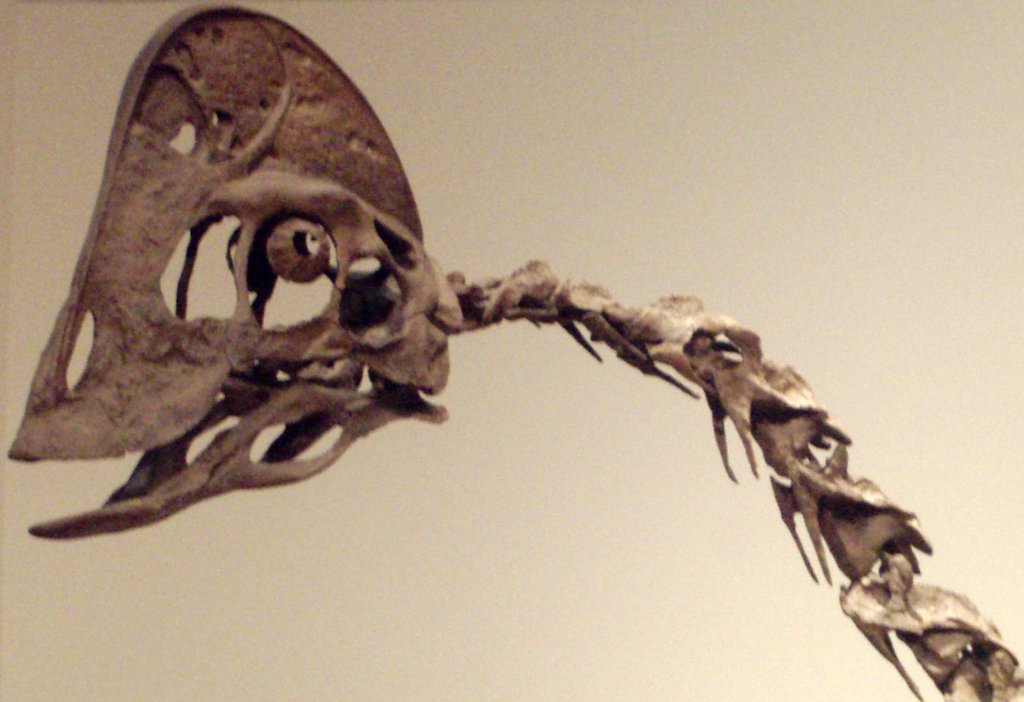
Sci.News reports that the skeleton came out of the Hell Creek Formation in Montana in 2011, and that more material from Montana, South Dakota and North Dakota has since been assigned to the species. The animal lived 68 to 66 million years ago and weighed an estimated 12 kilograms. Bone sections showed it was fully grown when it died, at least six years old. From CT scans, the team reconstructed the jaw muscles and found that they pulled mostly front to back rather than up and down, which points to a weak bite. The joint let the lower jaw slide forward and backward, and the ridges and grooves on the upper and lower jaws fit together as it moved. No stomach stones, the gravel many plant-eating dinosaurs swallowed to grind food in the gut, turned up in the body cavity.
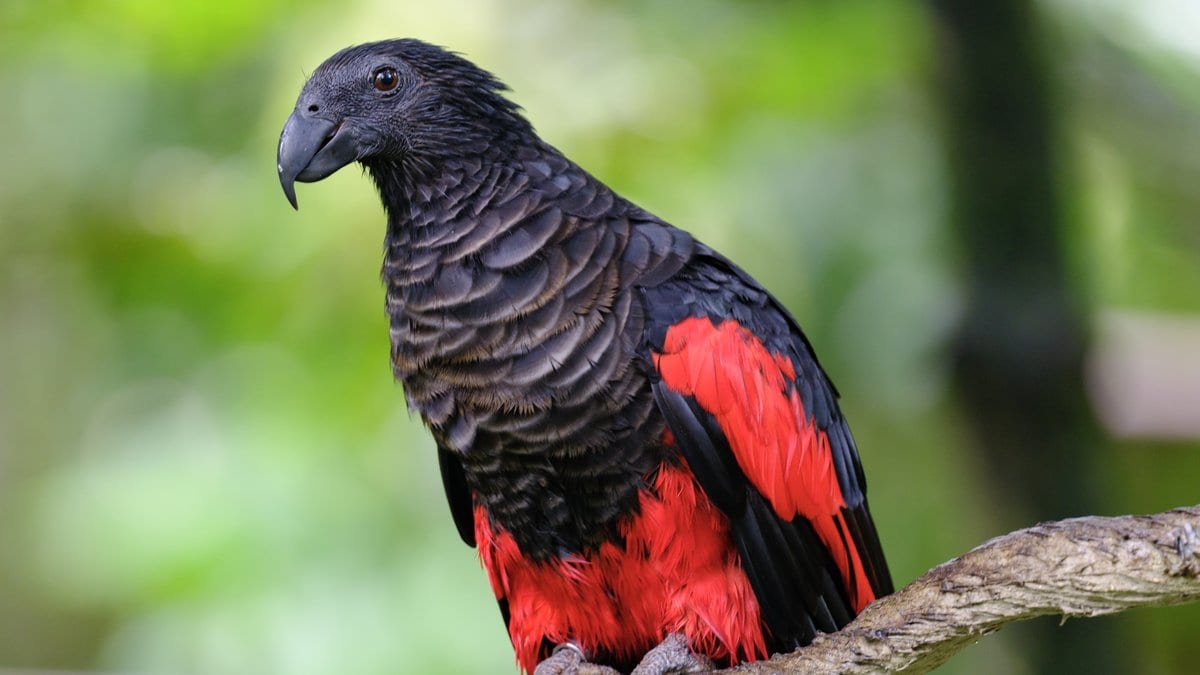
The resemblance that makes sense of all this is to a parrot. The paper's scope word is "non-avian": this muscle arrangement is unique among dinosaurs that are not birds, and living fruit-eating parrots arrived at something similar on their own. Sci.News reports that the closest match the team found among living animals was Pesquet's parrot (Psittrichas fulgidus), which eats fruit by mashing the pulp and discarding the seeds.
Three things point the same way. A weak bite argues against tough, fibrous plants. A mouth built for long processing argues against swallowing food whole. And with no stomach stones, the other way a plant eater breaks food down is missing too. The authors conclude that caenagnathids were specialized plant eaters whose diet "likely consisted in large part of fleshy angiosperm fruits," meaning fruit from flowering plants. That conclusion is read from the shape of bone: one skull and the scattered pieces assigned to the same species, with no gut contents and no fossil droppings of the kind that show what an animal actually swallowed.
That scope word is doing real work. Birds are dinosaurs, and one early bird already has fruit on its record. Han Hu and colleagues, writing in eLife in 2022, scanned a new skull of Jeholornis, a bird from near the base of the bird family tree, and argued that the seeds preserved in its body cavity came from swallowed fruit rather than from a diet of seeds. They called it the earliest evidence of fruit eating in birds. That case starts from material preserved inside the animal; this one starts from the shape of a skull. What Infernogallus adds is the first such apparatus known outside the birds.
The paper's wider claim is about timing. The authors write that fleshy fruits grew larger and more varied as oviraptorosaurs, the broader group caenagnathids belong to, spread and diversified. They are careful about what that buys them. Their opening lines grant that the rise of flowering plants and the diversification of plant-eating dinosaurs are each well established, and then say that "the link between them is debated." They add that the broad diversity patterns of the two groups do not line up closely, and that no dinosaur had yet been shown to be adapted to flowering-plant food. They offer caenagnathids as "one of the strongest candidates for angiosperm-based diet adaptations in dinosaurs." A candidate is not a closed case.
Whether the dinosaurs mattered to the plants is the question the paper leaves open. Fruit-eating animals carry seeds away from the parent plant and drop them elsewhere, and the Late Cretaceous is when fleshy fruit proliferated, but the authors write that the role of these animals in that proliferation remains unclear. A preserved gut, or a fossil dropping with fruit pulp in it, would say more than any skull can.
Sources
- Nature CommunicationsPeer-reviewed
- www.sci.news