A Seabird Steers by the Sun Even When the Coast Is Right Below It

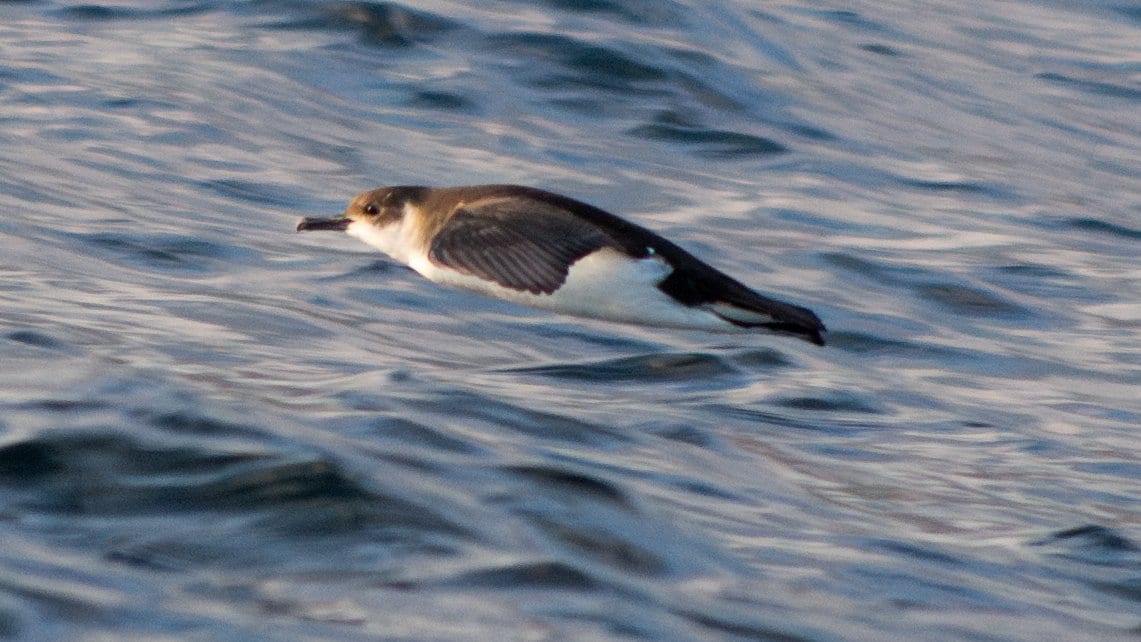
Just after dawn, a Manx shearwater is somewhere over the Atlantic, flying hard for the island where its chick waits in a burrow. The water below gives it nothing to steer by. The Sun does, and the bird uses it. But the Sun it is reading belongs to a later hour than its body thinks, because it has spent the morning flying east, and the dawn it woke to happened a long way behind it.
That disagreement is enough to bend a bearing, and 24 researchers led from the University of Oxford have now measured the bend in wild birds on real journeys. Writing in Science on Oct. 29, 2026, Patrick Lewin, Tim Guilford and their co-authors report that fast eastward flights leave Manx shearwaters' internal clocks running behind local solar time, and that the direction the birds aim shifts by a predictable amount as a result.
Steering by the Sun, which biologists call a Sun compass, is only as good as the clock behind it. The Sun travels 15 degrees of its daily arc every hour, so an animal reading a direction off it has to know what time it is to know which way it is looking. Birds keep that time with a body clock, and sunrise is one of the things that sets it. Fly far enough east in a single morning and local solar time, which depends on nothing but longitude, has moved on while the clock has not. The drift is continuous, measured in lines of longitude rather than in time zones, and it is paid for in degrees.
The consequence has been known since the 1950s from captive birds. Put a bird on an artificial light schedule that shifts its clock by a few hours, and it will pick a direction wrong by roughly as much as the Sun moved in those hours. What nobody could do was run that experiment on a wild bird mid-journey. Nobody has to: a shearwater flying east does it to itself, and the authors call the result jet lag, titling their public dataset "Jet-lagged birds".
The analysis rests on 20 years of GPS tracking at six island colonies off the west coast of the UK: Copeland, Lundy, Ramsey, Rum, Skomer and Skokholm. Tracks were smoothed to one position every five minutes. Nobody measured a bird's clock, and no clock was shifted on purpose. For every position, the team worked out the longitude at which that bird had seen sunrise and how long ago, and from those two numbers how far the Sun had drifted out of step with the bird's own morning. That yielded a predicted bearing error for every moment of every homing flight. The test was whether the bearings the birds actually flew matched the prediction.
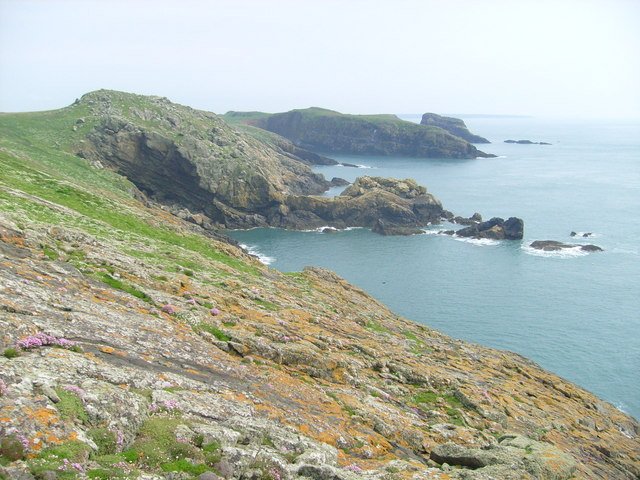
They did. The rival explanations did not. The same data carry predictors for the Coriolis effect, the sideways nudge a spinning Earth gives anything in flight; for the angle between magnetic north and true north; and for whether land was in sight or within 30 kilometers. None of them accounted for the deflection; the clock prediction did. It is a match between a predicted error and an observed one in birds nobody manipulated: weaker than an experiment, and the only kind of evidence available over the open Atlantic.
In the Guardian's report of the work, the clocks run up to about an hour behind local time and the bearings bend by at most about 15 degrees. Those are ceilings, not typical errors, and they come from the researchers' account to reporters rather than from the paper. An hour of clock error works out at about 15 degrees of the Sun's arc, which is why the two ceilings line up. And adults correct for it in flight. "For adult shearwaters, this lag has very limited impact on their overall journey, with errors adding a calculated 5km to a 1,000km journey," Lewin, a behavioral and sensory ecologist at Oxford, said.
The second result is the one that makes the clock interesting. Shearwaters often come home along a coastline, and a coastline needs no clock: it is simply there, and following it demands no more sense of time than following a road does. The birds kept steering by the Sun anyway. "Use of the Sun compass persists even when shearwaters have access to compass-independent cues during coast following," the authors write. That is what puts the limit in the clock rather than in a shortage of information. The bird was not missing a cue. It had one and did not switch.
The authors are careful about how far that reaches. Their findings, the paper says, suggest that "conserved chronobiological mechanisms impose substantial constraints on navigation" and open "a new avenue for chronobiology research in the wild". Suggest is the word they use, and the clock in question is not a seabird's invention: it runs in insects, fish, birds and people. Richard Holland, who studies animal navigation at Bangor University and had no part in the work, told the Guardian that the result confirms in wild animals what controlled experiments have shown, and that the cost of it is another matter: "It's not clear from the study what the consequences of these errors are, since the birds return to their colony and the errors are small."
This is one peer-reviewed study of wild flights, with decades of caged-bird work behind the mechanism and no replication of it in the air. Everything under it is open: the tracking data and the analysis script are posted with no conditions on reuse, paid for by public research councils and charitable trusts, so another group can rerun the test or carry it to another species. Every bird in the analysis was a breeding adult heading for its own colony, so the study says nothing about a young bird on its first migration. And the adults were not lost. A shearwater reads an accurate instrument with a watch that is running slow, and it gets home anyway.