Three Different Ages for the Same Cave Art, and the New Study Picks None

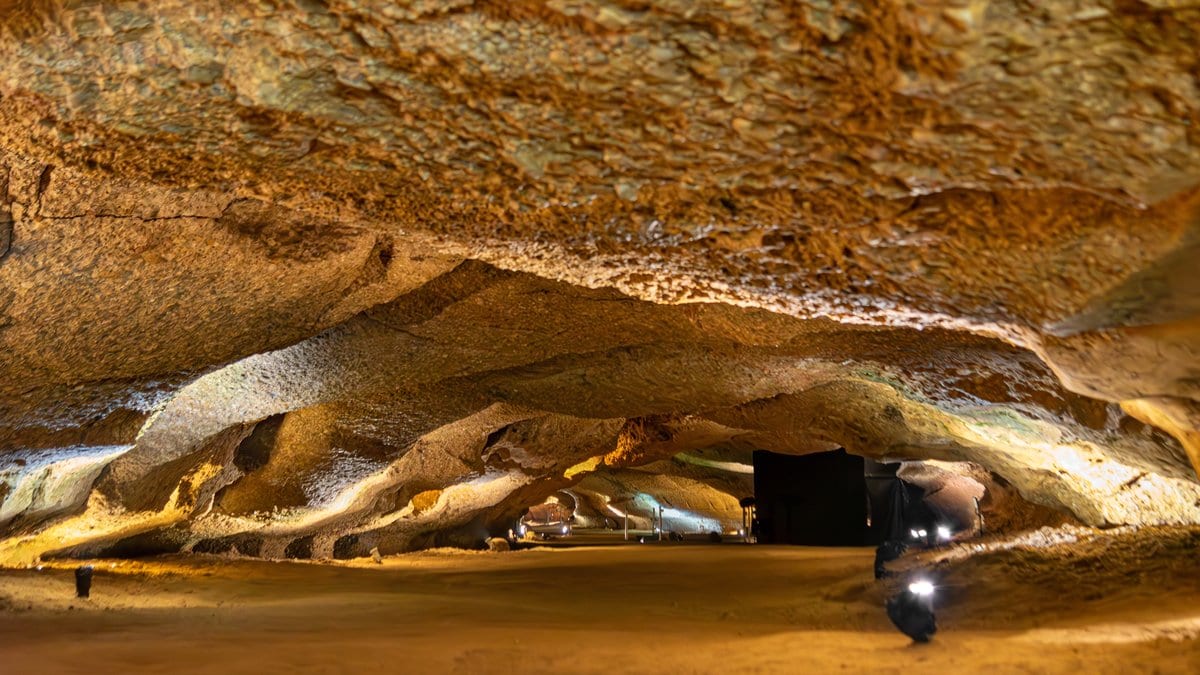
The walls of the Gatoneres de Cal Palletes, a cramped set of galleries under a Catalan village, are covered in names. Visitors cut them into the rock over decades, along with dates and initials. On Oct. 30, 2019, during the first excavation season of a new project, one of the two archaeologists there looked at a stretch of that wall and saw, among the modern scratches, several engravings with the characteristics of Paleolithic art.
Six years later, Josep Maria Vergès Bosch and Míriam Salas-Altès, archaeologists at IPHES-CERCA and the Universitat Rovira i Virgili in Tarragona, have published the first full description of what is on those walls: 280 engraved motifs, 55 of them animals. Their paper, published Nov. 5, 2026, in Antiquity and free to read, is careful about what that count covers.
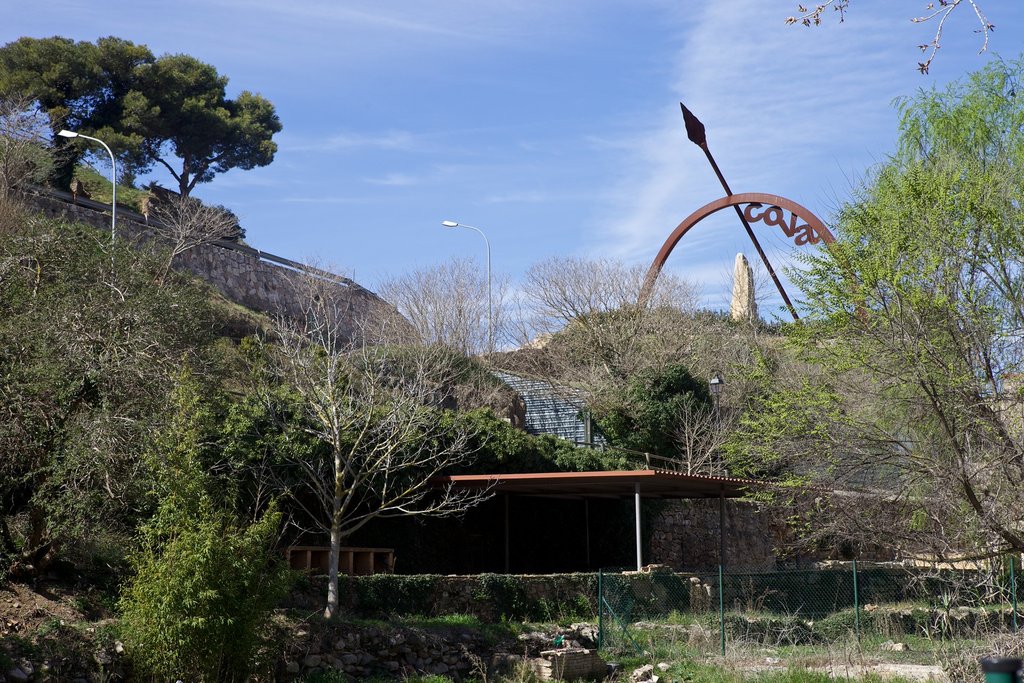
The 280 are what the authors call graphics: single units, such as one horse or one sign, and sets of linked marks with no clear pattern. The count covers what survives and has been identified so far, not individual scratches, and the authors say the original collection was larger. Most of it is not figurative, mainly straight parallel lines, some in runs of up to 40 side by side. The 55 animals are horses, wild goats, deer (mostly female), and aurochs (the extinct wild cattle), plus a single bear (rare in this art anywhere).
The grooves are shallow and a few millimeters wide, cut into soft marl bands sandwiched in a coarse conglomerate whose surface is irregular, the kind of wall long assumed to be unfit for drawing on. "When you shine a light straight on the engravings, they are really difficult to see, you have to play with light from different directions to see the depressions," Salas-Altès told Nature. The town council cleared the cave's blocked entrance in 1957, and the galleries later joined a ticketed adventure route. The paper records that for more than six decades "thousands of visitors passed directly in front of the engraved surfaces, and in some cases inscribed names and dates over them, without the Palaeolithic origin of the figures being recognised." The engraved zone is closed now; the 2020 announcement of the find said it cannot be visited.
The age moved before the paper arrived
The find has been public far longer than the paper. It was presented on Feb. 7, 2020, at an event with the Catalan culture minister, the village mayor and IPHES's director, and described there as more than a hundred engravings about 15,000 years old, attributed on style to the Magdalenian, a late Ice Age phase. The paper raises the count to 280 and moves the attribution the other way, to phases before the Magdalenian, which it brackets between about 43,000 and 19,000 years ago. It does not mention the earlier figure.
Two more numbers came with the coverage. Nature's news report put the engravings at around 26,000 years old. That number is in the paper, but as an occupation date: a flint bladelet from a level dated to 26,000 years ago in another gallery is evidence of people inside the cave, not of anyone drawing. Elsewhere the figure given was 19,000 years, the young end of the authors' own pre-Magdalenian bracket. As a floor for the figures they assign to those phases it holds; as an age for the art it does not.
What the paper itself claims is narrower. No engraving has been dated directly. One animal figure lies under a crust of calcite, which can be dated from the uranium inside it, and the authors say that will be done later. Until then the attribution rests on two indirect arguments: the cave's own occupation record, which puts people in the inner galleries between roughly 41,000 and 26,000 years ago in two separate spells with a long gap between them; and two drawing conventions, the double-Y limb and the three-line head, known from Mediterranean assemblages of pre-Magdalenian age. The authors call the evidence consistent with pre-Magdalenian phases, then add that "it is still too early to rule out the existence of engravings dating to the Magdalenian or later periods."
A panel of loops that nobody can place
One wall shows how open the chronology still is. A single panel carries hundreds of loop-shaped engravings, some joined into roughly horizontal chains, and the paper is blunt about them: "The chronological attribution of these engravings remains uncertain, and no clear parallels have yet been identified within other Palaeolithic assemblages." Radiocarbon on a charcoal fragment recovered from inside one engraved groove indicates that some of the incisions are no later than the seventeenth century; that result reaches the paper as a colleague's personal communication rather than one of its own samples. A superimposed inscription bearing the date 1199, formally unlike the loops, shows that some were already on the wall by then. Whether the loops are among the 280, the paper does not say.
Catalonia had two Ice Age figures, and one was stolen
The regional gap is what makes one cave matter beyond itself. The authors write that until recently only two wall figures attributed to the Upper Paleolithic were known in all of Catalonia: a black-painted bovid from the Cova del Tendo, which "was stolen shortly after its discovery and is documented today only through photographs and a tracing," and an incomplete figure, possibly a deer, whose human origin is uncertain. Along the Iberian Mediterranean coast, the authors report, about three-quarters of known assemblages hold at most five animal figures. On that count they call Font Major "the third-largest Palaeolithic parietal assemblage across the entire Iberian Mediterranean façade, with 55 zoomorphic representations, surpassed only by Ardales and La Pileta," both at the southern tip of the peninsula. The ranking is the authors' own, and it counts animal figures rather than every motif.
One line in the same discussion does not hold. The authors also call Font Major the first and only major Paleolithic cave art assemblage documented in the eastern peninsula. Cova Dones, in Valencia, was described in the same journal in 2023 as a major Paleolithic cave art site in eastern Iberia, with "more than 110 graphic units," and the Font Major paper does not cite it. The ranking survives that comparison, since it counts animal figures; the claim to be the only one does not.
What the authors take from it is a lesson about method, not a date. A cave with irregular conglomerate walls, 250 meters of passage between the engravings and daylight, and generations of visitors is the kind of place a survey passes over, and it holds the densest concentration of Paleolithic wall art known in Catalonia. No cave should be ruled out in advance, they argue, however unsuitable its surfaces or however heavily visited. The inventory is the part that has now been published. The age has not.