A Pump With No Known Job Ejects an Antibiotic From a Pneumonia Bacterium

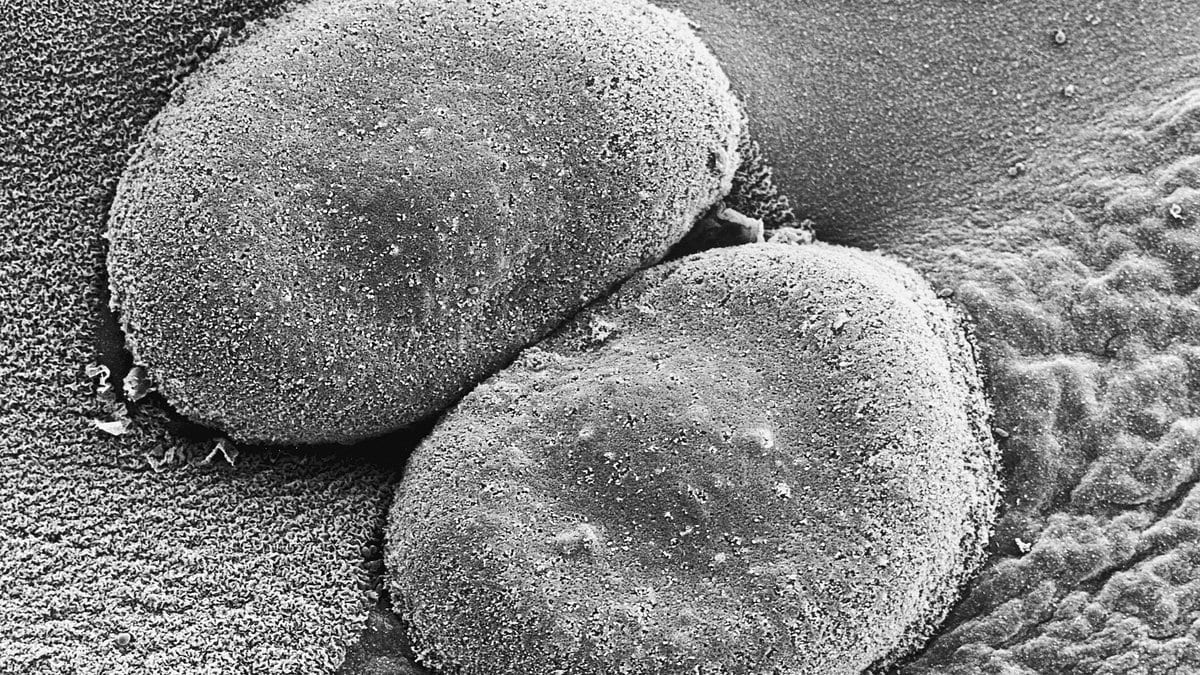
Sequence a bacterium and you get a parts list with most of the labels missing. Streptococcus pneumoniae, the organism responsible for a great deal of pneumonia and meningitis, encodes a broad array of ABC transporters, molecular pumps that sit in the membrane and move things across it. A few are known to push antibiotics out of the cell. For most of the rest, nobody can say what they carry. Atsushi Taguchi, Kunihiko Nishino and colleagues at the University of Osaka went at that gap directly, screening the pneumococcus's pumps to see which ones made the bacterium harder to kill.
One of them did. A transporter nobody had previously characterized turned up, conferring resistance to the antibiotic fosfomycin. The team named it FoeAB and reported it on August 28 in the Proceedings of the National Academy of Sciences, together with a set of cryo-electron microscopy structures showing the pump in the middle of changing shape.
Fosfomycin is worth a bacterium's trouble. It is a natural-product antibiotic, unusually low in toxicity, and it works by jamming MurA, the enzyme that catalyzes the first committed step in building the cell wall. It has been in use for decades, mostly against urinary tract infections, and attention has returned to it as old drugs are pulled back into service against multidrug-resistant organisms. Fosfomycin, though, is not standard therapy for pneumococcal infection, and the paper makes no clinical claim for it.
Resistance to fosfomycin is not new either. It appears quickly in the laboratory through the loss of active transport, as Lynn Silver's review of the drug sets out, and a loss is what it is: something the cell had and gives up. FoeAB is the other kind of change, an addition.
Resistance measured inside a living cell can come from many directions, so the group tested the protein on its own. They purified FoeAB, rebuilt it into liposomes (artificial membrane bubbles holding the protein and little else), and showed it carrying fosfomycin across. They also report evidence that FoeAB works as a multidrug efflux pump, with substrate preferences unlike those of the pumps already described.
Then the shapes. A transporter of this class works by rocking between two positions. It opens toward the inside of the cell to take up its cargo, then toward the outside to let it go, and ATP binding at the motor domains drives the swing. The team caught FoeAB in both states. The structures show what shifts when nucleotide binds, and point to residues that matter for moving a substrate through.
The structures, though, are not of the pneumococcal protein. All sixteen structure depositions in the paper's reference list are FoeAB from Streptococcus thermophilus, the dairy streptococcus behind yogurt and cheese, and the paper's own title calls its subject a streptococcal ABC transporter rather than a pneumococcal one. The screen and the fosfomycin resistance are pneumococcal. The protein that was imaged is a close relative's version of the same pump.
There are eight of those maps, public since June 3: FoeAB with nothing bound, with ADP, with ATP and ADP together, with a form of ATP the pump cannot break down, and a single-residue mutant, E504Q, captured with ATP still in place. Read in order, they are less a portrait than a sequence. The deposited entry for the ADP-bound map gives a resolution of 3.25 angstroms, fine enough to place individual amino acids. The protein was made in Escherichia coli, and the pump is a pair, two different proteins with one copy of each.
A pump that had no assigned job now has a name, a substrate and a shape on the public record.
Sources
Medical Disclaimer: This content is provided for general informational and educational purposes only. It is not medical advice and should not be used as a substitute for professional medical advice, diagnosis, or treatment. Always consult a qualified healthcare professional regarding any medical condition, concern, symptom, or treatment decision.