A Tiny Brazilian Fossil Snake Hints the Group Was Already Varied at the Start

Snakes are a paradox of the fossil record. There are more than 4,000 species alive today, slithering through deserts, rivers, treetops and soil on every continent but Antarctica, one of evolution's great success stories. Yet trace that success back toward its origin and the trail thins almost to nothing. Snake skeletons are long, fragile chains of tiny bones and, worse, they are usually crushed flat before they fossilize. The skull, the part that could tell you most about how an ancient snake lived, is almost always the first thing to go.
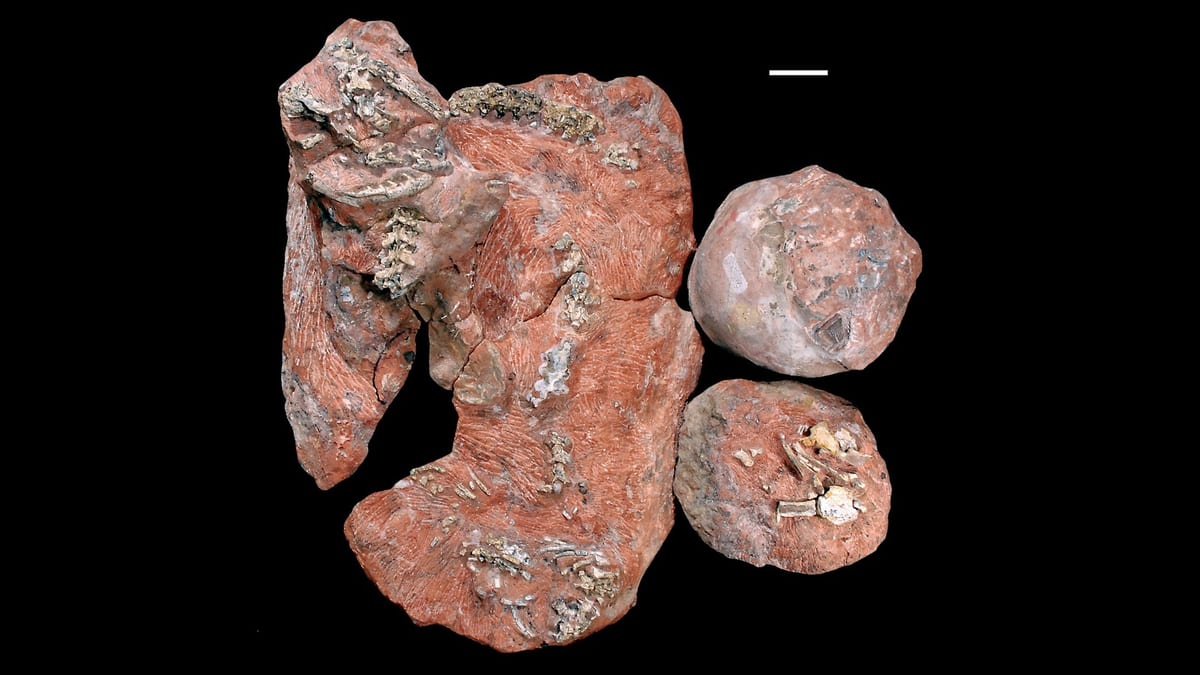
Which is what makes a small skull from the Late Cretaceous of Brazil so unusual. It did not get crushed.
Named Tametara mirim, the fossil is preserved in three dimensions, its braincase intact enough that researchers could reconstruct the shape of the brain it once held. The find is described in Nature. A preserved braincase is a rare gift in snake paleontology because the brain's form tracks how an animal senses and moves through its world: how much it leans on smell, on vision, on the vibrations that a burrowing animal feels through the ground. Read the braincase and you get a glimpse of the animal's way of life, not just its anatomy.
What the skull seems to say
The shape the researchers found points to a fossorial snake: a burrower, an animal built for life underground. That alone is notable, standing as some of the earliest concrete evidence of the burrowing habit that many snake lineages later adopted.
But the more provocative implication is about timing. If one of the earliest well-preserved snakes already shows a brain tuned to a specialized, underground existence, it hints that the earliest snakes were not a uniform starter stock that only later branched into today's variety. They may already have been exploring sharply different lifestyles near the very beginning.
That would reframe a long-standing picture. The intuitive story of a successful group is a slow fan: a modest ancestor gradually radiating outward over tens of millions of years into new habitats and body plans. Tametara mirim raises the possibility of the opposite: an early burst, with diversity front-loaded into the group's first act rather than accumulated patiently over its history.
An open question, not a verdict
Here is where care matters. The fossil is a strong clue, not a closed case, and the researchers are careful to keep two explanations on the table.
One is the story above: snakes were diverse all along, occupying varied ecological niches from early on. The other is subtler: that the differences we see reflect the rapid evolution of new sensory abilities, novelties appearing fast rather than variety that was there from the outset. Both readings fit a single exquisitely preserved skull, and a single specimen, however rare, cannot by itself settle which is right.
That restraint is the honest heart of the finding. What Tametara mirim delivers is a sharper version of the question, and a rare, uncrushed piece of evidence to argue it with. For a group whose early history has been read mostly from scraps, a three-dimensional brain from the age of dinosaurs is reason enough to keep looking.
Sources
- NaturePeer-reviewed