A Dog Runs on Many Clocks, Not One

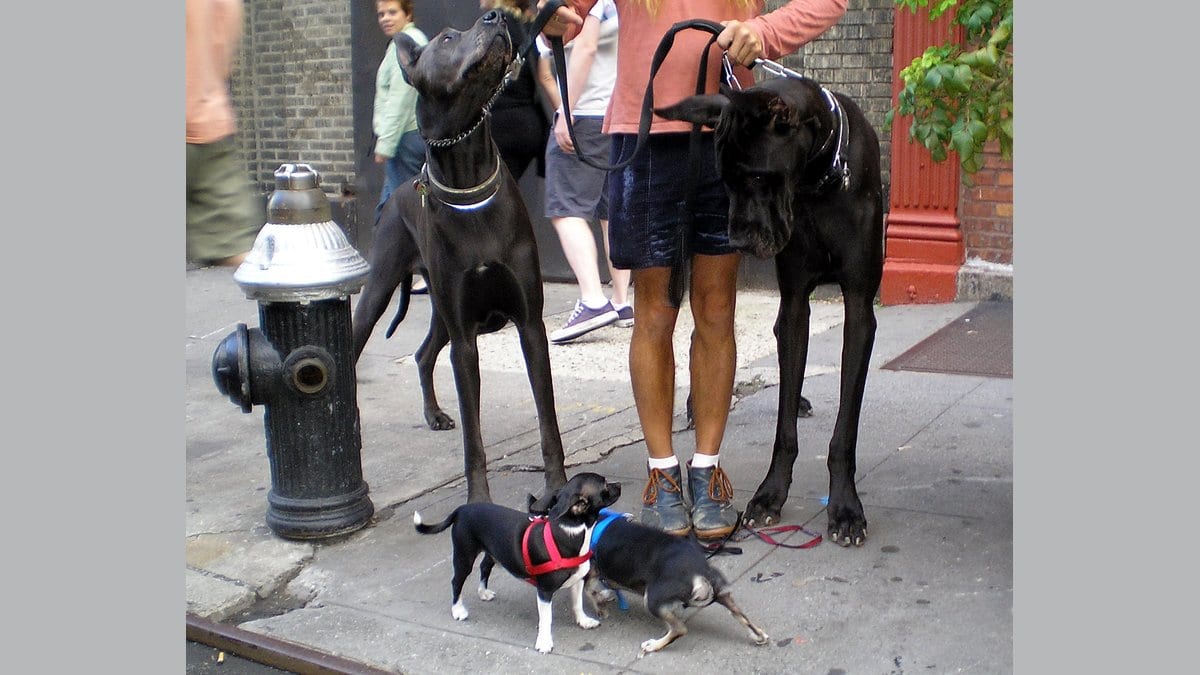
At about two weeks old, a puppy opens its eyes. Within a few days it can hear, and it is walking rather than crawling. The three arrive almost together. A human infant does nothing of the kind: a baby sees and hears for most of a year before it takes a first step.
Christine J. Charvet and Taylor Turner, of the Department of Anatomy, Physiology and Pharmacology at Auburn University's College of Veterinary Medicine, treat that mismatch as data rather than trivia. In a preprint posted Nov. 17, 2026, on bioRxiv, they assembled 11,365 observations from humans, 11 canid species and 171 dog groups, then tried to line up the ages at which comparable things happen: eye opening, the eruption of baby teeth, the age at which a blood value stops changing, the first appearance of an age-related disease. What they report is not that a dog's life runs faster or slower than ours. It is that a dog has no single pace for comparison.
The preprint has not been through peer review, and no journal version of it exists; bioRxiv stamps that warning on every page. The rule of seven had already been displaced once. A 2020 study in Cell Systems compared chemical marks on DNA that shift with age in Labrador retrievers and in people, and offered a logarithmic replacement for the multiplier; the press covered it then. That work used one breed and one molecular marker, which is close to the criticism the new preprint makes of single-metric approaches in general. It does not cite the 2020 paper anywhere in its reference list.
Fitting a curve through the matched points produces age equivalents that look nothing like a multiplier. A newborn puppy, by this alignment, corresponds to a human fetus in the last weeks before birth. A one-year-old dog lines up with a human of about 17. A ten-year-old dog lands in a human's early 60s. The one directional claim the authors make is deliberately narrow: dogs, they write, "progress through postnatal development relatively more rapidly than humans." That is development, not the whole of life.
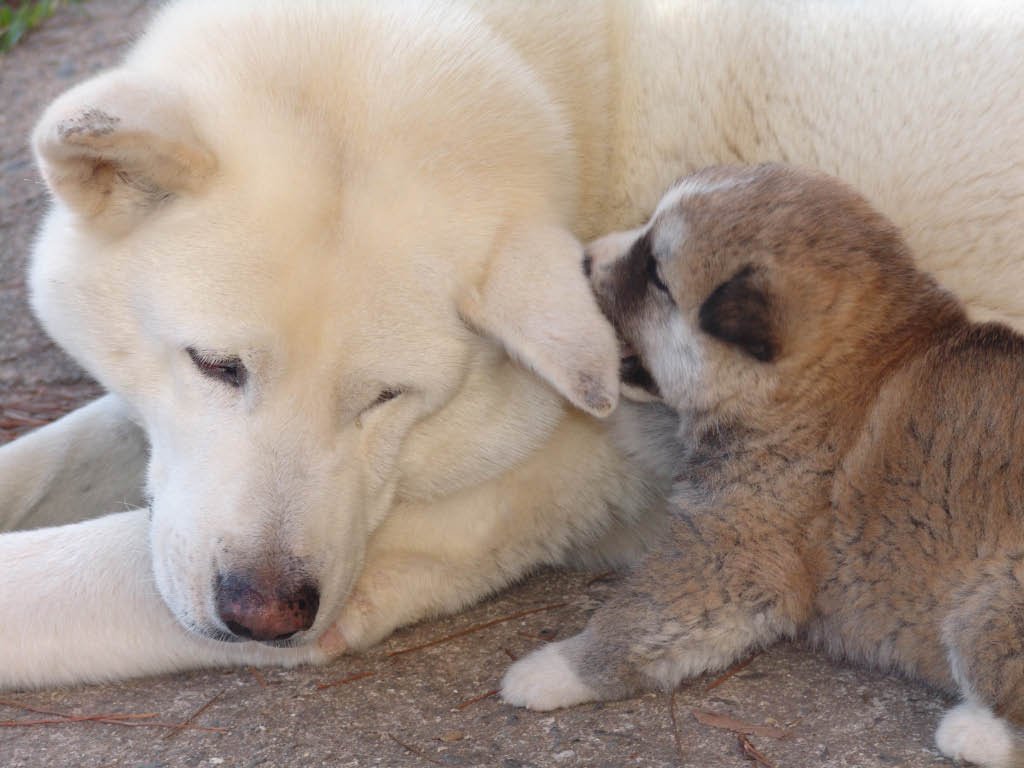
That mismatch is one of their measurements. In dogs, the age at which locomotion matures and the age at which the senses come online are statistically indistinguishable. In humans the two are nowhere near each other, with locomotion arriving much later. Wolves and coyotes behave like dogs. Whatever stretches out a human child's path to walking is not shared with the dog's wild relatives.
The paper's central result comes from a contest between two models, each asked to account for the same ordering of events across breeds. The first let breeds differ only in an overall rate, so that a fast-aging breed runs everything fast. The second let each system keep its own schedule. The authors' word for that is heterochronies: differences in timing, not pace. "Models incorporating system-specific heterochronies across dog breeds outperformed models that assumed breeds differ only in their overall rates of development and aging," they write.
Outperformed here means a lower AIC score, a standard way of ranking models that weighs fit against complexity. That is a comparison rather than a test, and the authors do not throw the simpler model away: both account for a high share of the variance, and the paper reports predictions from both. Their closing line is that more work is needed to pin down which systems age at different rates.
The breed-level picture that falls out of the better model is the most quotable part of the paper and the least firm. Dachshunds show accelerated aging in the nervous system, which fits their well-documented early spinal disc disease; boxers show cancer arriving early; mastiff-type breeds are among the fastest to age overall and toy breeds among the slowest. Charvet and Turner twice warn against over-reading those breed-specific numbers, and their own tables show why: the organ-system groupings behind the model rest on 176 timepoints for masses and cancers, 70 for cardiovascular changes, 45 for the nervous system, 24 for metabolic disorders and 10 for reproductive traits. The model comparison itself ran only on breeds with at least 125 timepoints each, not on every group in the dataset.
Where the numbers come from matters as much. The clinical half comes from a single institution: 19,700 dogs seen at Auburn's own veterinary clinic, which the authors test against breed diseases already well established in the literature rather than claiming it stands for dogs in general. The developmental half comes from published studies and from breeders' own online reports of when puppies open their eyes, take first steps and wean. The dataset is not public. It will be released, the paper says, after the manuscript is accepted, so the observations behind the result cannot yet be inspected by anyone outside the two authors. The work was funded by Auburn startup funds and the Auburn Health Disease Research Fund, and the paper carries no competing-interests statement either way.
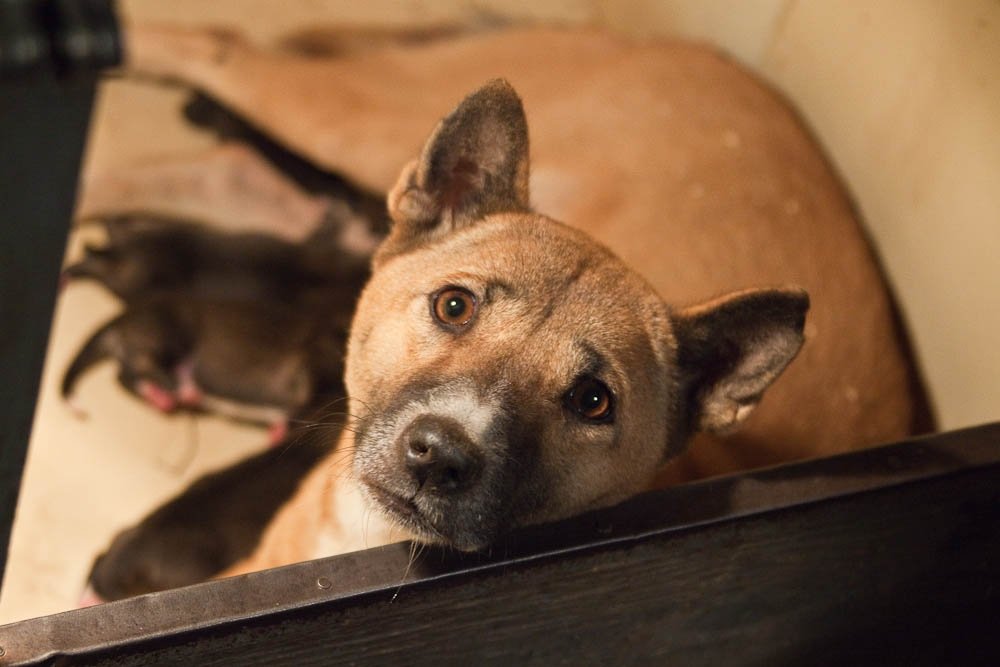
The wild canids carry the paper's prettiest result. Wolves and coyotes do not develop significantly more slowly than dogs overall, but their reproduction and their body growth are stretched out, while their bones harden earlier. The maned wolf, the longest-legged of the family, owes those legs to a drawn-out period of bone hardening in the limbs. Domestication, on this reading, rearranged the schedule rather than simply speeding it up.
The method is older than the dog dataset. It comes from a long-running project called Translating Time, which Charvet has previously pointed at chimpanzees, mice and pet cats. All of that work is the same group's, so it counts as the method's track record rather than a second line of evidence for the dog result. Dogs are worth pointing it at because they get the diseases of human old age over a much shorter life. If a dog's nerves and its heart keep separate time, then its age in human years was never going to be one number.