Wild Tropical Fruit Is Mildly Alcoholic, and the Fallen Fruit More So

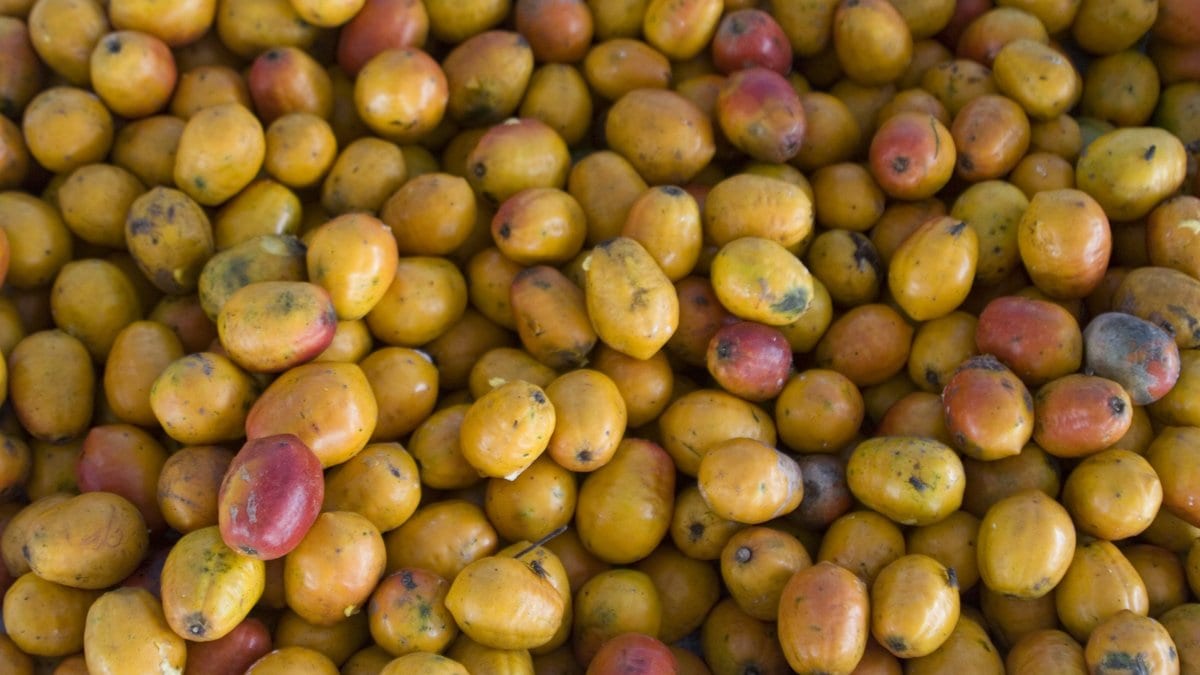
Hold a breathalyzer over the pulp of a squashed fig and it will usually register something. Biologists have known for decades that wild fruit ferments, on the branch and on the ground, and the idea that the animals eating it have been dosing themselves with alcohol for millions of years is old enough to have a nickname, the drunken monkey hypothesis, and a long argument attached. What it has never had is a map.
A collaboration of 57 researchers led from the University of Calgary has now drawn one. In a preprint posted Nov. 13, 2026, which has not been peer reviewed, Julia G. Casorso, Amanda D. Melin and their co-authors report ethanol measurements from the fruit of 591 wild plant species at field sites in 18 countries, along with flowers and nectar from dozens more. They call it the first global survey of its kind, and the claim is about scale rather than discovery: alcohol in wild fruit has been measured before, including by members of this team, but one forest at a time.
In the subset of 211 species that were sampled repeatedly, ethanol turned up in the ripe fruit of 72 percent. The sampling was opportunistic and leaned toward plants known to be in the diets of fruit-eating animals, so this is a portrait of what a fruit-eater meets rather than a random census of tropical plants, and a zero reading means below the breathalyzer's detection floor rather than nothing at all.
The concentrations are the part worth slowing down over. The highest reading in the study was 3.9 percent alcohol by volume, from an overripe hog plum, which is a weak beer. That is the ceiling, not the forest: averaged across every sample where ethanol was found at all, the figure was 0.27 percent, faint enough that a person would not taste it and steady enough that an animal eating fruit by the kilogram would not escape it. The strongest ripe sample was not something a researcher picked, either. It was a wadge of cashew apples that a chimpanzee had chewed and spat out.
Flowers carried less, and the paper is careful about which tissue is which. Ethanol appeared in the flowers or flower-buds of 12 of the 37 species sampled for them, at concentrations below those in fruit. Floral nectar, measured separately, reached 0.73 percent, the highest value recorded outside fruit.
What decides whether a fruit ferments
Two things predicted where the alcohol was, and the first was climate. Ethanol was likelier to be found at warmer sites, but only up to about 25 °C, above which detection fell away again; ethanol is volatile, and the authors suggest it leaves the fruit faster than yeasts can replace it. Wetter sites produced the higher concentrations, which suits a process that runs on microbes and microbes that run on water. Denser vegetation went with more frequent fermentation, a result the team asks readers to treat as preliminary because it had few samples from thinly vegetated ground.
The second was ancestry, and it worked in one direction only. Closely related plants tended to share the highest concentration their fruit reached, while average and median concentrations showed no family resemblance at all. Lineage appears to set a ceiling; local conditions decide how near a given fruit gets to it.
The fruit on the ground is the stronger fruit
Where the same species was collected both in the canopy and off the forest floor, ripe fruit from the ground had 44 percent higher odds of being the more alcoholic of the two. Those are odds, not amounts, and the advantage disappears once fruit is further gone: for midripe and overripe fruit the difference was not significant. Ground humidity, steadier temperatures, and a dose of yeast from soil, leaf litter and insects are the mechanisms the authors offer.
That is the result with a bearing on human beings. African apes, including humans, carry a more active form of ADH4, the enzyme that breaks down ethanol, and a long-standing explanation holds that the change was favored once their ancestors began feeding on fallen, fermenting fruit instead of picking from the branch. Casorso and her co-authors are explicit that the study does not directly test evolutionary causation. What a global measurement adds is that the premise of the story, fallen fruit being the stronger fruit, holds across continents rather than in one forest.
What a lemur's heaviest days could amount to
To get from plants to animals, the team took long-term feeding records for 10 wild primate species and multiplied them by the fruit concentrations measured here. No animal's intake was measured; this is arithmetic over diet diaries, and it was run for peak days on purpose, the 10 days per species on which the recorded diet would have carried the most alcohol. On those days the modeled exposure ran from near zero to 0.72 grams of ethanol per kilogram of body weight.
The top of that range belongs to one species, the black-and-white ruffed lemur of Madagascar, and converts to about 5.1 international standard drinks of 10 grams each for a 70-kilogram person. It is also the number the paper hedges hardest: the spread around it is more than twice the average, and the average is lifted by a single verified feeding bout at a jackfruit tree whose consumed mass was estimated from bites taken and which the authors say may be an overestimate. The steadier estimates sit far below, at about 2.6 drinks for black-handed spider monkeys on their heaviest days.
None of that means a lemur is drunk. What the survey establishes is the supply: ethanol is a routine, low-level ingredient of tropical fruit, its concentration shaped by climate and by lineage, and it is strongest in exactly the fruit that animals feeding on the ground pick up. Whether any of them seek it out, avoid it, or simply swallow it as the price of a ripe meal is a behavioral question this work does not answer. The authors add one forward-looking note: because vegetation structure and microclimate shape where fermentation happens, land use and forest management could change how much alcohol a forest's animals meet. The measurements and the analysis code are posted openly, so another group can test the pattern in its own forest.
Sources
- bioRxivPreprint