A Neandertal Gene Variant Is Linked to Smaller Vision Areas in the Brain
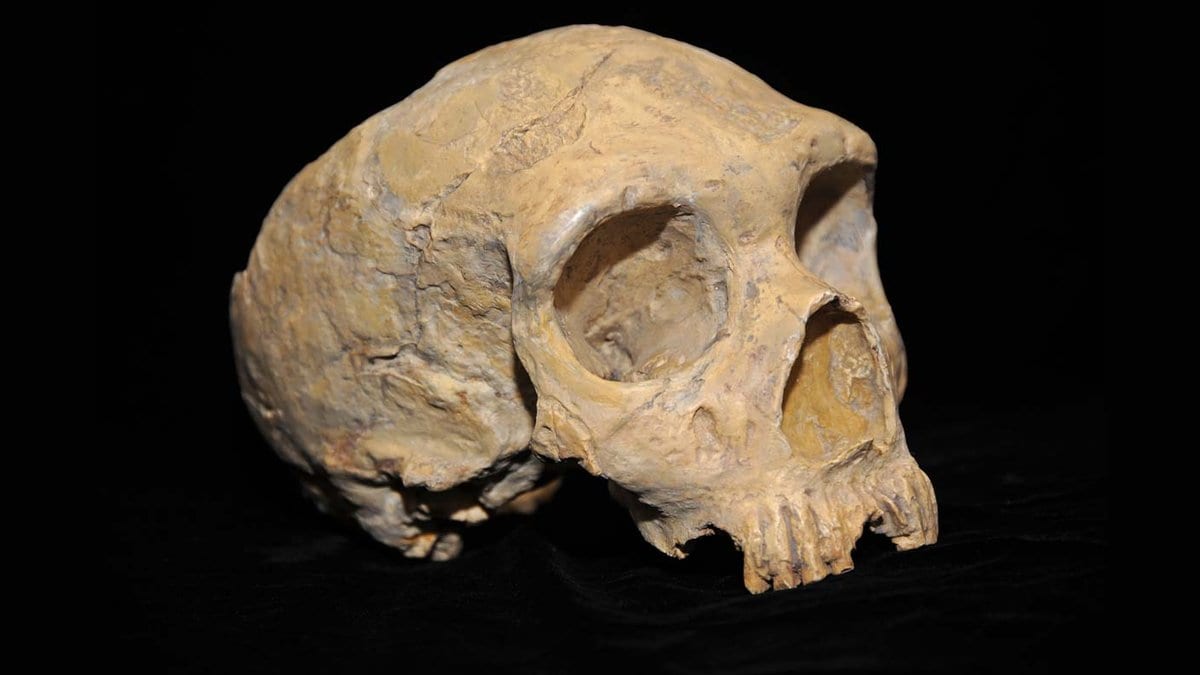
Hugo Zeberg and Svante Pääbo report in Proceedings of the National Academy of Sciences that a common genetic variant inherited from Neandertals influences the size of the occipital lobe, the part of the brain at the back of the head that handles vision. The same variant, they report, is linked to lower schizophrenia risk.
The work ties a difference seen in fossil skulls to DNA that people still carry. The paper says Neandertal skulls were less rounded than those of modern humans, which suggests that their brain regions, among them the frontal and occipital lobes, differed in relative size.
The variant lies in stretches of DNA near DAAM1 (a gene known to be involved in brain development) that are predicted to be attachment sites for the proteins that switch genes on and off. Carriers have altered DAAM1 activity and occipital lobes that are about 0.85 cubic centimeters smaller for every copy of the variant they carry.
Among people who carry two copies, the authors report schizophrenia risk reduced by almost 10%, while Neandertal ancestry as a whole shows no such tendency. Both links are reported as associations in people living today, not as causes.
The paper calls any association with cognition or schooling "small or nonexistent": at most two weeks of education per copy of the variant, against an average of about 15 years.
Zeberg is at the Max Planck Institute for Evolutionary Anthropology and the Karolinska Institutet, and Pääbo at the same Max Planck institute and the Okinawa Institute of Science and Technology. Their study was published online Nov. 16, 2026, and the version of record is free to read under a CC BY license.
Sources
- Proceedings of the National Academy of SciencesPeer-reviewed