How Whole-Genome Sequencing Caught a Contagious Cancer Passing Between Catfish

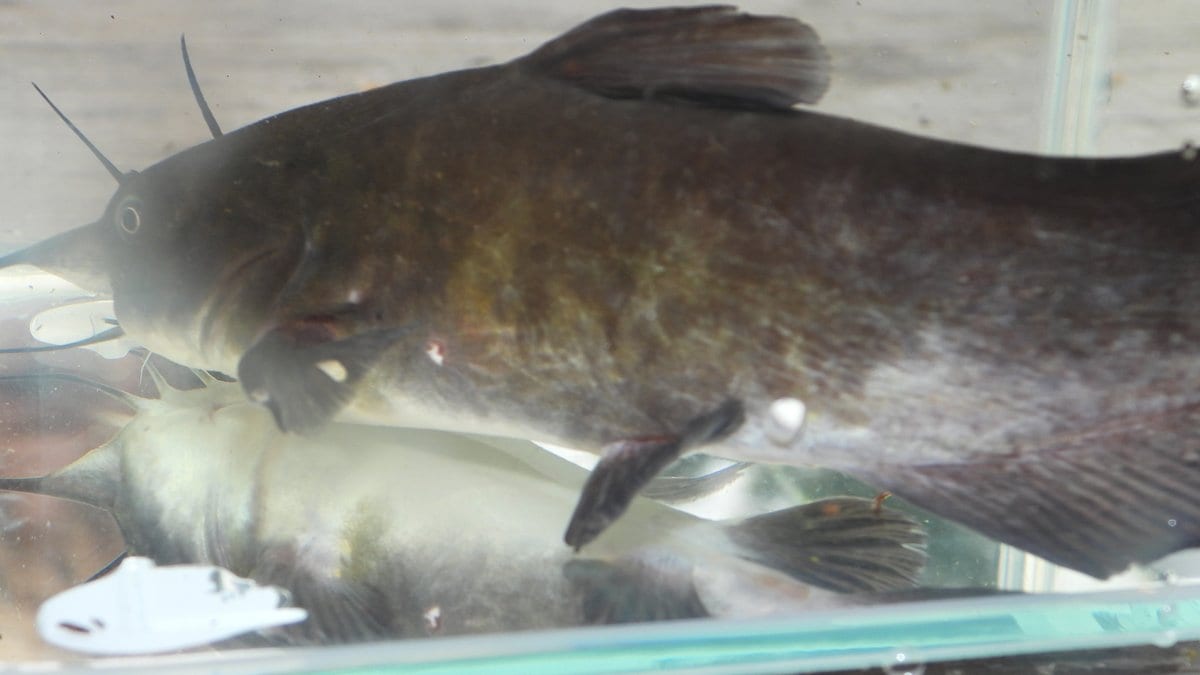
The lesions were the easy part. For more than a decade, biologists had watched brown bullhead catfish in Lake Memphremagog turn up with patches of blackened, malignant skin; by 2014, nearly one in three fish in the lake carried them. What the dark blotches did not reveal was the far stranger question underneath. Were these fish each unlucky enough to develop their own skin cancer? Or was something else going on, something a photograph could never settle?
Answering that meant reading the genomes.
A team co-led by Julie Dragon of the University of Vermont Cancer Center and Mark Henderson of UVM's Rubenstein School turned to whole-genome sequencing, comparing the DNA of the tumor cells with the DNA of the fish they were growing on. The logic is elegant. A cancer that arises inside a fish is genetically that fish. Its mutations are its host's mutations plus whatever damage tipped a cell into malignancy. Sequence the tumor and the healthy tissue side by side, and the two should match almost perfectly.
They did not match. The tumor cells carried hundreds of thousands of genetic variants that were simply absent from the host fish. And when the researchers compared tumors from different animals, those cancers looked more like each other than like the catfish carrying them.
The findings point to one compelling explanation. The cancer is not arising anew in each fish. It is a single lineage of cells (one original tumor, from one long-dead catfish) that has learned to survive outside its host and pass from animal to animal, dragging its own foreign genome along with it. The cells are the contagion. In the study, published in Nature on July 22, that shared genetic fingerprint is the whole case: a set of variants present in the tumors of many fish and in none of their bodies.
A cancer that behaves like a parasite
Transmissible cancers are among the eeriest phenomena in biology precisely because they invert what cancer normally is. An ordinary tumor dies with its host. A transmissible one keeps going, a rogue cell line effectively become its own organism, spreading through a population like a parasite.
Until now, science knew of only three in nature: the venereal tumor that passes between dogs, the facial cancer devastating Tasmanian devils, and a leukemia-like disease that moves among clams and other bivalves. The catfish makes four, and the first ever found in a fish. According to the University of Vermont, roughly 30 percent of the lake's brown bullhead are now affected.
How the cells travel between fish is not yet pinned down (that is the next question), but the genomic evidence that they are traveling is hard to argue with.
Why a fish cancer is worth reading closely
There is no known human risk here. The cells cannot cross into other species, and the fish are safe to handle. The reason to care runs through the biology, not the lake.
"By studying how cancers survive and spread outside their original host, we can learn a great deal about what keeps cancers contained," Dragon said. A transmissible cancer is, in a sense, a natural experiment in everything that normally stops cancer from being contagious: the immune system's ability to recognize foreign cells, the barriers that keep a tumor bound to one body. Each new example (especially one from a lineage as distant from mammals as a freshwater fish) is another chance to see which of those defenses are universal and which can fail.
The catfish did not tell that story with a symptom. It told it with a genome, and only because someone thought to read it.
Sources
- NaturePeer-reviewed
- www.science.org
Medical Disclaimer: This content is provided for general informational and educational purposes only. It is not medical advice and should not be used as a substitute for professional medical advice, diagnosis, or treatment. Always consult a qualified healthcare professional regarding any medical condition, concern, symptom, or treatment decision.