Brains Seem to Accept Costlier Wiring to Gain Toughness and Capability

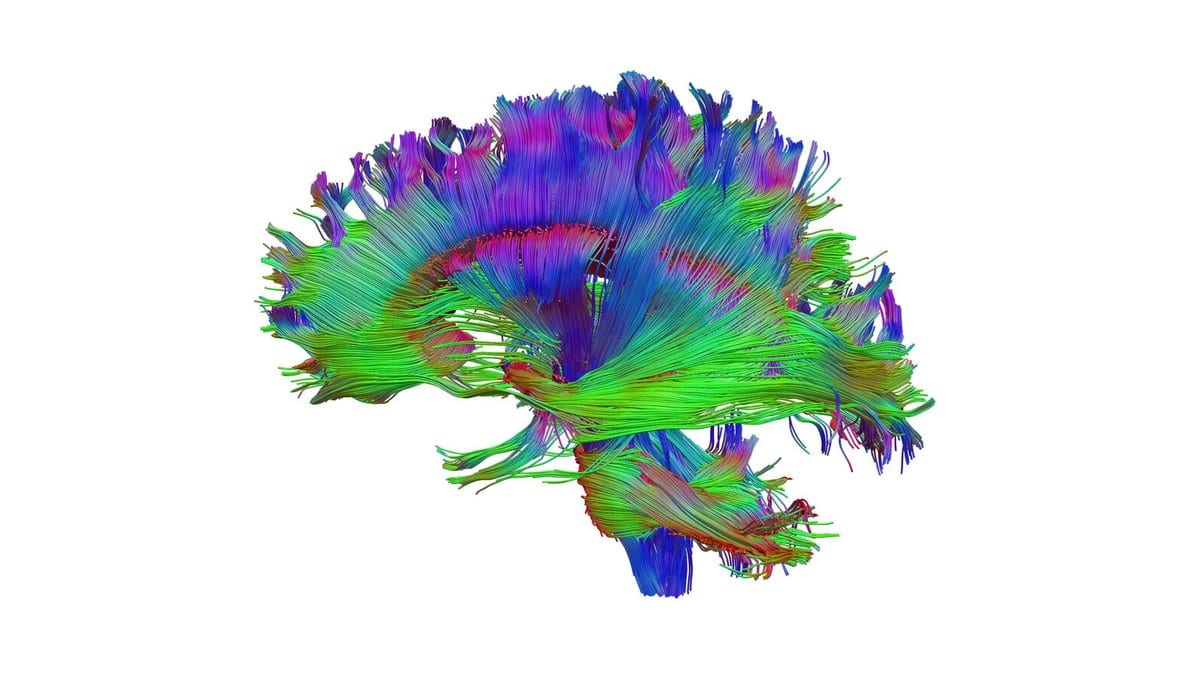
Ask an engineer for a network that computes well, survives the loss of its parts and stays cheap, and the answer is that you will have to choose. The three demands fight one another. Extra connections buy resilience, and every connection takes up room and has to be kept working. Brains are networks under exactly that squeeze. Adrian Dendorfer of the Technical University of Munich and Kayson Fakhar of the University of Cambridge, with colleagues in Cambridge and at the University of Amsterdam, set out to find which compromise real brains settle for. Their route, posted on Oct. 11, 2026, started with 25,000 brains that do not exist.
In the preprint, the authors describe each of those synthetic networks by 29 properties, which turns an argument about design into a map: one point per network, with similar networks sitting near one another. They note that earlier work has mostly weighed two or three competing demands at a time, which can show how a pair trades off but not how many demands are doing the shaping.
The map came out triangular, and in this kind of analysis the shape is the finding rather than a picture of it. A two-way trade-off strings its points out along a line; a three-way one fills a triangle, each corner a design that is excellent at one thing and poor at the rest. The three corners here are computational capability, robustness to damage and metabolic efficiency. In plainer words: getting a lot of processing out of the structure, carrying on when parts are lost, and keeping the wiring cheap. No network in the set manages all three.
Real brains do not spread across that triangle. The authors report that they cluster in one small niche of it, and that the niche is not the cheap corner: biological brains accept a higher metabolic cost in exchange for both robustness and capability. The smallness of the niche is measured against the generated set, so it depends on how widely that set reaches. And no energy was measured anywhere in this work. The animal brains are MRI scans of tissue after death, which carry no record of what a living brain spends. In network studies of the brain, cost is normally counted from the wiring itself: the number of connections and how far they run. That stands in for an energy bill, it is not one.
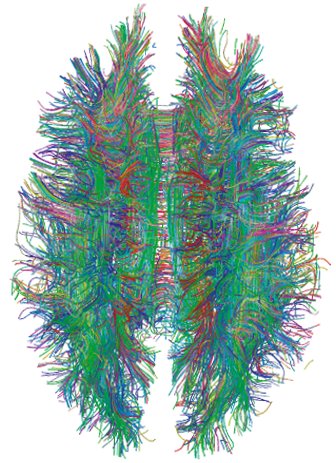
The animal half of the comparison is borrowed rather than new. The preprint lists as its data record a public archive of post-mortem MRI scans of mammalian brains, assembled for a 2020 study in Nature Neuroscience by Yaniv Assaf and colleagues at Tel Aviv University, who found that both connectivity and wiring cost are conserved across the mammalian class. The 224 networks placed in the triangle come from that pool and span 12 taxonomic orders, the big branches of the mammal family tree. Rodents, bats, carnivores, primates and marsupials are all in there. The archive holds repeat scans of some animals, so that is a count of networks rather than of animals.
The human half is where the paper reaches for a direction. Its 635 human networks span the ages 6 to 22, and the authors report that maturation raises capability first and optimizes for efficiency later, with development and evolution moving brains the same way through the space. What that describes is an order rather than a cause. It places brains of different ages in a sequence across the map, and says nothing about what moves one along it.
The paper is a preprint and has not been through peer review. Both halves of what it stands on are open, though: the preprint carries a CC-BY license, and the mammalian scans sit in a public archive, so another group can take the placement of real brains apart with the same material. The claim worth watching is the one the triangle makes about the question itself. Earlier work could ask how two or three demands trade off against one another. This is an answer to a different question, which is how many demands there are to trade off at all.
Sources
- bioRxivPreprint
- Nature Neuroscience