How Shark Skin Saves Airlines Millions of Dollars and Reduces CO2 Emissions

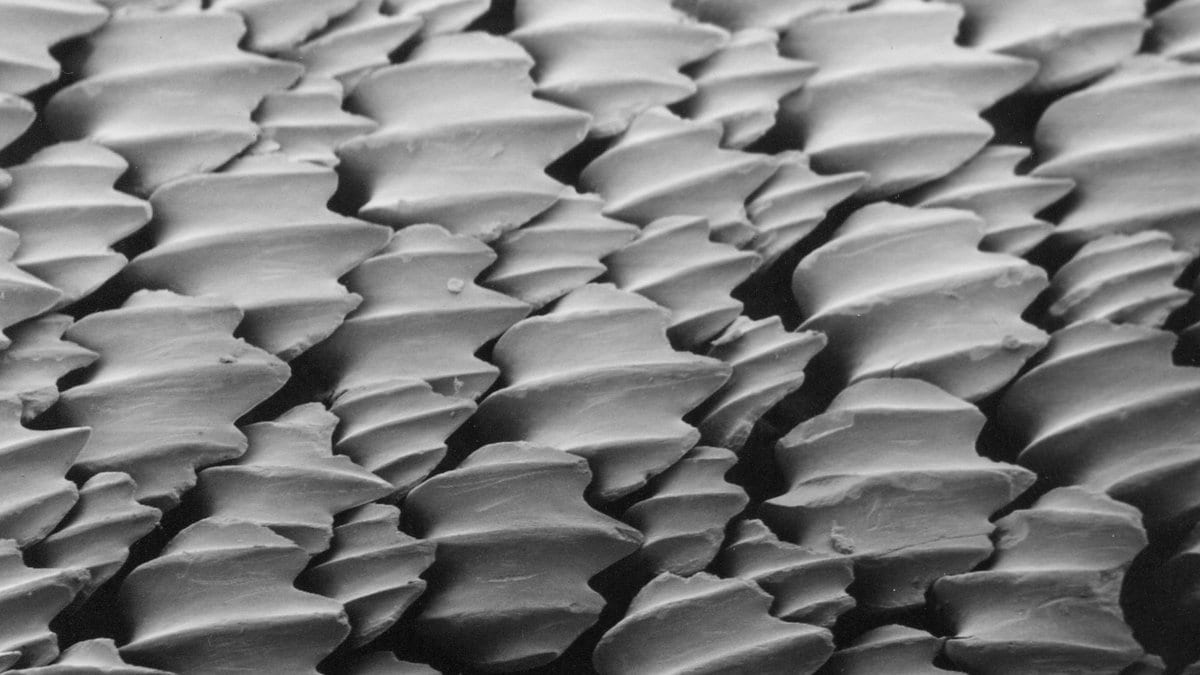
For billions of years, the natural world has acted as a silent engineer. It methodically discarded ineffective solutions and refined the good ones. As a result, these mechanisms became so effective that evolution has preserved them to this day. Every organism that has survived to the present bears the mark of this optimization.
The turbulent “trap”
Imagine this: you’re flying 6 miles above the ground. Outside the window, darkness and −57 °C. The air, clinging to every inch of the fuselage, is silently devouring the fuel. For a single airplane, that amounts to tons of excess jet fuel, and for the global aviation industry as a whole, it amounts to billions of dollars burning up in the air.
A fundamental challenge for aviation is that nearly half of an engine’s power is spent overcoming the viscosity of the surrounding medium. The air flowing over the surface of an aircraft is predominantly turbulent. Surface friction is the dominant drag force: it accounts for up to 50% of the airliner's total aerodynamic drag during cruise flight. This figure prompted scientists to look for ways to “trick” the physics of air at the microscopic level.
The perfect 10%: a NASA laboratory breakthrough
In the late 1970s and early 1980s, Michael Walsh and his team were conducting purely engineering experiments at NASA’s Langley Research Center. At the time, the engineers weren’t even thinking about biology or sharks. They were tackling a purely technical challenge: reducing fuel consumption for aircraft in the wake of the global energy crisis. Scientists tested various micro-grooved skin designs in wind tunnels. Experiments have shown that tiny V-shaped grooves (comparable in depth to a scratch) reduce frictional resistance by 10%. These grooves are called riblets.
The mystery of the silent swimmer
As the research progressed, the scientists received unexpected confirmation from nature. Sharks, recognized as ideal swimmers, proved to be the key source of inspiration.
The fast shark's cruising speed is about 11 mph (5 meters per second), and its burst speed can reach 22 to 45 mph (10 to 20 m/s). 45 mph is the speed limit for cars on urban highways in the U.S. For a dense aquatic environment, that figure is simply staggering. The Reynolds number, a criterion for fluid flow regime, for the fast shark is also quite high (Re of approximately 10⁶ to 10⁷, calculated based on body length).
Such high values indicate that the fast-swimming shark is a true “race car,” surrounded by extreme turbulence.
When a shark swims, a boundary layer of water forms around its body. In this case, the flow may remain laminar, but as the velocity increases, it breaks down into turbulence. The eddies begin to mix chaotically, creating additional resistance for the silent swimmer.
At the microscopic level, the predator's skin is covered with millions of dermal denticles, which limit the transverse movement of vortices near the surface, thereby reducing friction. As a result, less energy is expended to overcome water resistance, and the shark moves faster and more efficiently. In experimental studies using real scales and exact replicas of shark skin, scientists observed a maximum reduction in drag of 7% due to the unique geometry of the denticles.
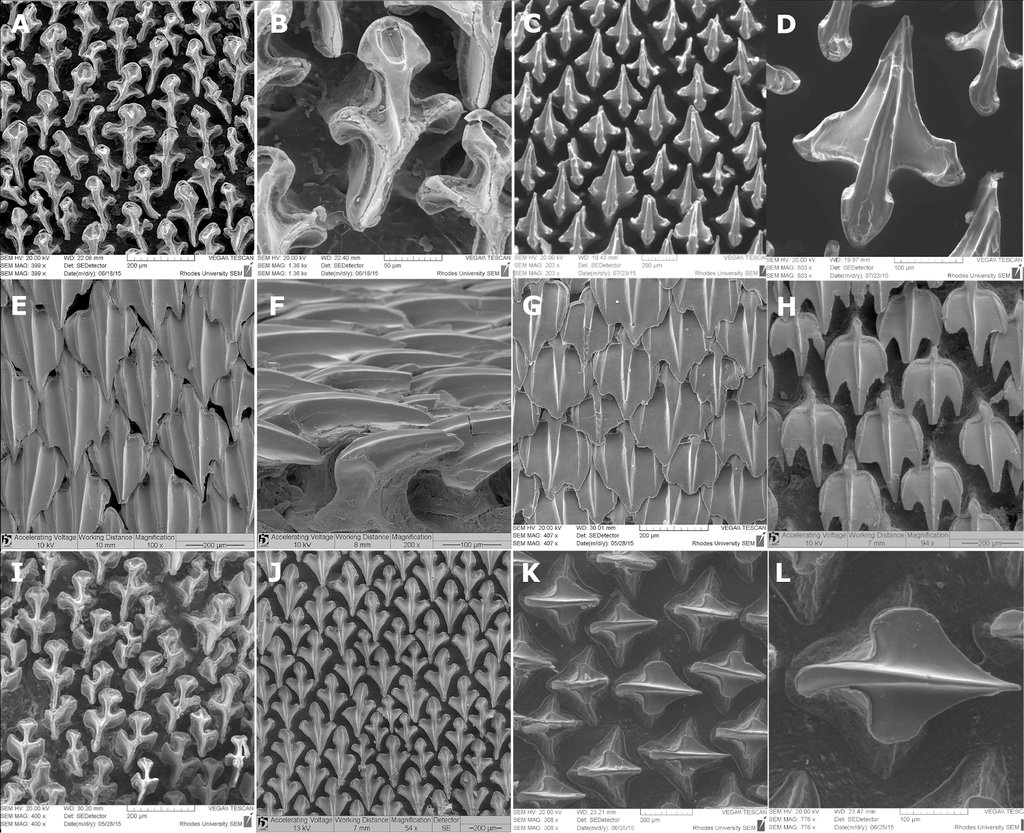
German researchers, biologist W.-E. Reif and hydrodynamics specialist A. Dinkelaker, were the first to establish a fundamental connection between the microstructure of shark scales and the artificial riblets studied at NASA’s Langley Research Center. This synergistic combination of biology and precise aerodynamics has provided the scientific community with a deep understanding of the mechanics of the process and laid the foundation for the targeted development of riblet technologies.
Breaking through the “wall” of unprofitability: how riblets conquered the real sky
By the mid-1980s, riblet technology had begun to shift from laboratory research to practical testing on vehicles of various types, from racing yachts to airplanes and ships. One of the most famous early uses of riblets was on the yacht Stars & Stripes, which won the 1987 America's Cup.
At the same time, the civil aviation sector also continued its testing. However, after the first successful tests of film-based riblets on an Airbus aircraft, the technology “hit a wall”: the films wore out too quickly and needed to be replaced every two to three years, which was uneconomical in the commercial aviation sector. The next two decades were a time of in-depth study of the mechanics of the process and the search for suitable materials.
The breakthrough came in 2000. Engineers at the German Fraunhofer IFAM Institute developed a fundamentally new approach to application: the micro-relief no longer had to be applied separately; it was integrated directly into the paint coating. And by 2011, the technology was ready for real-world conditions: the painted riblets underwent their first long-term flight tests on an Airbus A300-600ST Beluga cargo aircraft.
During this period, riblets also proved effective in fields outside of aviation.
By 2010, they were helping to optimize the efficiency of wind turbines, as well as shave off fractions of a second on Formula 1 race cars and Olympic bobsleds.
However, widespread commercial adoption in civil aviation demanded a solution optimized for seamless installation and maintenance. The result was a fundamentally new film coating, capable of withstanding extreme loads, developed at the intersection of aerospace and chemical technologies.
This approach was put into practice with the innovative AeroSHARK film developed by Lufthansa Technik and BASF; 500 square meters of this film was applied to a Boeing 747-400 for the first time in 2019. Thousands of flight hours confirmed a reduction in drag to 0.8%. This became the first successful commercial concept, which subsequently received a supplemental type certificate (STC) from EASA.
And in 2022, nearly 40 years after Walsh's first experiments at NASA Langley, SWISS launched its first regular passenger flights featuring a riblet coating. Thus, engineering ingenuity and millions of years of predator evolution converged at a single point, transforming laboratory blueprints into real aviation technology.
It’s only natural that the process takes so long; the aviation industry doesn’t tolerate haste. Before being used on a passenger liner, the coating had to prove that it could withstand conditions that sharks in the ocean never encounter. These include extreme cold (down to −60 °C at cruising altitude), sudden changes in pressure, intense ultraviolet radiation, constant vibrations and harsh chemicals used during industrial cleaning. It took years of fundamental research, meticulous refinement of the technology, and rigorous testing of the coating itself to ensure its durability.
One percent that's worth billions
Riblet technology solves one of the most costly challenges in aviation. Given that, at cruising speeds, surface friction accounts for about half of all aerodynamic drag, even a minimal reduction in friction translates into millions of liters of jet fuel saved and a significant reduction in the carbon footprint. AeroSHARK film reduces the total drag coefficient by 0.5% to 1%.
At first glance, the numbers may seem small, but on an industry-wide scale, they are enormous: for example, by April 2026, aircraft equipped with AeroSHARK had logged more than 350,000 flight hours, reducing CO2 emissions by more than 65,000 metric tons and saving over 20,600 metric tons of fuel. For major airlines, this “one percent” translates into millions of dollars in actual net savings.
The future of shark skin in aviation
Scientists at the Japan Aerospace Exploration Agency (JAXA) are already working on a new generation of riblets. This design more closely resembles the structure of real shark skin. The agency estimates this geometry can reduce drag by as much as 6% to 6.5% at once.
But durability remains the main practical challenge. The coating must last for years under extreme conditions. Resolving this engineering challenge will redefine the trajectory of aviation, dictating whether riblets attain global standardization or remain confined to a niche market.
Millions of years of experience
Evolution does not design organisms to achieve a predetermined goal; it selects for the traits that provide a survival advantage.This process results in surprisingly effective designs that continue to inspire scientists to this day. Engineers at NASA Langley discovered the riblet effect before biologists had explained its nature. But it was shark skin that provided researchers with a ready-made model that nature had refined over the 450 million years of these predators’ existence.