Skip to content
See the World Through ScienceA project of ALLATRA

NASA Gives Its Ultraviolet Sky Telescope a Launch Date and a Budget
Space

Republish this story

Our work is licensed under Creative Commons BY-NC 4.0. You may republish this piece for free — with credit to ALLATRA Media and a link to the original, unedited beyond length trims, and not for commercial use.

Read the full license

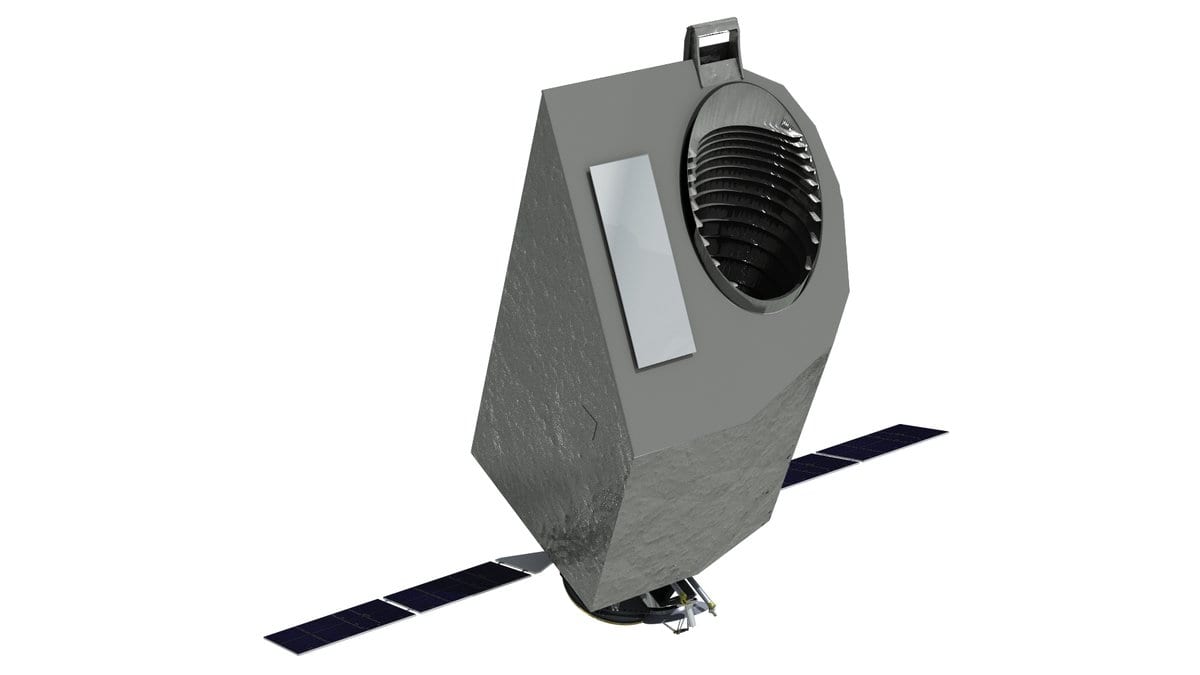
Gray computer rendering of the boxy UVEX spacecraft, with a cylindrical telescope baffle on top and two solar panels extending from its sides.
NASA's rendering of the UVEX spacecraft, which is still in development and has not been built (concept). The agency confirmed the mission Oct. 27, 2026, and committed to a launch by January 2031."New view UVEX3" (no author stated), via Wikimedia Commons, Public domain

NASA has committed to launching its UVEX space telescope by January 2031 and to a total cost of $590 million over the mission's life. The agency said Oct. 27, 2026, that officials confirmed the mission after it completed a technical and programmatic review known as Key Decision Point C. Both commitments follow from the project's passing that review.

NASA says UVEX, short for UltraViolet EXplorer, is designed to survey ultraviolet light across the entire sky and will offer new insight into how galaxies and stars evolve. The agency says the telescope will also be able to point quickly at sources of ultraviolet light, catching the explosions that follow a burst of gravitational waves. Those gravitational waves are the ripples in space thrown off when two neutron stars merge.
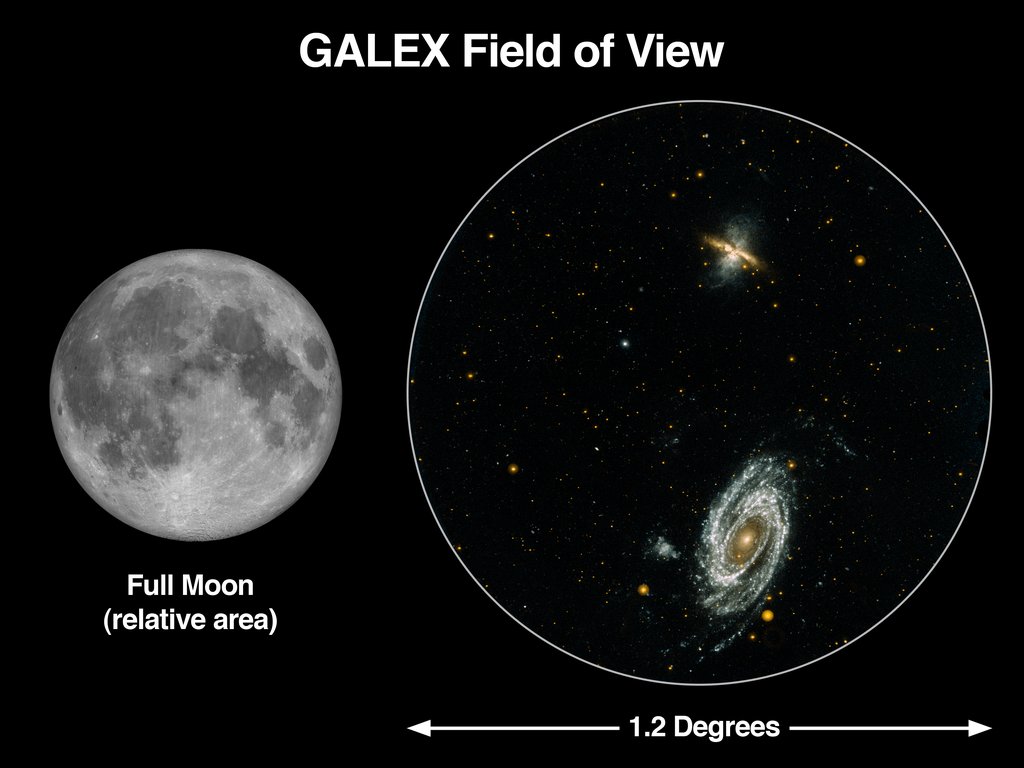
Diagram comparing a gray image of the full moon with a circular patch of sky containing two galaxies, marked as 1.2 degrees wide.
How much sky NASA's GALEX telescope took in at once, set beside the full moon for scale. A survey mission covers the whole sky in many such pointings (illustrative). "GALEX Field of View" by NASA/JPL-Caltech, via Wikimedia Commons, Public domain

NASA selected UVEX for development in 2024 as a Medium-Class Explorer mission. The agency says the all-sky survey will work alongside other wide surveys, including its Nancy Grace Roman Space Telescope, to build a map of the universe that spans different wavelengths of light.

The mission's principal investigator is Fiona Harrison at Caltech in Pasadena, California. NASA lists the University of California at Berkeley, its Jet Propulsion Laboratory, Northrop Grumman and the Space Dynamics Laboratory among the other institutions involved in UVEX.

Sources

Spot an error?

Spot an error?

Report an error

Spotted a mistake on this page? Tell us what's wrong and our editors will take a look.

What kind of problem?

Only if you'd like us to be able to follow up. We won't use it for anything else.

We correct mistakes openly. Select any text to flag it. Fixes are logged under our Corrections Policy.

Report an error

Reporting on

NASA Gives Its Ultraviolet Sky Telescope a Launch Date and a Budget

What kind of problem?

Only if you'd like us to be able to follow up. We won't use it for anything else.

We read every report. Corrections are logged publicly.