Eaton Fire Smoke Carried More Than 50 Times the Lead of Wildfire Smoke
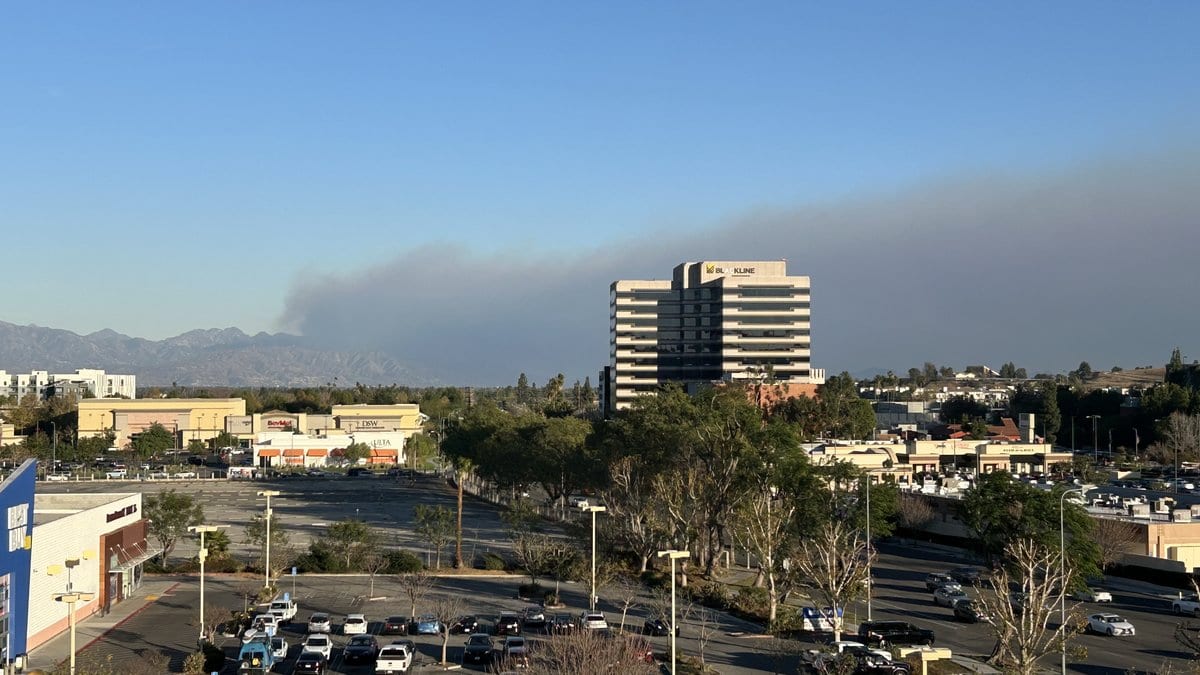
Researchers led from the California Institute of Technology measured trace metals in real time inside the smoke plume of the January 2025 Eaton firestorm. They report that the plume carried more than 50 times as much lead as wildfire smoke.
During the peak of structural burning, the authors estimate that about 7 million residents, in a range of 4.3 million to 8.0 million, were exposed to daily average lead levels over 80 times background. That number is a modeled estimate with a stated range, not a count of people whose exposure was measured. Smoke from fires burning into cities is an emerging class of air pollution, distinct from the wildland smoke that decades of air quality research has addressed, calling for revised exposure frameworks and emergency response protocols. Their paper appeared Oct. 28, 2026, in Science Advances.
The team reports that the urban plume was also enriched 7-fold in halogens and 3-fold in arsenic against a wildfire baseline, a mixture it links to burning vehicles, electronics and building materials rather than to vegetation. The plume changed quickly as the fire moved from houses into wildland, and the authors tracked that change hour by hour using the ratio of potassium to lead in the air they sampled.
The first author is Haroula D. Baliaka of Caltech, and the last author is Nga L. Ng, also at Caltech; co-authors work at UC Davis, UC Riverside, Georgia Tech, Colorado State University and the Jet Propulsion Laboratory. The paper lists the National Science Foundation, the Jet Propulsion Laboratory, Caltech's Resnick Sustainability Institute and the Onassis Foundation as funders.
Sources
- Science AdvancesPeer-reviewed