Climate Change Raised Storm Boris's Floods Much More Than Its Rain
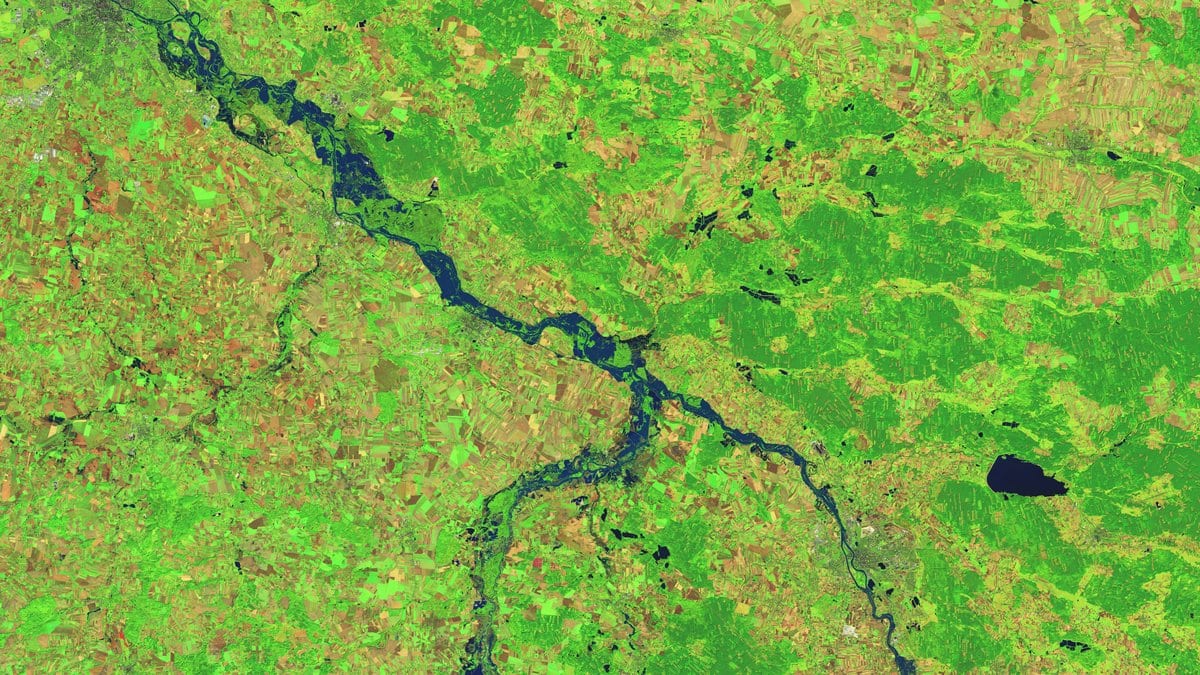
Human-caused climate change raised the flood peaks produced by Storm Boris much more than it raised the storm's rainfall, according to a modeling study published Oct. 28, 2026, in Science Advances. The storm flooded parts of central Europe in September 2024.
The authors conclude that attributing the rainfall alone would substantially underestimate how much climate change amplified the flood hazard, an effect they say should inform future risk assessments and loss estimates.
In the paper, Peter Miersch of the Helmholtz Centre for Environmental Research (UFZ) and TUD Dresden University of Technology, and colleagues, re-ran the same storm in a simulated world without human-caused warming. They report that the rain would have been 6 to 9% lower in that world, while the flood peaks would have been 14 to 22% lower on average. That is an amplification of the peaks by a factor of 2.1 to 2.9 relative to the change in rainfall. Those are model estimates of a storm that did not happen, not measurements.
The estimates rest on simulations in which two climate models were each coupled to two hydrological models and run across hundreds of the river catchments (the areas of land that drain into a river) that the storm affected. The authors call the method a storyline approach: rather than asking how likely a storm like Boris has become, it asks how this particular storm would have unfolded in a world without warming.
Jakob Zscheischler of the UFZ and TUD Dresden is the study's senior author. A public data release for the work is available on Zenodo.
Sources
- Science AdvancesPeer-reviewed