Comet Dust From Antarctica Holds Three Kinds of Organic Matter, One Rarely Seen
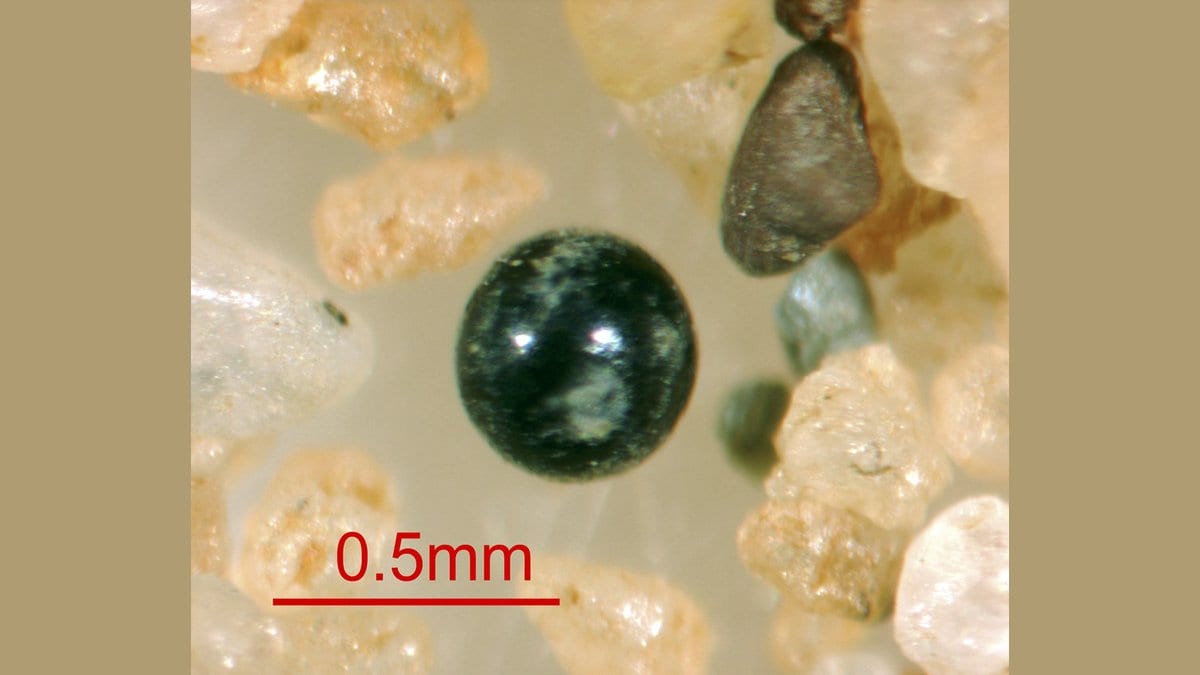
A ten-author team posted a laboratory analysis on Aug. 26 reporting three distinct phases of organic matter inside Antarctic micrometeorites of probable cometary origin, one of them nitrogen-rich and with few known counterparts in other extraterrestrial material.
The grains come from the Concordia micrometeorite collection, and the paper describes them as ultracarbonaceous Antarctic micrometeorites, or UCAMMs. B. Guérin and nine co-authors cut eight sections from them with a focused ion beam, then examined each section by scanning transmission X-ray microscopy and transmission electron microscopy.
Two of the three organic phases share spectral features with the insoluble organic matter of carbonaceous chondrites and with the cometary grains returned by the Stardust mission. The third is nitrogen-rich, with atomic nitrogen-to-carbon ratios of up to 0.22; the paper names cometary particles collected by Stardust, interplanetary dust particles and UCAMMs from the Dome Fuji Station as the only comparable material analyzed so far.
The nitrogen-rich phase could have formed by irradiation of nitrogen-rich ices in the outer regions of the protoplanetary disk, the flattened cloud of gas and dust the planets grew from.
One mineral in the set showed a phyllosilicate texture, the layered structure typical of clays, which form where water has reacted with rock. That observation raises the question of whether aqueous alteration occurs on comets.
The rest of the mineralogy is mainly consistent with previous UCAMM analyses: crystalline magnesium-rich silicates, iron-nickel sulfides and iron oxides, sometimes cemented in a silicon-rich groundmass, plus glassy phases the authors say resemble GEMS, a grain type known from interplanetary dust. The team reads that mix as implying large-scale radial mixing in the early solar system, carrying mineral grains outward to the disk's outer parts.
The work is a preprint and has not been peer-reviewed.
Sources
- arXivPreprint