Collapsing Ground Sends More Soil Into Tibetan Rivers Than Greener Slopes Hold Back
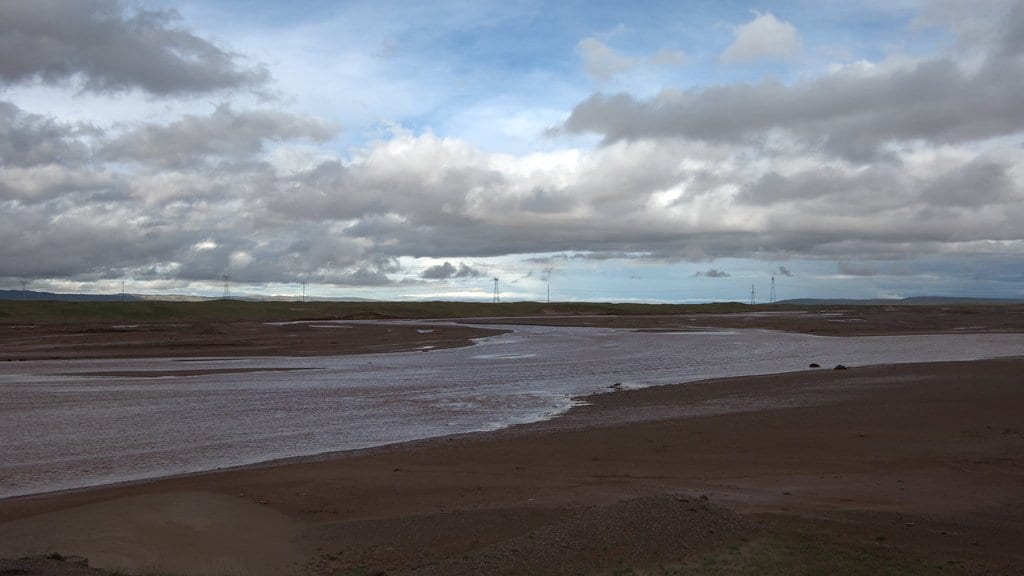
Permafrost thaw is putting more sediment into rivers on the Tibetan Plateau than greener hillsides are keeping out of them, by a factor of more than four. Jiapei Ma of the Institute of Mountain Hazards and Environment at the Chinese Academy of Sciences, Shouqin Sun of Sichuan University and colleagues report the comparison for the years 2000 to 2022, published Oct. 16, 2026, in Communications Earth & Environment.
The two processes pull against each other. Warming has lengthened growing seasons and greened the plateau's slopes, where roots hold soil in place. It has also triggered thaw slumps, where a hillside gives way as the ice buried in it melts and spills loose material into the nearest stream. The authors say that measuring the two together explains why rivers there have been carrying more sediment even as the land turned greener, and gives other ice-rich permafrost basins a way to tell when the same switch has happened.
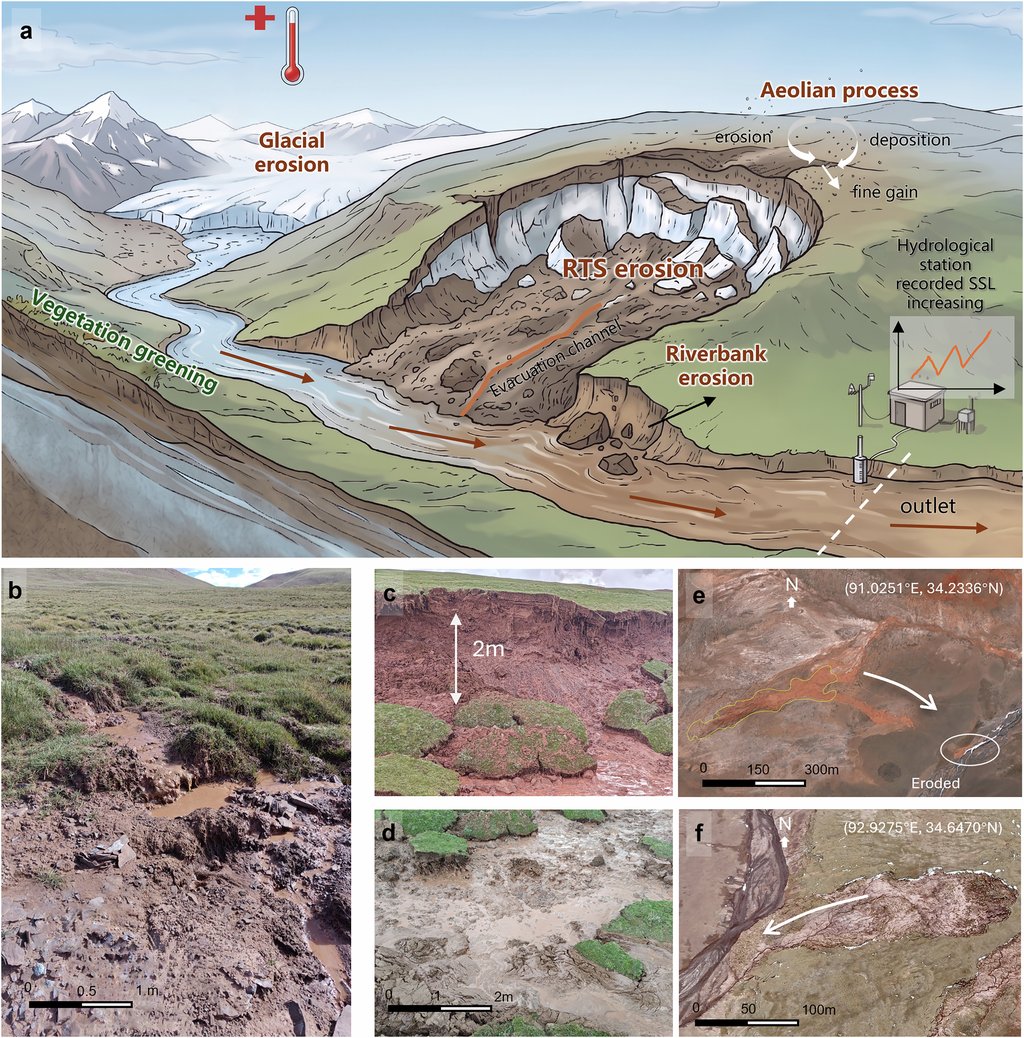
Working in the source region of the Yangtze River, the team combined satellite image series, repeat high-resolution elevation surveys and a cold-region erosion model. They report that slumped ground erodes hundreds to thousands of times faster than undisturbed hillslopes, and that most of the material a slump releases reaches a channel rather than settling at the foot of the scar.
Slumps cover less than 0.1% of the basin, so that imbalance comes from very little ground. Across permafrost regions generally, the paper sets an upper bound of about 0.12% slump coverage, above which slump sediment exceeds the reduction from greening.
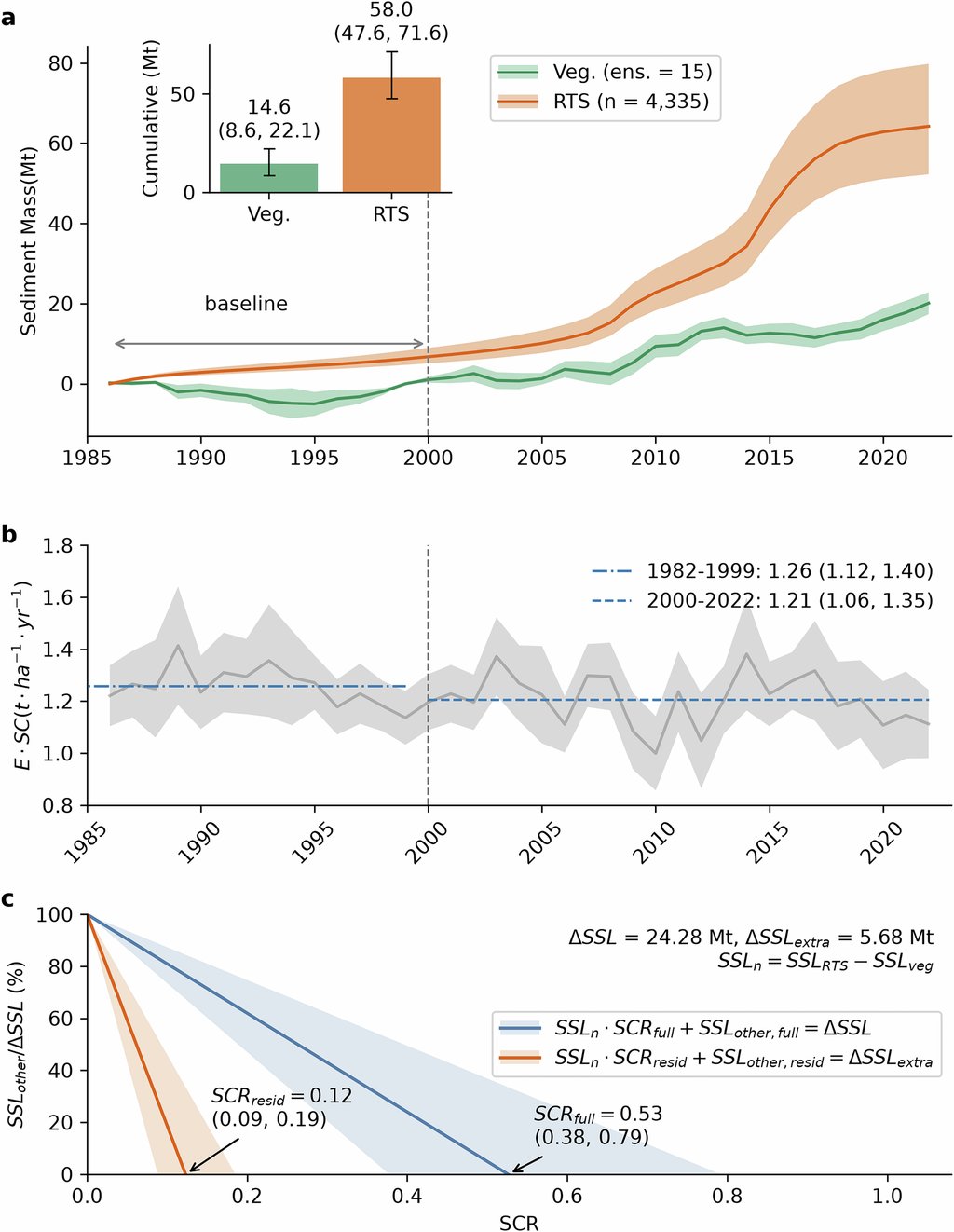
The sediment the slumps release also made up for sediment that the region's retreating glaciers no longer supply, the authors report. They say more of it moving downstream could speed the silting of reservoirs, raise the murkiness of the water and wear at dams and other water structures.
Sources
- Communications Earth & EnvironmentPeer-reviewed