Euclid Photographed the Spot Before the Supernova, and No Bright Star Was There
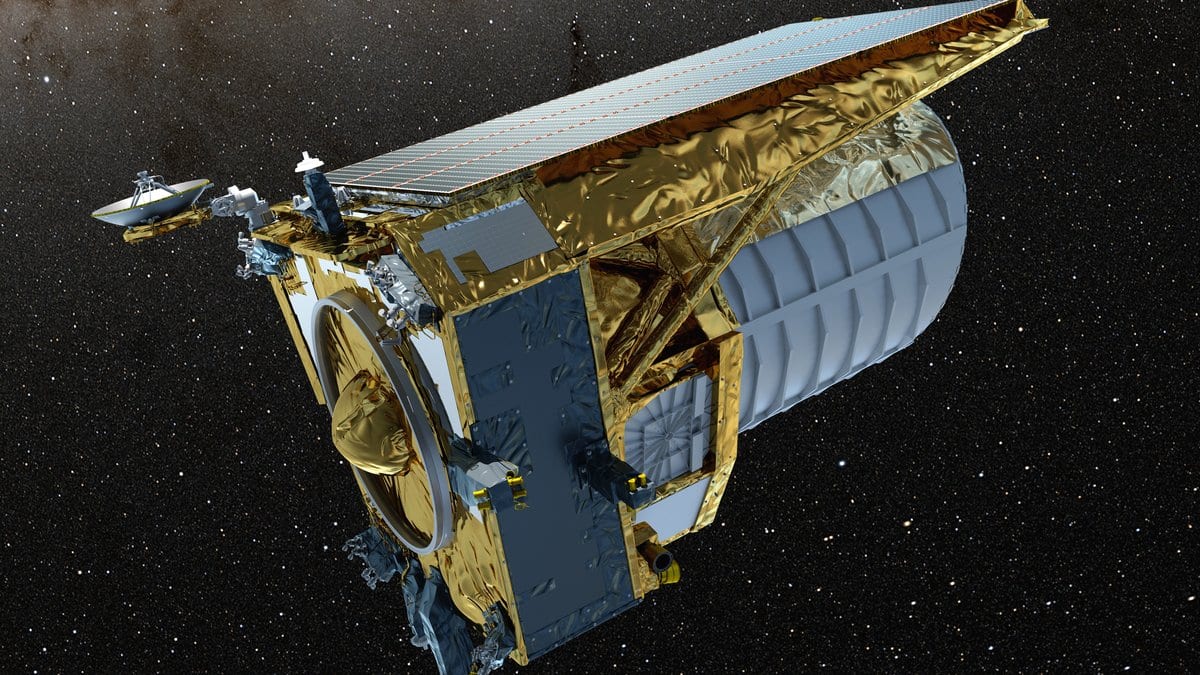
Erez A. Zimmerman of the Weizmann Institute of Science and colleagues report that a deep image taken before the explosion by the European Space Agency's Euclid telescope shows no bright star at the position of supernova SN 2024vjm, and that the system that produced it must be fainter than any progenitor candidate identified for an explosion of this kind.
The study, published Nov. 26, 2026, in Nature Astronomy, bears on what kind of star explodes as a Type Iax supernova. Ordinary Type Ia supernovae are uniform enough to be used as cosmological distance markers, which the authors attribute to a single origin: the thermonuclear explosion of a white dwarf, a burnt-out stellar core. The Iax subclass breaks that uniformity, being less energetic and more varied, which the authors say raises questions about where these explosions come from.
The Euclid picture is archival rather than a new observation of the supernova — the telescope had already recorded that patch of sky in its early-release observations, before the star blew up. For the bright Iax supernova SN 2012Z, a luminous blue star was found in images taken before that explosion, matching models in which a white dwarf burns without being fully destroyed. The authors write that those models fail to explain the faintest Iax events, which has pointed to a different kind of progenitor for them. They describe SN 2024vjm as "possibly the faintest supernova observed to date," and report that their limits also argue strongly against a massive star as the source.
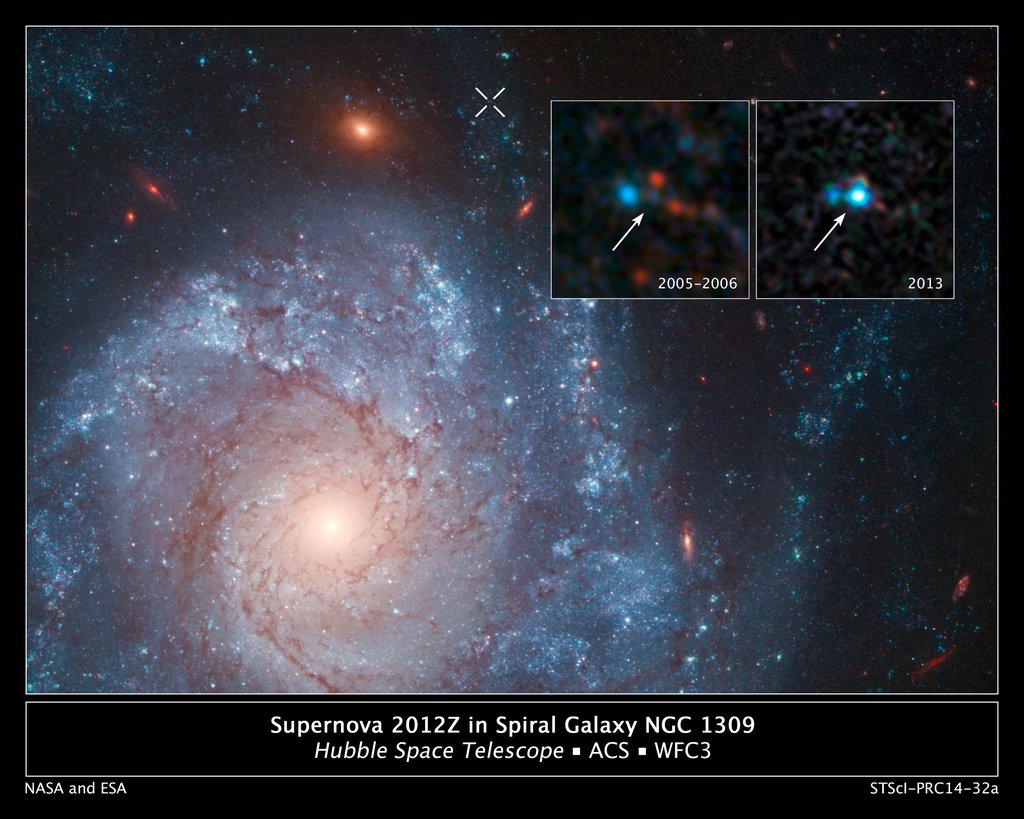
The team further reports that the supernova's slowly expanding debris stays denser than in bright Iax explosions, and suggests this makes faint Iax supernovae fade more slowly than bright ones. That is the reverse of the Phillips relation, under which brighter Type Ia supernovae dim more gradually than fainter ones.
Besides the Euclid image, the paper lists observations from JWST and the European Southern Observatory's Very Large Telescope among its data, and makes its photometry and spectra public through the WISeREP archive, with the analysis code on GitHub.
Sources
- Nature AstronomyPeer-reviewed