Europe's Sentinel-1 Radar Satellites Are Also Catching Space Debris
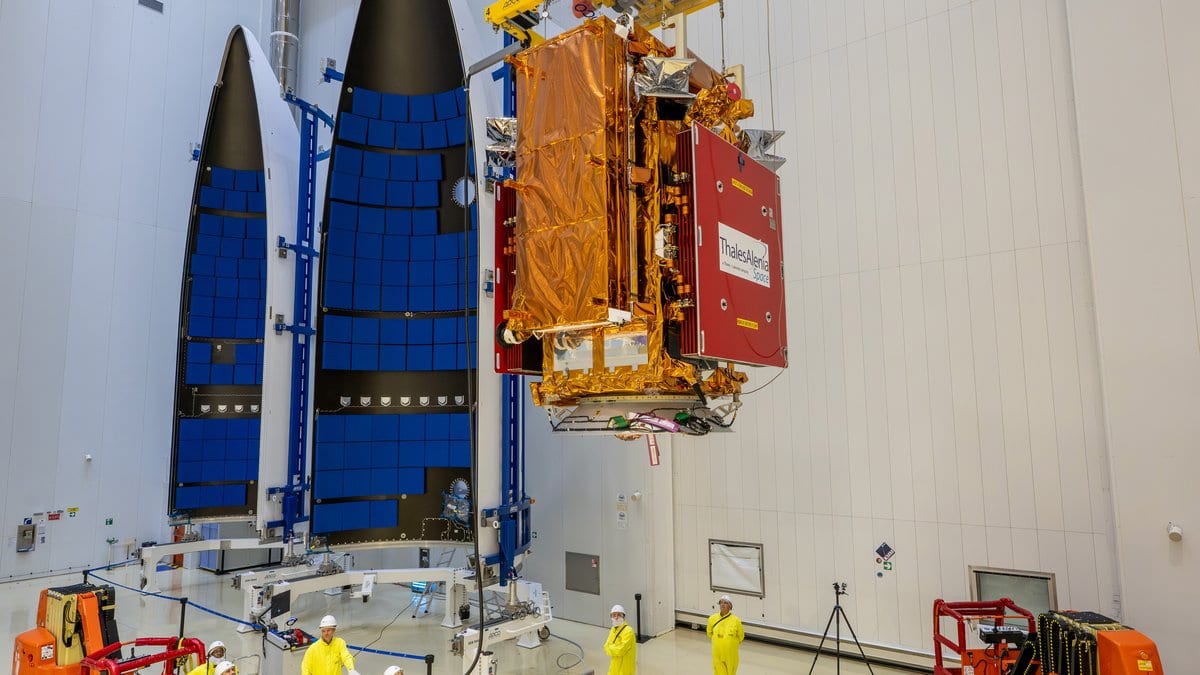
A research group has found echoes of satellites, rocket bodies and debris fragments in radar data that Europe's Sentinel-1 satellites recorded for ordinary Earth imaging. Reprocessing openly available Sentinel-1 radar recordings from six days in late October and early November, Juha Vierinen of UiT The Arctic University of Norway and colleagues found 76 objects from the public satellite catalog, at distances of 41.7 to 492.9 kilometers, and checked them by hand.
The authors write that fragments a few millimeters to a few centimeters across can damage a spacecraft while being too small to track individually, and that how much of this debris is in orbit is still hard to measure. A radar already in orbit passes far closer to it than one on the ground, and a closer object returns a much stronger echo.
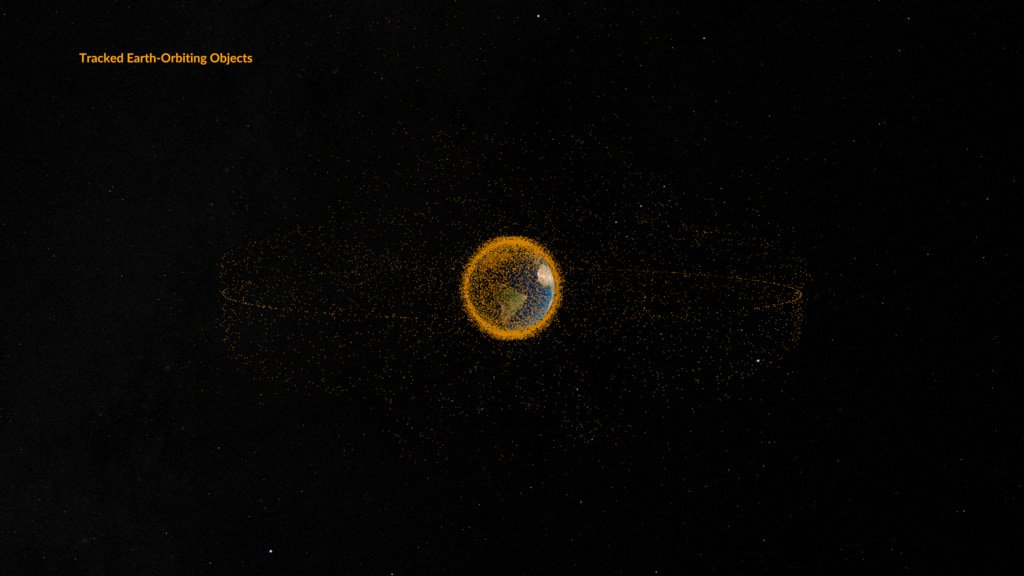
Most detections used catalog orbit predictions to know where to look. Two blind searches, run over the same recordings without those predictions, each recovered one debris pass. The work is a preprint, posted Nov. 9, 2026, which the authors say they submitted to the journal Acta Astronautica. It has not been peer reviewed.
The authors report that the ground below is the main obstacle: reflections from it lift the background, and in one of the two blind searches they produced hundreds of spurious peaks per second.
The paper also asks how small an object such radars could register. Comparing receiver noise alone, the authors predict a detectable metal sphere about 3.4 millimeters across for Sentinel-1, and about 0.6 millimeters for the European Space Agency's EarthCARE, at a range of 10 kilometers. Those are modeled limits under the assumptions they state, and nothing that small was detected in this work.
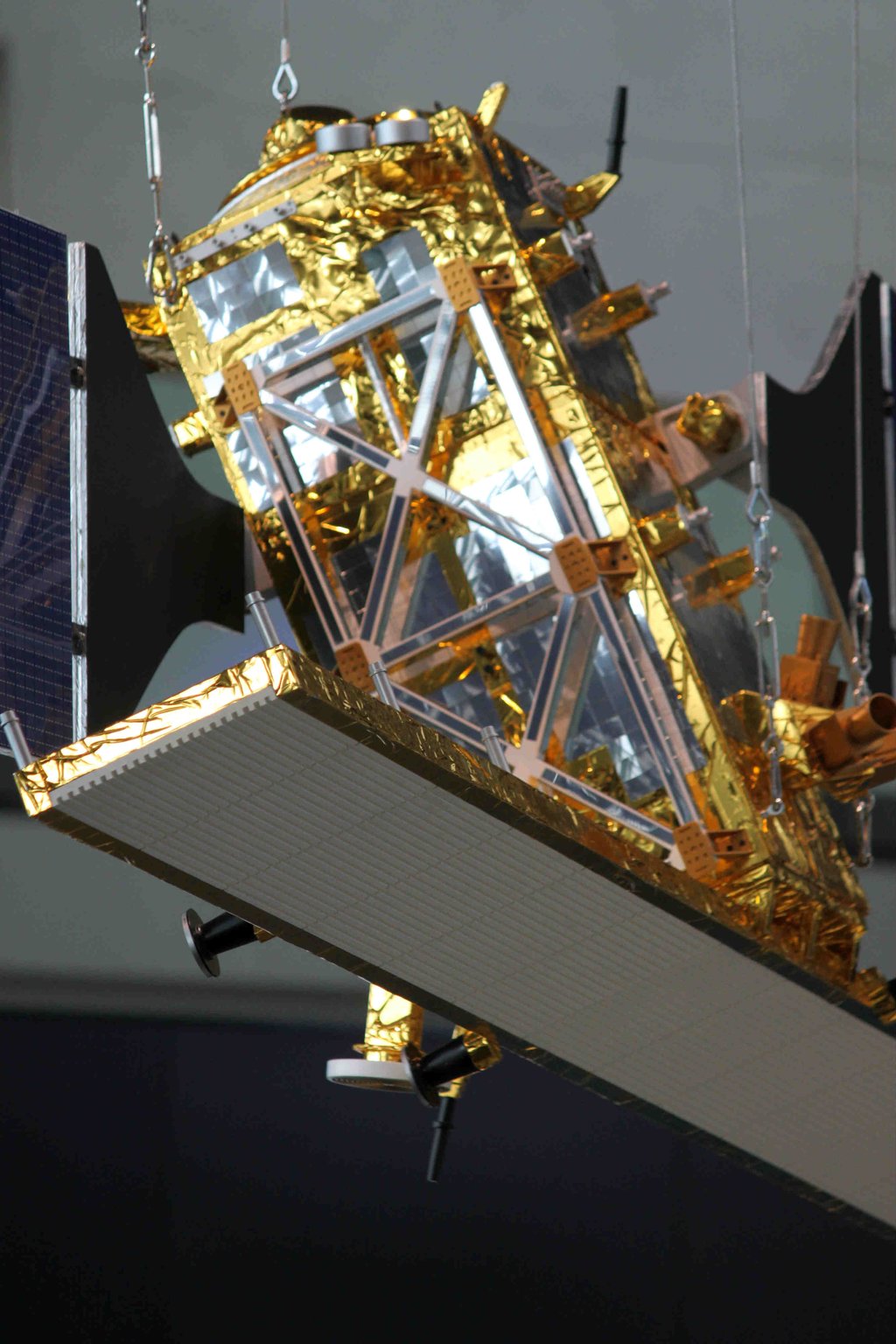
A Sentinel-1A solar array was struck in 2016 and lost part of its power for good. The published investigation the authors cite named a man-made fragment about one centimeter long as the most likely impactor.
The recordings used are public Copernicus Sentinel-1 products. The authors say their software and reduced data will stay in a private repository until the manuscript is published.
Sources
- arXivPreprint