Twenty Flashes on the Moon Measure a Meteor Stream Unchanged in Seven Years
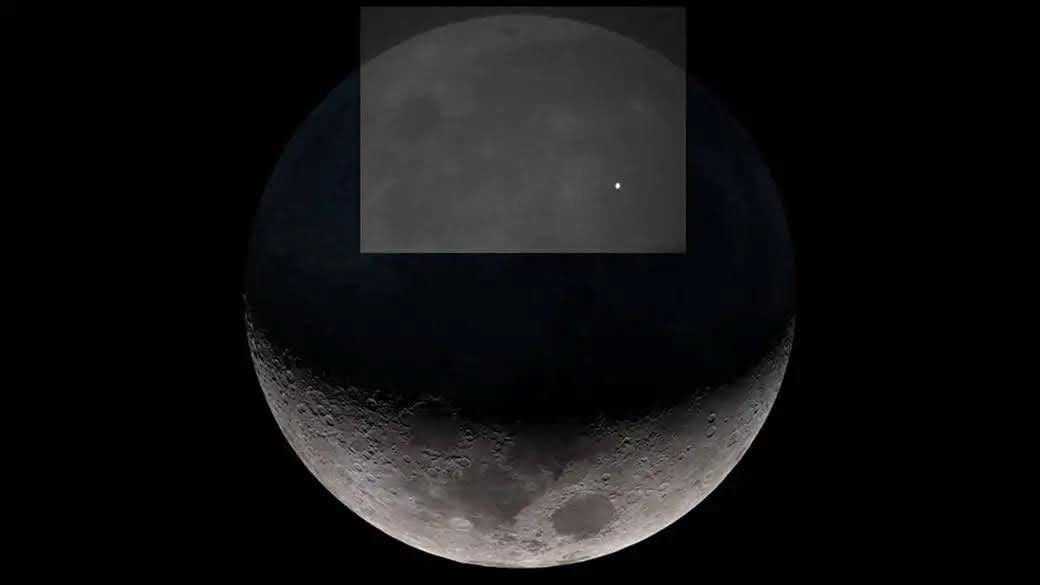
A team at Nihon University has counted 20 impact flashes on the night side of the Moon during two Geminid meteor showers seven years apart, and reports that the stream delivered centimeter-sized grains at the same rate both times. The work is a preprint posted Nov. 23, 2026, and no journal has accepted it.
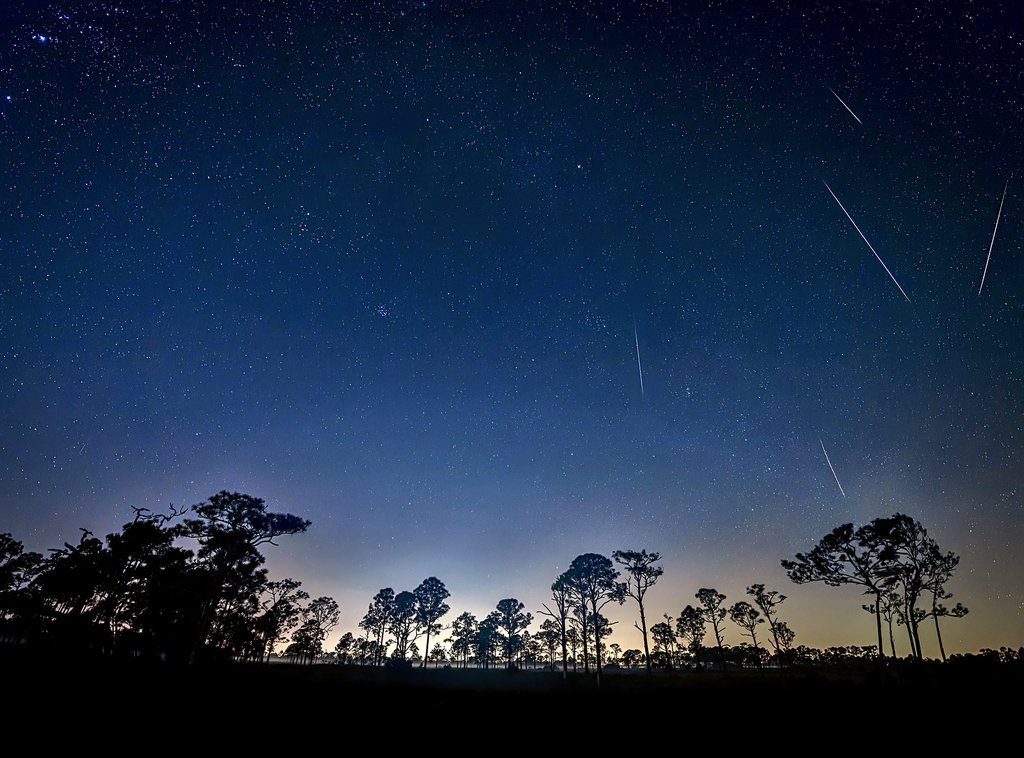
The authors write that meteoroids this size are the poorly measured part of the meteoroid population, and that watching them strike the Moon is the only ground-based method that reaches that size. The paper puts the collecting area of a telescope aimed at the Moon's unlit half at roughly 100 times that of a single fireball camera.
Both campaigns used the university's 0.40 m GUNDAM telescope at Funabashi, near Tokyo. Eleven flashes appeared in 3.3 hours of recording on Dec. 15, 2018, and nine in 2.2 hours on Dec. 14, 2025. Each was recorded at the same moment by at least one other station, which ruled out satellite glints and electronic noise.
The two campaigns give impact rates of 4.2 × 10⁻⁷ and 5.2 × 10⁻⁷ flashes per square kilometer per hour. The authors call those values mutually consistent and read them as a stable density of centimeter-sized Geminids in the stream across the two runs.
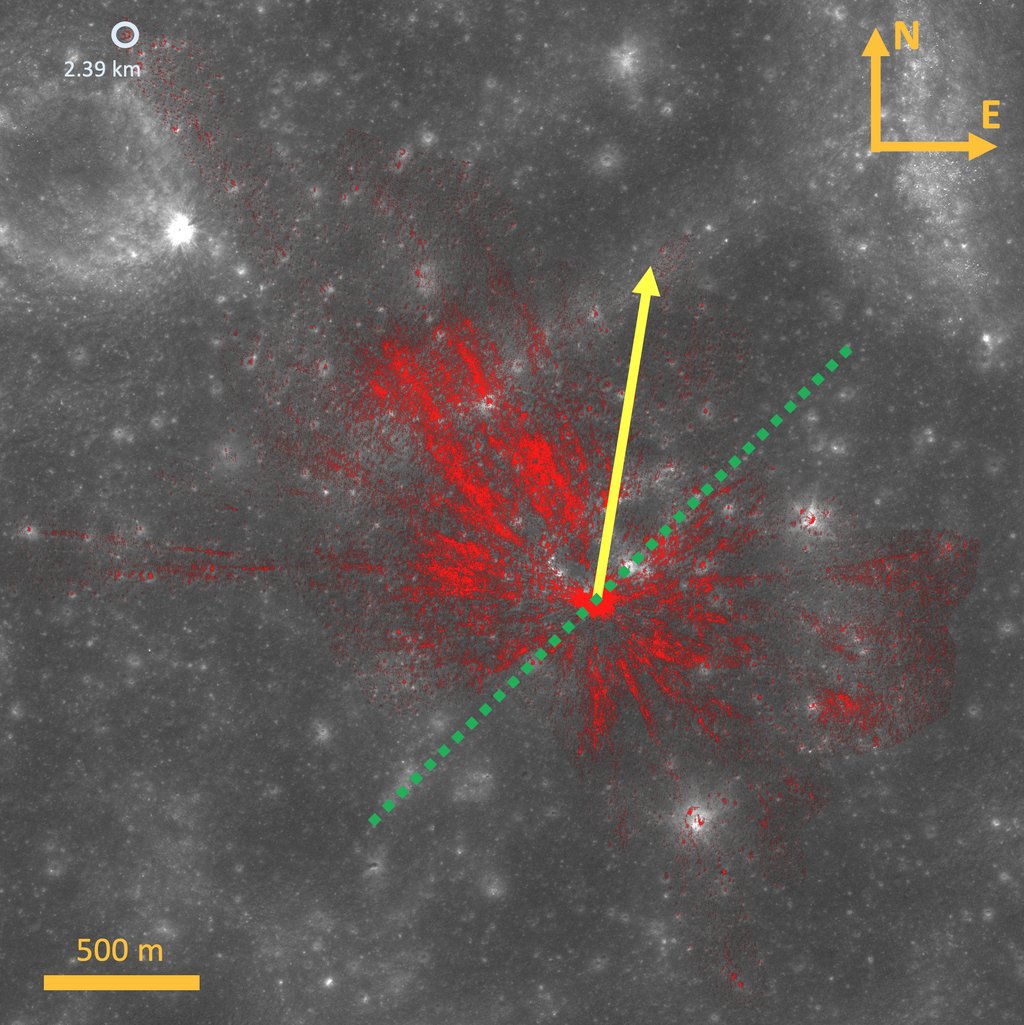
For the brightness-to-mass conversion the team adopts, the impactors were 1.8 to 5.9 centimeters across and should have left craters 2 to 5 meters wide in the lunar soil — none of which has been found. The paper's proposed next step is to look for one in repeat imaging from NASA's Lunar Reconnaissance Orbiter, which would pin down how much of an impact's energy turns into light at a known speed.
Across the 20 flashes the size distribution is shallower than the mix of every flash logged by the ESA-supported NELIOTA survey: relatively more large grains than in the background population hitting the Moon. The authors read that as an excess of big particles shed by Phaethon, the asteroid that supplies the Geminids. The video clips, light curves and analysis scripts are in a public Zenodo deposit.
Sources
- arXivPreprint