Peptides Survive for Weeks in an Acid That Dissolves Metals
MIT researchers report that three short peptides stayed intact for weeks in a solution of about 98 percent sulfuric acid and folded into a defined three-dimensional shape instead of breaking down. The university announced the result on Aug. 31 and says the paper appears this week in the Proceedings of the National Academy of Sciences.
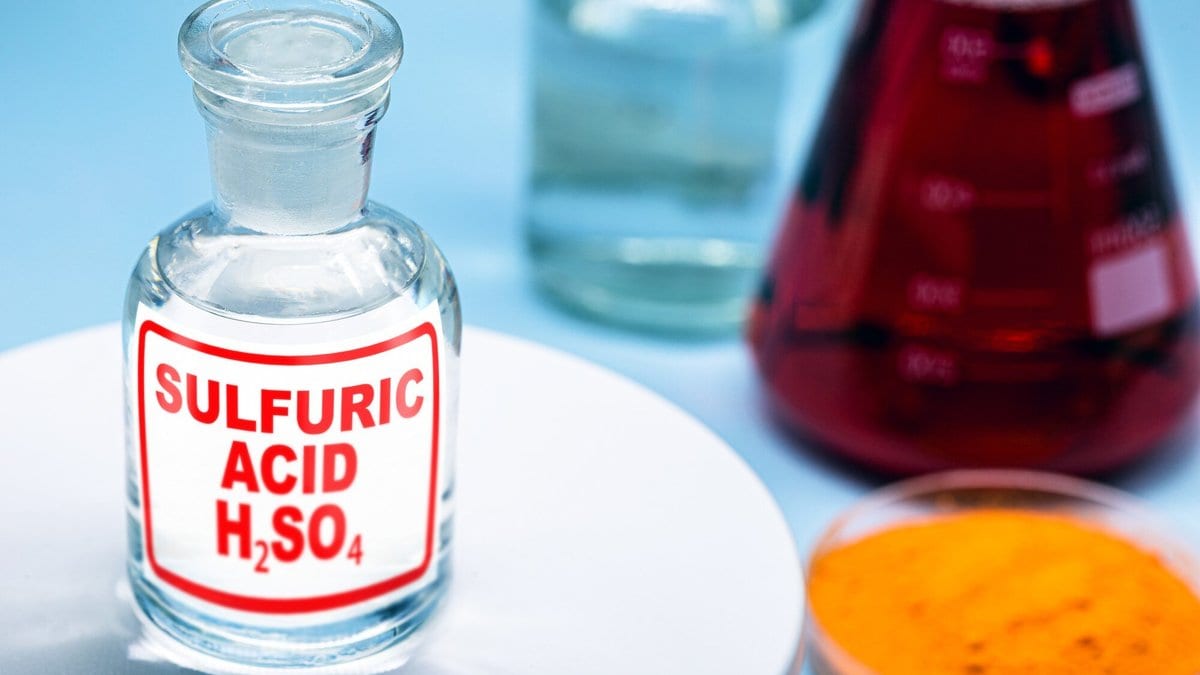
The team ran nuclear magnetic resonance spectroscopy, which measures the magnetic properties of atomic nuclei, on solutions of nearly pure sulfuric acid. The peptides remained stable for many weeks. The researchers attribute that to the scarcity of water in such solutions: at 98 percent acid, there are very few water molecules, so hydrolysis, the reaction that breaks peptide bonds in acid, cannot happen.
One of the three, a synthetic seven-amino-acid peptide called HHQ, forms flat sheets in water that go on to form long fibrils. In concentrated sulfuric acid it instead took the shape of a loop resembling the Greek letter omega. A longer variant, HHQ13, and an unrelated seven-amino-acid peptide, K7, formed omega loops as well. The researchers believe sulfuric acid molecules act as a scaffold, sliding into the center of each loop and holding it there.
Venus's cloud layer, which MIT places 30 to 40 miles above the surface, is made of droplets that are about 98 percent sulfuric acid, a solvent that dissolves metals and destroys most biological molecules on Earth. Senior author Sara Seager says the findings "definitely open up a whole range of possibilities." Adriaan Bax of the National Institute of Diabetes and Digestive and Kidney Diseases, who was not involved, says the retained order "raises the prospect that folded oligopeptide/protein structures can exist in such environments."
Seager's lab began a series of studies in 2020 that found nucleic acids, lipids and amino acids also remain intact in the same conditions. The group says it now plans to study double-stranded peptide nucleic acid and longer peptides. MIT lists the Alfred P. Sloan Foundation, the NOMIS Foundation and the National Institutes of Health as funders.