Astronomers Take the First Direct Measure of a World That Shares Neptune's Orbit
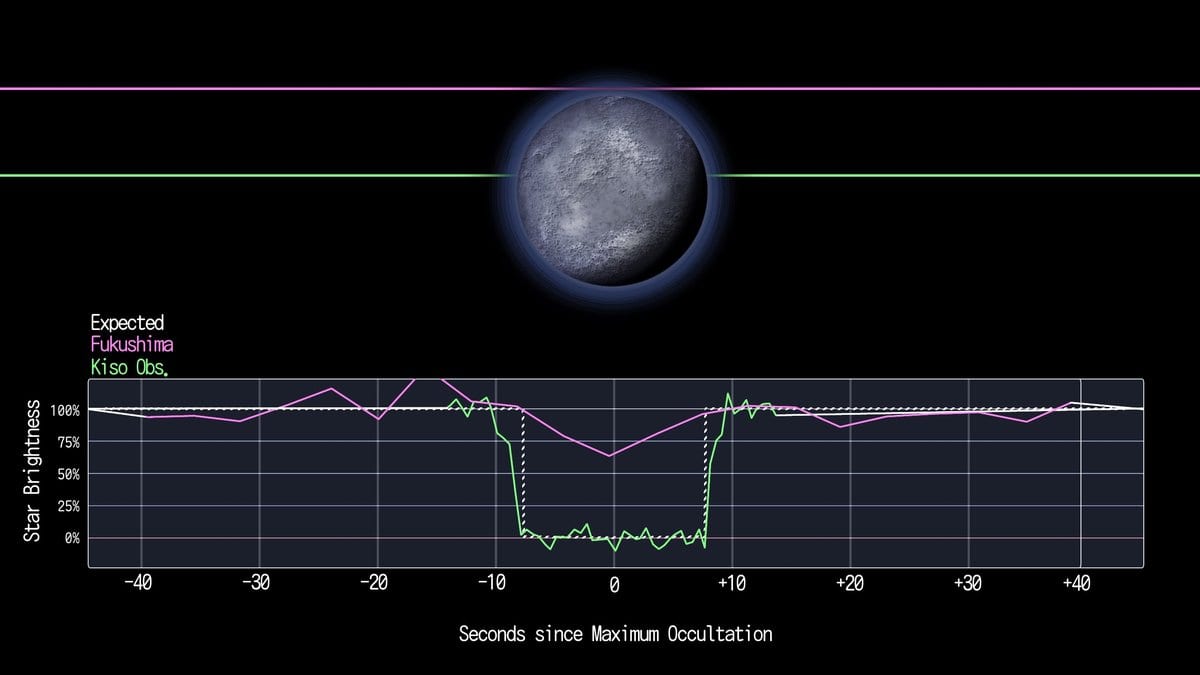
Astronomers have measured a Neptune Trojan, one of the small bodies that share Neptune's orbit, directly for the first time, by timing how long it blocked the light of a star. Eros Gradovski of Observatório Nacional in Rio de Janeiro and colleagues report seven positive detections of the object 2013 KY18, from campaigns run on July 22, 2026, and Aug. 10, 2026.
Writing in The Astrophysical Journal Letters, the authors say an occultation, when a body crosses in front of a star, is the only Earth-based method that measures a small object's size and shape to within a few kilometers. Earlier size estimates for this population rested on an assumed surface reflectivity — a bright surface implies a small body, a dark one a large body, and brightness alone cannot separate the two.
An ellipse fitted to the timings of the first event gives an equivalent diameter of 266.2 kilometers. Taken with a brightness derived from Pan-STARRS survey photometry reported to the Minor Planet Center, that size means the object reflects 5.5% of the light reaching it, a very dark surface. The paper calls the July event the first stellar occultation by a Neptune Trojan ever detected, and its results the first measurement of a Neptune Trojan's size and reflectivity.
A single flattened shape accounts for both events, though the longer crossing timed in August leaves a three-axis body possible.
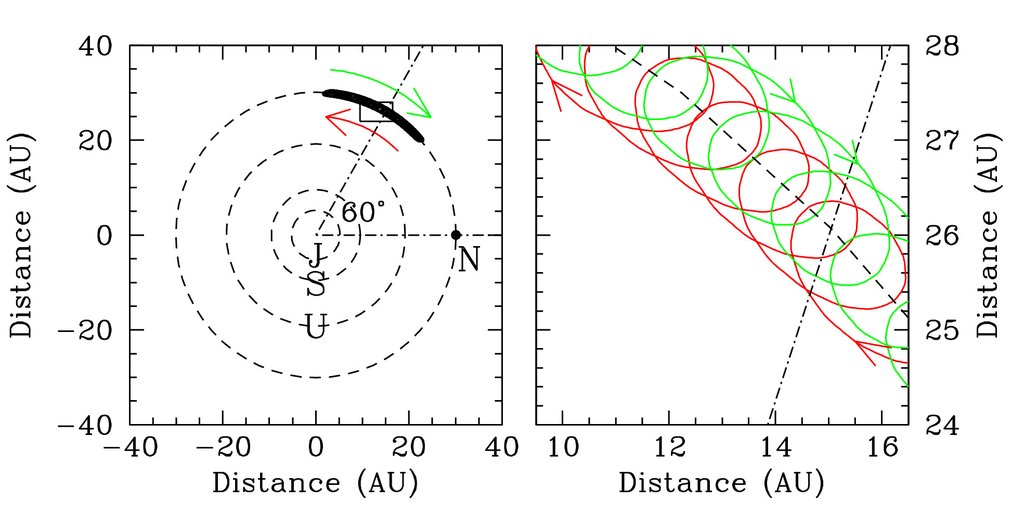
Only 33 Neptune Trojans are known, and 2013 KY18, which trails the planet at one of the stable points in its orbit, is the brightest of them. Because the measured surface is dark, the authors conclude that the brightness comes mainly from the object's size, and that it is probably the largest Neptune Trojan known to date. The next-brightest of them, 2011 WG157, would have to reflect less than 4% of the light reaching it to be larger.
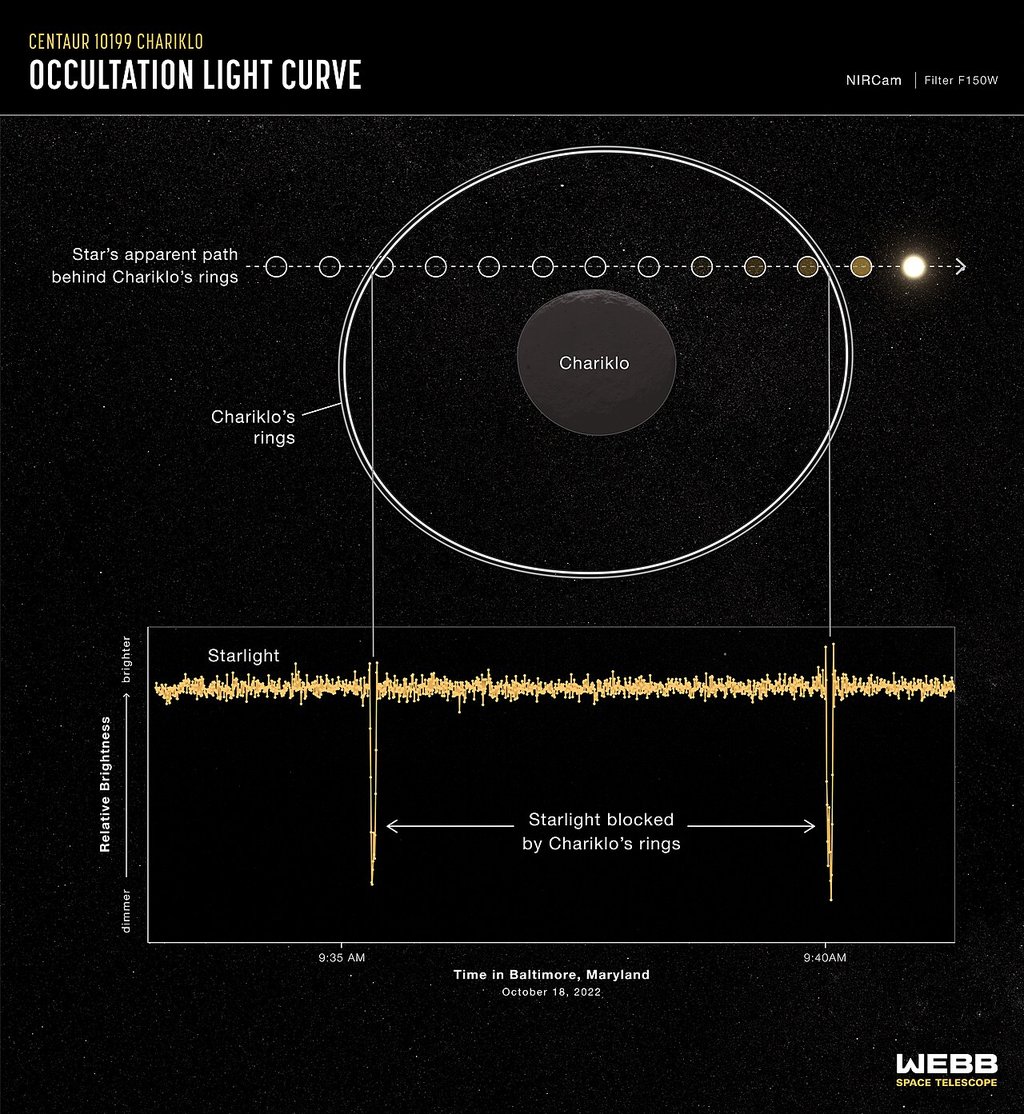
A search of the light curves for brief extra dips that would mark a moon, a ring or dust around 2013 KY18 turned up none.
Sources
- The Astrophysical Journal LettersPeer-reviewed