A Planet 3.6 Times Earth's Mass Turns Up Around a Nearby Sun-Like Star

Astronomers with the NEID Earth Twin Survey report a planet at least 3.6 times the mass of Earth orbiting HD 126053, a Sun-like star within 25 parsecs of Earth, about 80 light-years away. The finding appears in a preprint posted to arXiv on Sept. 26, 2026, and submitted to the journals of the American Astronomical Society; it has not been peer-reviewed.
Radial velocity measures the small back-and-forth motion a planet's pull produces in its star. The authors describe HD 126053 as exceptionally quiet by that measure, and call it a promising target for continued monitoring in search of low-mass planets in the habitable zone, the band of orbits where liquid water could survive.
The paper puts the planet's orbit at 10.91 days and places HD 126053 b among the least massive planets known around Sun-like stars that close. Its mass figure is a floor rather than a measurement of the planet itself, because the method cannot fix how far the orbit is tilted to our line of sight, so the true mass may be higher.
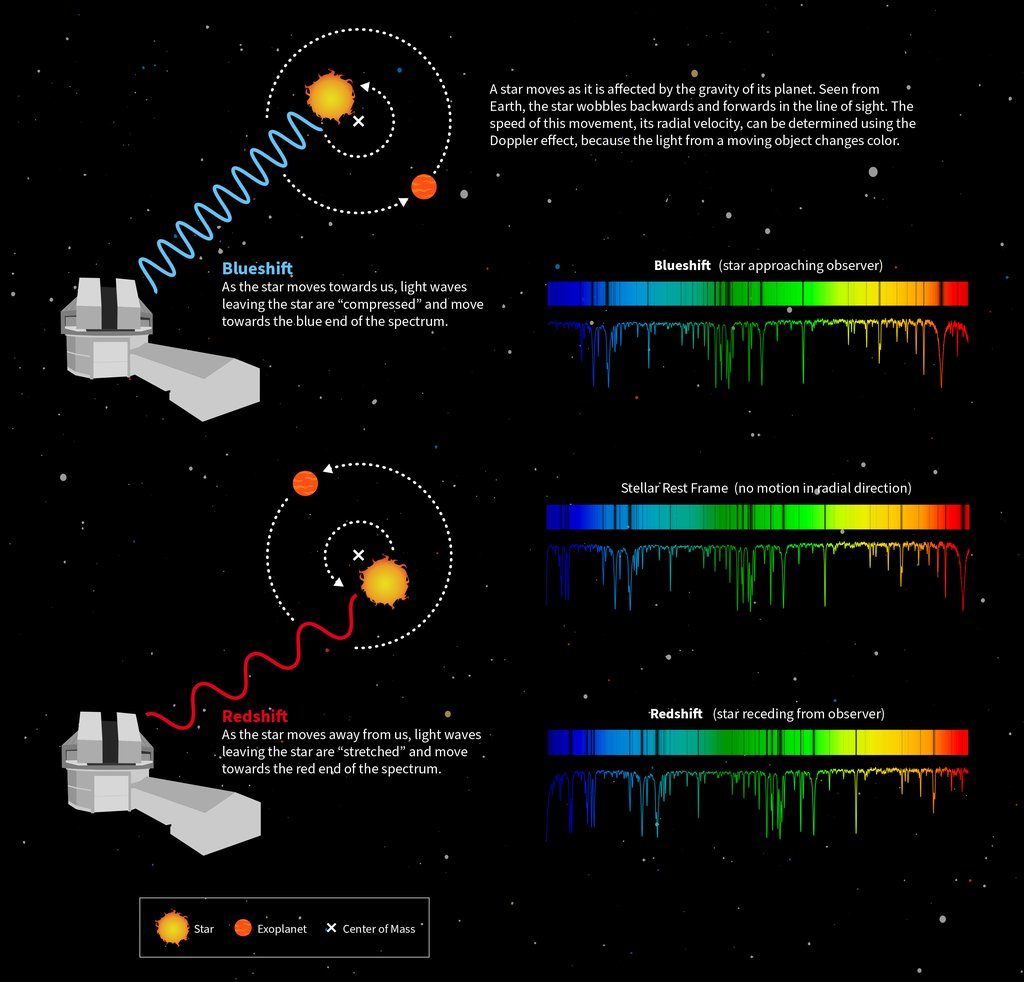
Arvind F. Gupta and colleagues wrote the paper, the sixth from the NEID Earth Twin Survey. The survey uses the NEID spectrograph to revisit stars that have already been watched for decades with less stable instruments.
The same work also re-characterizes a known planet, HD 168009 b, and reports a previously unrecorded 27.8-day signal in that star's measurements. The authors tentatively attribute that signal to the star's own activity turning into and out of view as it rotates, rather than to a second planet. They read the repeating changes at a third star, HD 10780, as a mix of the same rotation effect and a slower activity cycle.
Sources
- arXivPreprint