Other Planetary Systems Are Flat Like Ours, a Survey of 16 Finds
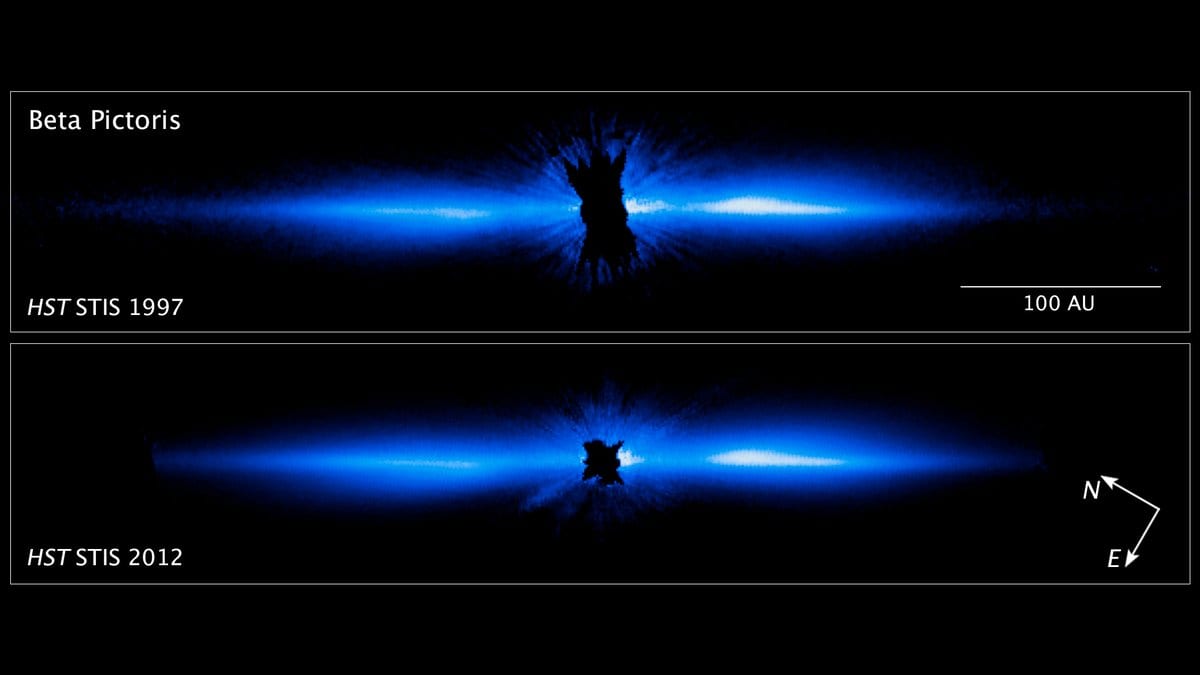
Jingwen Zhang of the University of California, Santa Barbara, and colleagues compared the orbits of 32 planets in 16 star systems with the dusty debris belts that circle the same stars, and report that 30 of them orbit within 10 degrees of their system's belt.
In the Solar System, the planets and the Kuiper Belt, the ring of icy bodies beyond Neptune, lie in nearly the same plane. That is the layout expected of a system born in a flat, spinning disk of gas and dust. The authors read their measurements as an indication that this arrangement is representative of the conditions under which exoplanet systems are born. The work was posted as a preprint on Nov. 12, 2026, and has no journal version; the arXiv record says it was resubmitted to Science Advances.
They describe the result as the "first population-level constraints" on how planet orbits line up with debris disks, and say earlier measurements covered only a handful of systems. Calibrated positions from the Hipparcos and Gaia missions let the team fit orbits for giant planets found by their pull on the host star and reach closer orbits and older stars.
The sample comes from cross-matching confirmed planets in the NASA Exoplanet Archive against stars with a resolved debris disk, and leaves out planets too small and close in for a tilt to be measured. Those that remain orbit between 0.1 and 100 times Earth's distance from the Sun, around stars tens of millions to several billion years old. The Solar System is one of the 16.
The alignment is broad rather than exact: the authors report tilts of a few degrees in several systems, including Beta Pictoris.
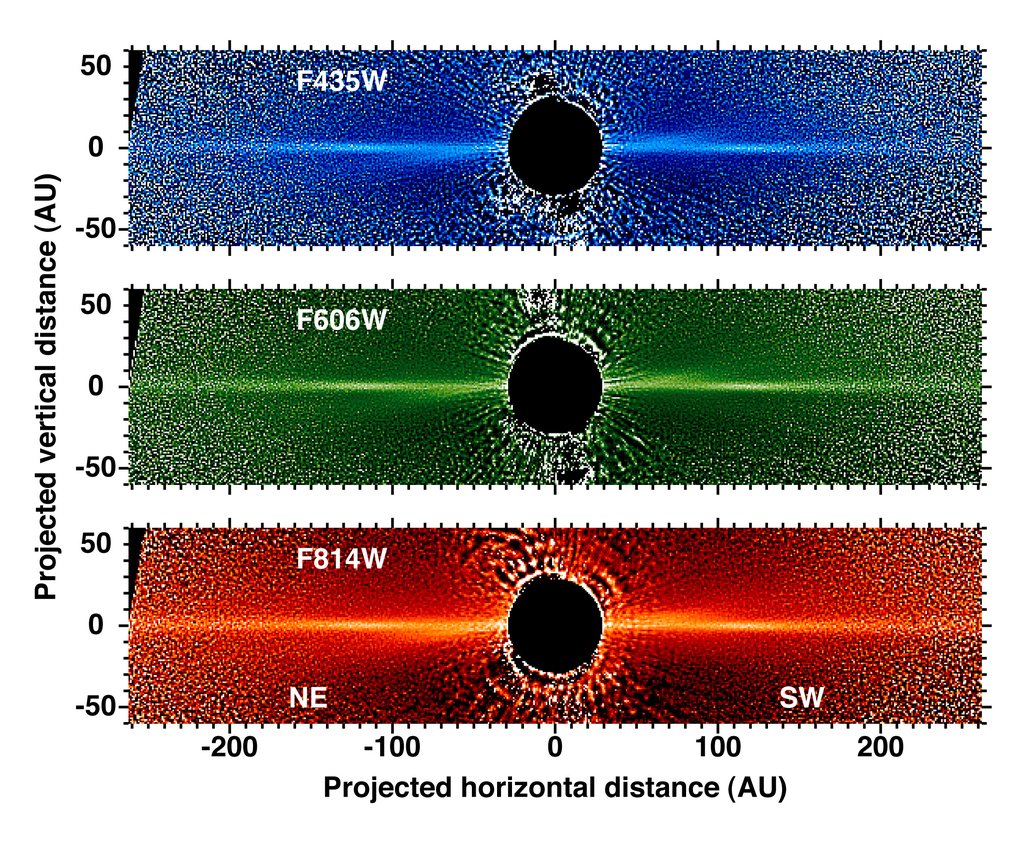
Two systems break the pattern. HD 10647 and Kappa Coronae Borealis each hold a giant planet tilted about 44 degrees out of the plane of its outer belt. Both are among the oldest stars in the sample, which the authors take as favoring a tilt acquired after formation rather than inherited from the birth disk, and they add that a primordial origin cannot be ruled out in individual cases.
Sources
- arXivPreprint