Microbes Brought by Astronauts Could Survive in the Moon's Shadows, NASA Says
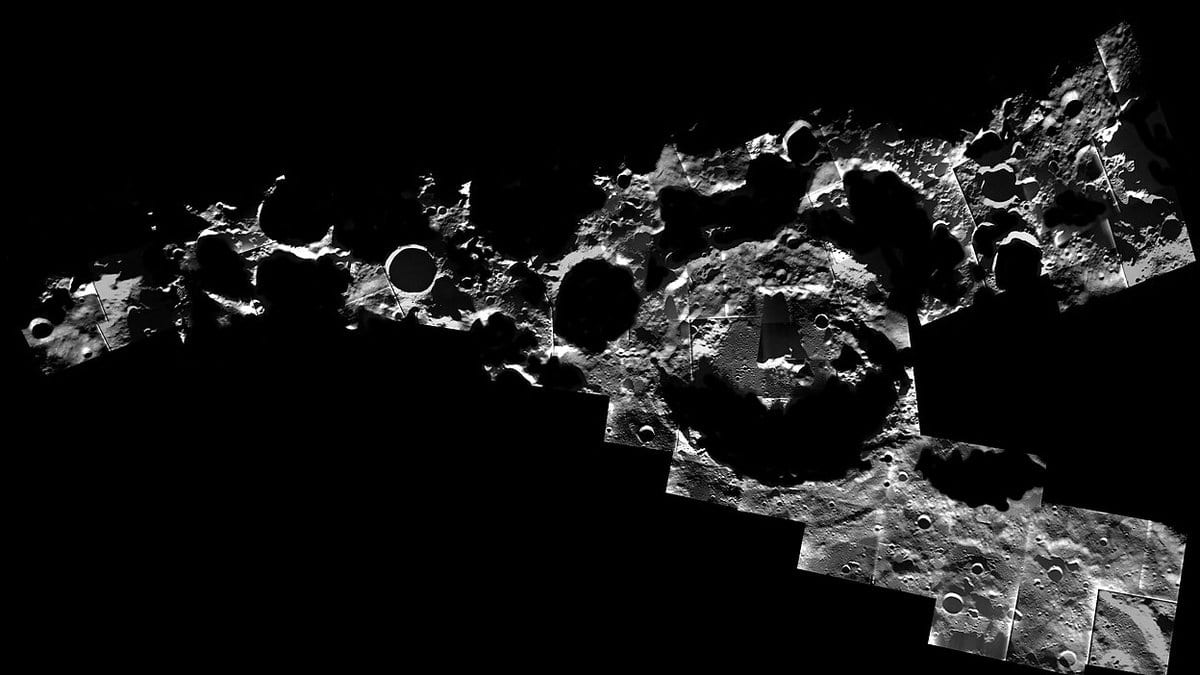
Microbes carried to the Moon on astronauts and their equipment could stay alive in shaded ground around the lunar south pole, NASA scientists report in a modeling study published Aug. 19 in Science Advances and summarized in a NASA release the same day.
The team took published limits on how much heat and ultraviolet light five organisms can withstand and applied them to simulated conditions at three regions NASA is weighing for Artemis landings: Nobile Rim, Connecting Ridge and De Gerlache Rim. The organisms were the fungus Aspergillus niger, the bacteria Bacillus subtilis, Staphylococcus aureus and Deinococcus radiodurans, and several Fusarium species, all chosen for their record in spaceflight environments or on human skin, according to the release. The simulations used elevation and temperature maps built from data collected by NASA's Lunar Reconnaissance Orbiter, combined with models of how radiation strikes the surface. Nothing was measured on the Moon.
What the models produced were maps of "survivable niches" ranging in size from a crater floor miles across down to the shadow of an astronaut's boot print, NASA says. Survival was defined narrowly: the release states that it "means the microbe can stay alive for at least one Earth day, which does not mean that it can grow and reproduce." Aspergillus niger, the most UV-resistant of the five, came through even in modeled areas that get some sunlight.
The shadows exist because the Sun sits close to the horizon at the poles, so ridges, mountains and even small bumps block light from low ground, keeping it cold and shielding microbes from damaging ultraviolet radiation.
NASA's stated concern is that contamination brought by human visitors could later be mistaken for native lunar chemistry. The authors also note there is no evidence the Moon holds what growth and replication require, including liquid water.
Prabal Saxena, a planetary scientist at NASA's Goddard Space Flight Center, led the study.