Rivers North of Delhi Have Stopped Being Fed by Groundwater and Started Feeding It
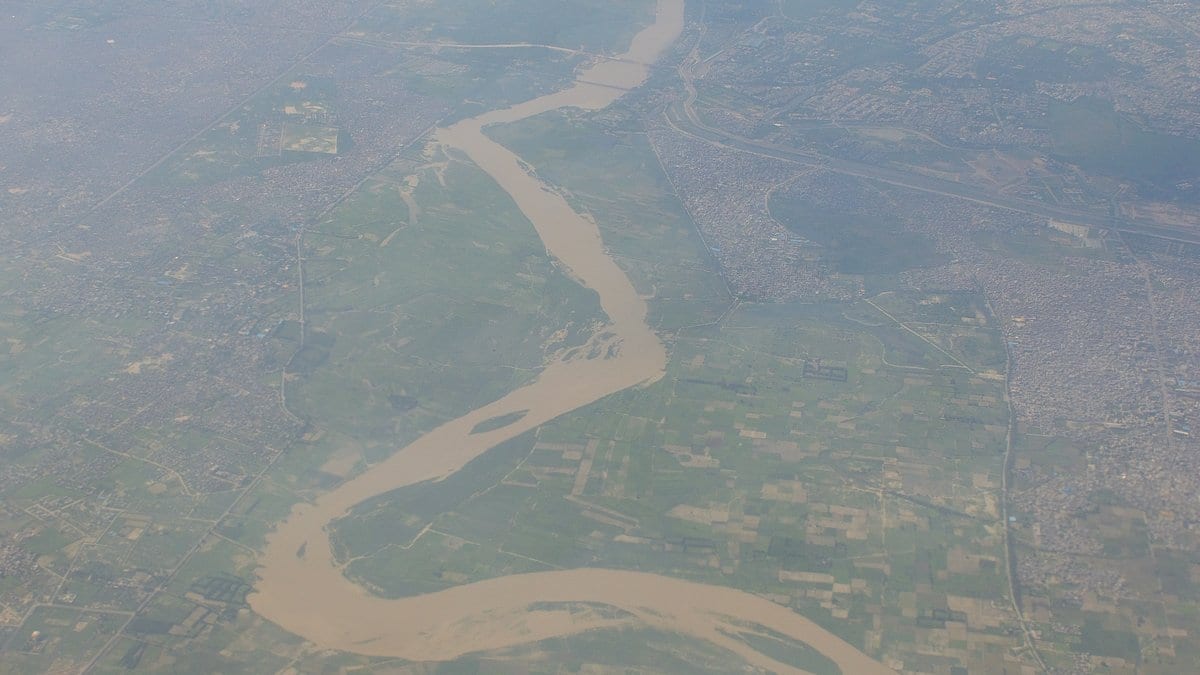
Small rivers on the plain between the Ganges and the Yamuna in northern India have most likely stopped being fed by the groundwater beneath them and now leak into it instead. Groundwater model simulations covering two centuries, published Oct. 15, 2026, in Hydrology and Earth System Sciences by Frank J. G. van Broekhoven, Paul P. Schot and colleagues at Utrecht University and the National Institute of Hydrology in Roorkee, India, put the switch at around 2000.
The authors say the change matters most where the rivers are dirty. River water that soaks into the ground ends up in the shallow groundwater that households and farms pump for drinking and irrigation, and the groundwater that no longer flows the other way is not there to dilute what the rivers carry.
The study covers about 16,500 square kilometers of the Upper Ganges-Yamuna plain north of Delhi. It finds that leakage from irrigation canals, starting with the Eastern Yamuna Canal in 1830, raised water tables and increased the groundwater seeping into rivers. The spread of pumping after the 1970s reversed that, pulling water tables below where they sat before the canals were dug. The authors report that irrigation accounts for roughly 85% of the groundwater now pumped, with towns and industry taking the rest.
These are simulations rather than field measurements. The team kept only the model runs that matched water levels recorded at monitoring wells and that behaved plausibly before those records began. Most of those runs show the Hindon River and other local tributaries switching around 2000; some put it in the 1970s, and some show no switch at all. The Ganges and the Yamuna themselves give up less groundwater than they once did, but nearly all the runs still show them taking water from the ground rather than giving it back.
The authors write that without cuts in irrigation pumping or a large increase in water soaking back into the ground, returning to pre-1970 conditions may be difficult. Their model code and datasets are posted on Zenodo.
Sources
- Hydrology and Earth System SciencesPeer-reviewed