Japan Launches a Mission to Bring Home a Piece of Phobos
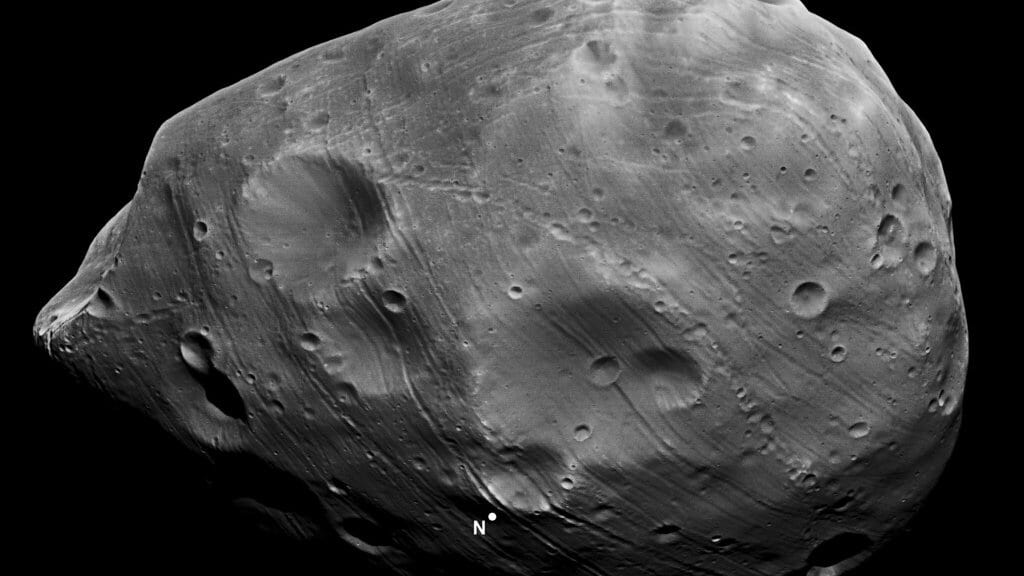
Japan's space agency has launched a spacecraft toward Phobos, the larger of the two moons of Mars, with the aim of bringing a piece of it home. JAXA said the Martian Moons eXploration spacecraft lifted off at 04:41:03 Japan time on Oct. 20, 2026, from the Tanegashima Space Center in southern Japan.
JAXA's published plan for the mission, known as MMX, calls for the spacecraft to settle into orbit around Phobos and map the moon's shape, interior, composition and gravity. It is then to touch down twice and pick up at least 10 grams of surface material. A capsule is to bring that material back to Earth in 2031 and land with it in Australia. JAXA calls the attempt a world-first sample return from the Martian system.
In its launch-result statement, JAXA said H3 Launch Vehicle flight No. 10 flew as planned and that separation of the spacecraft was confirmed approximately 71 minutes and 13 seconds after liftoff. The spacecraft was then injected into the orbit planned for it.

JAXA's mission plan gives MMX about a year of cruise before it reaches Mars. It sets out the aim of fetching Phobos material: to work out how the two Martian moons formed, and how water and organic matter, the carbon-rich chemistry that life depends on, moved through the solar system while the planets were taking shape.
JAXA notes that Phobos has never had its surface explored up close or had samples returned. Its plan also calls for MMX to observe Deimos, the smaller of the two moons, during the final phase of the mission, before the spacecraft starts for home.