Minnesota Team Accelerates Research fMRI 20-Fold Without Reference Data
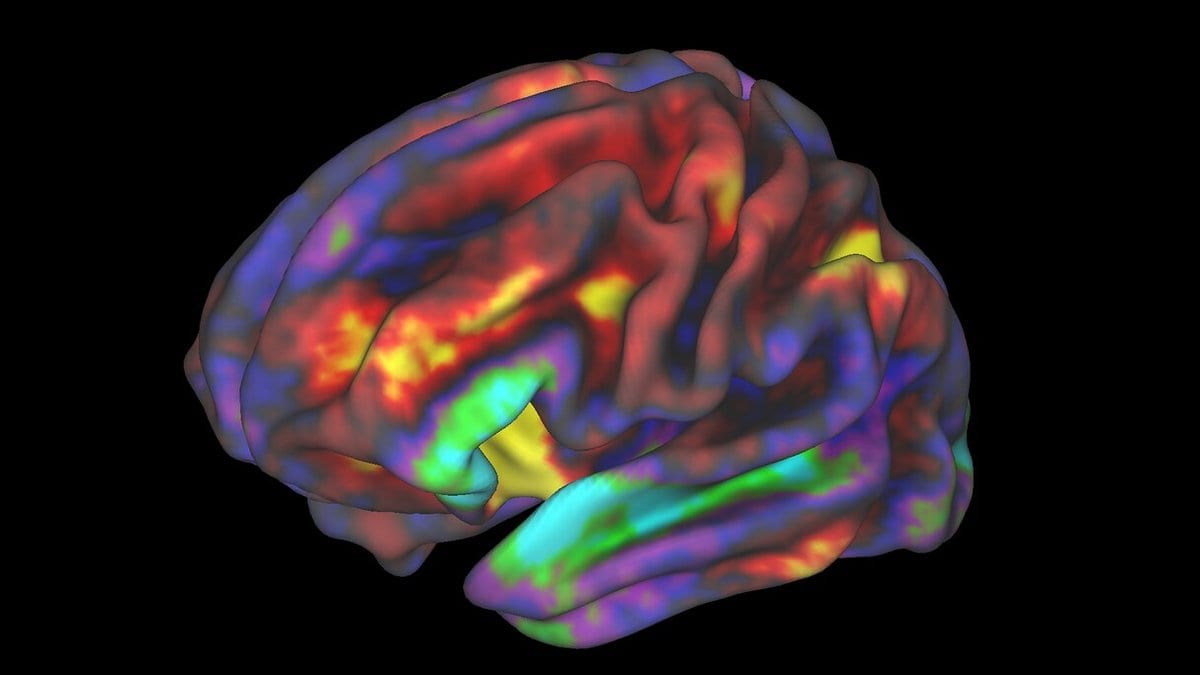
A University of Minnesota group has built a deep-learning method that rebuilds the functional MRI scans used in neuroscience research, and reports usable whole-brain activity maps from data sampled 20 times more sparsely than a full scan. The method was trained without any fully sampled reference scans, which is the part the authors present as new. It was published Oct. 19, 2026, in Communications Engineering.
Functional MRI (fMRI) is already collected fast and sparsely, because covering the whole brain in fine detail leaves no time to gather everything a clean image needs. The paper states that pushing the speed higher leaves behind smearing and amplified noise, and the authors describe their aim as enabling efficient high-resolution fMRI that is otherwise out of reach.
The paper credits a newer class of reconstructions, which write the scanner's own physics into the neural network, with promising results at higher acceleration elsewhere in MRI. Those reconstructions are normally trained on fully sampled reference data, which fMRI studies at this detail do not have. The Minnesota method instead learns from the sparse measurements themselves, several image slices at a time.
The team tested the method at 20-fold acceleration two ways: on complete data thinned out afterward and on scans actually collected at that rate. The authors report that functional mapping stayed reliable at acceleration rates not reached before and improved substantially on conventional reconstruction.
Ömer Burak Demirel is the first author, with Mehmet Akçakaya and Kamil Uğurbil as the corresponding authors, all at the University of Minnesota. The National Institutes of Health funded part of the work. The open-access paper is an accelerated preview of the accepted manuscript, which Communications Engineering says will be replaced by its final version.
Sources
- Communications EngineeringPeer-reviewed
Medical Disclaimer: This content is provided for general informational and educational purposes only. It is not medical advice and should not be used as a substitute for professional medical advice, diagnosis, or treatment. Always consult a qualified healthcare professional regarding any medical condition, concern, symptom, or treatment decision.