A Star's Spin Dates It Better Than Its Motion Through the Galaxy
Two astronomers at the University of Cambridge have put ages on six nearby red dwarf stars that host planets, and they report that a star's rotation dates it far more tightly than its motion through the Galaxy does.
Lalitha Sairam and Nikku Madhusudhan, both at Cambridge's Institute of Astronomy, write that reliable ages are needed to work out how planetary systems around these small, cool stars form and change. Among those systems are the temperate sub-Neptunes now being observed with the James Webb Space Telescope, planets that fall between Earth and Neptune in size. Red dwarfs are hard to date because they evolve so slowly that matching them against models of stellar aging gives little constraint.
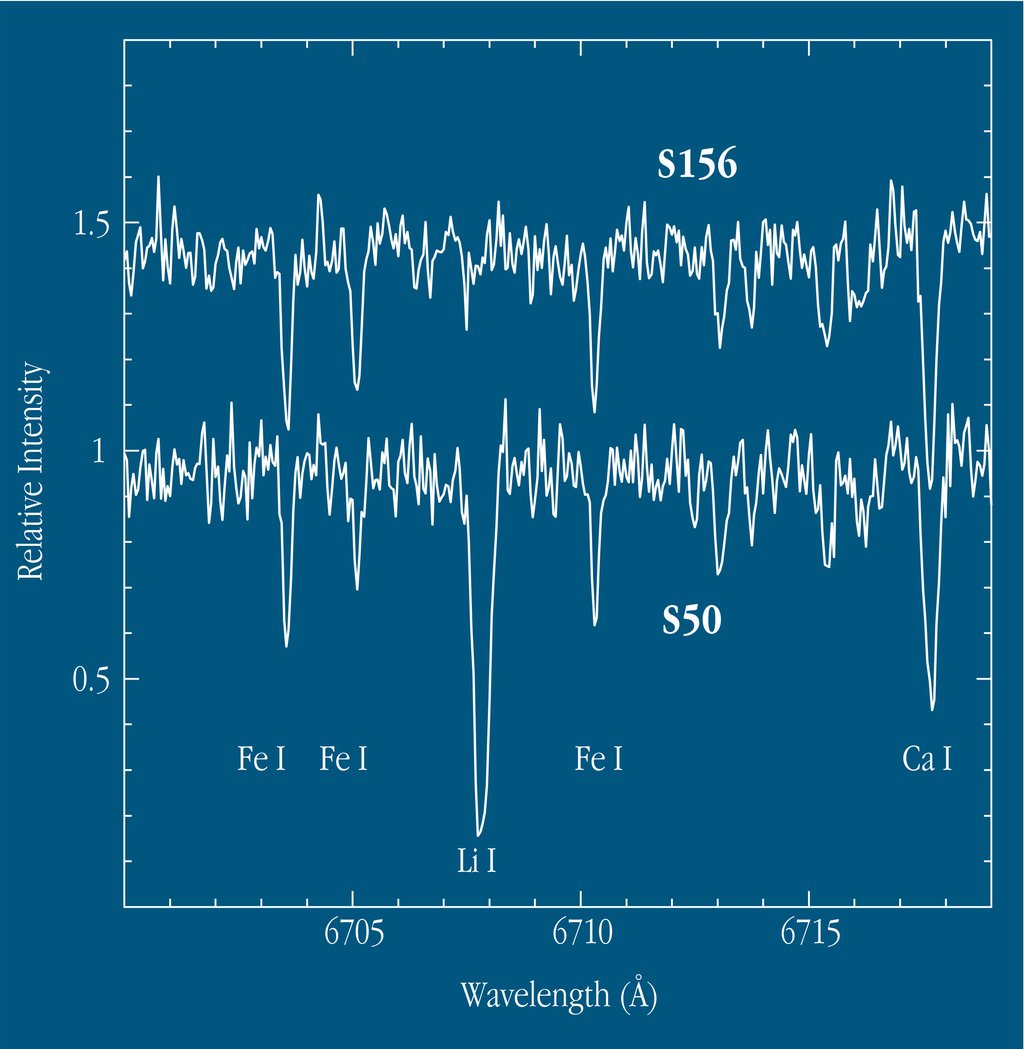
The analysis applies three age indicators to the same six stars, among them K2-18 and TOI-270, both already observed with JWST. It was posted to arXiv on Sept. 15, 2026, and has been accepted for publication in Monthly Notices of the Royal Astronomical Society. Lithium absorption was absent in all six, and because lithium fades from these stars early in life, the authors write, its absence puts their ages above 200 million years. Rotation periods of 39 to 145 days yield ages of 2.8 billion to 8.6 billion years. Ages worked out from the stars' motion through the Galaxy carry uncertainties of 4 billion to 6 billion years.
Where a rotation period has actually been measured, Sairam and Madhusudhan put the rotation-based constraint at 2 to 6 times tighter than the one from Galactic motion. Where the period has to be inferred from activity in the star's outer atmosphere, they report that the two approaches do about equally well.
The motion-based ages are less precise star by star, the authors write, but they flag outliers such as TOI-1231 and place the sample in Galactic context. Sairam and Madhusudhan had already dated two of the six, K2-18 and TOI-732, from rotation in earlier work; here all six are analyzed together with the same set of indicators.
Sources
- arXivPreprint