A Receiver on the Moon Used GPS Signals to Study Earth's Upper Atmosphere
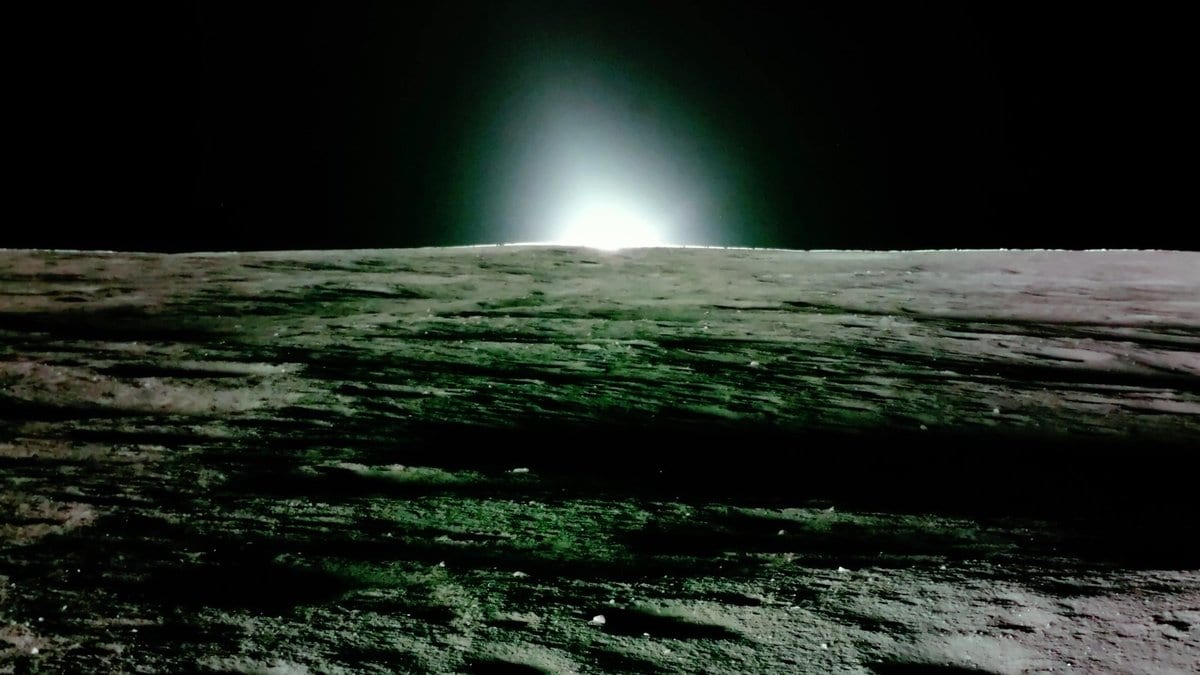
A navigation receiver standing on the Moon picked up signals from GPS and Galileo satellites orbiting Earth and used them to measure a layer of Earth's own atmosphere, a team led by Rong Yang of Shanghai Jiao Tong University reports in a preprint that has not been peer-reviewed. The receiver sat 356,000 to 398,000 kilometers from Earth's surface.
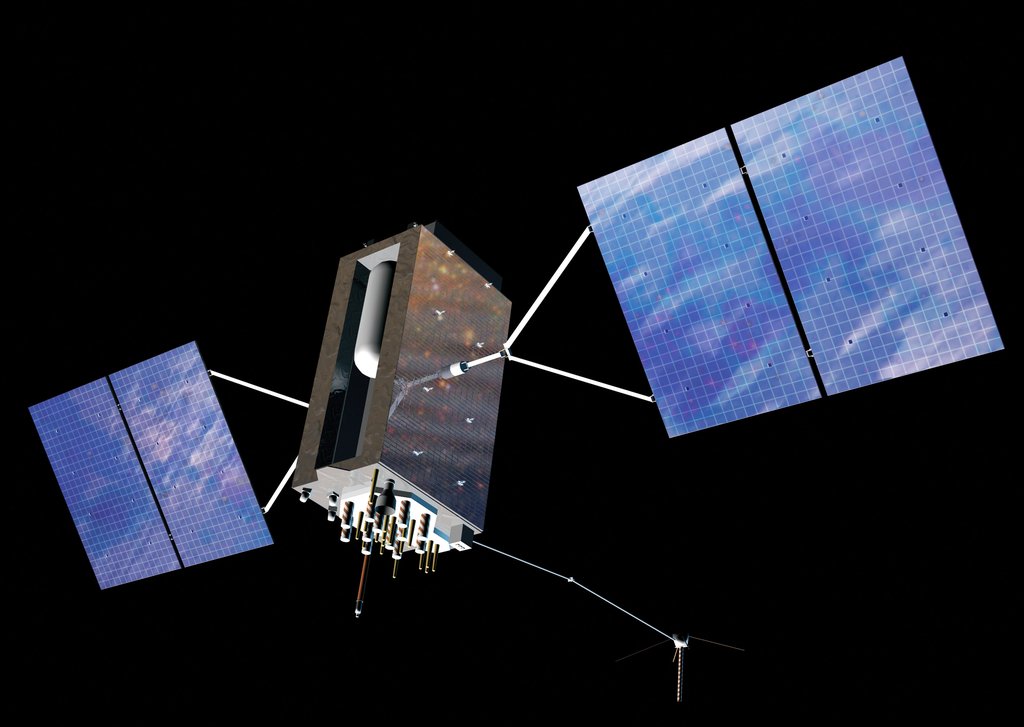
To reach the Moon, a navigation signal leaves Earth sideways, grazing the edge of the atmosphere on its way out, and that path crosses the ionosphere, the electrically charged upper air where sunlight knocks electrons off gas atoms. Uneven patches of charge scatter the radio wave, so the strength of the signal arriving at the Moon rises and falls. The authors write that the measurements support using the lunar surface as a vantage point for studying those irregularities over Earth's poles, and that later observations could extend the approach to long-term monitoring.
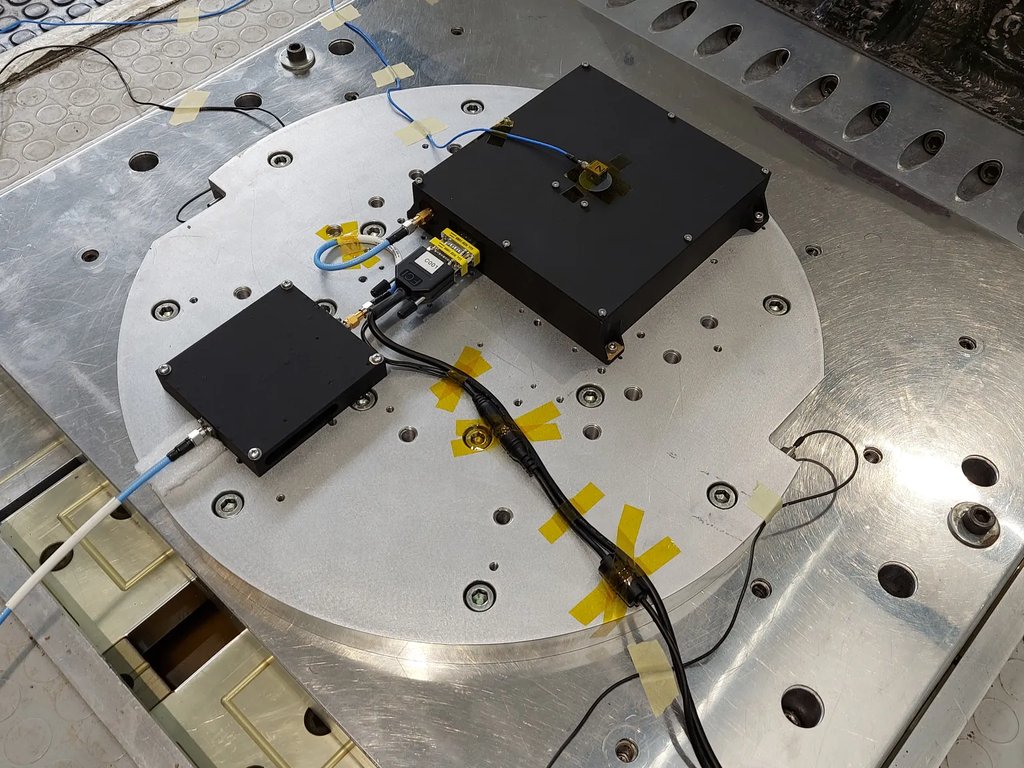
The preprint describes nearly 93 hours of observations, recorded once a second during lunar surface operations in March 2025 by the Lunar GNSS Receiver Experiment, an instrument flown aboard Firefly's Blue Ghost 1 lander. The team cut the record into one-minute windows and counted those in which signal strength swung widely from second to second. About 30% of the windows whose signal paths crossed the polar ionosphere did, against less than 5% in either the equatorial or the mid-latitude band.
Ground stations and instruments in low Earth orbit sample the ionosphere from below or from close in. Lunar reception, according to the paper, extends the height range over which these fluctuations can be watched, and the polar ones stayed strong well up into the ionosphere. Over the same hours, near-Earth records had their largest fluctuations at equatorial latitudes instead. The swings seen from the Moon also turned up during relatively quiet geomagnetic intervals.
Rong Yang and the senior author, Xingqun Zhan, are at Shanghai Jiao Tong University; their co-authors are at Politecnico di Torino, Italy's National Institute of Geophysics and Volcanology and the Hong Kong Polytechnic University. The preprint is posted under a CC BY 4.0 license.
Sources
- arXivPreprint