Early Galaxies May Hide Most of Their Mass in Small Stars
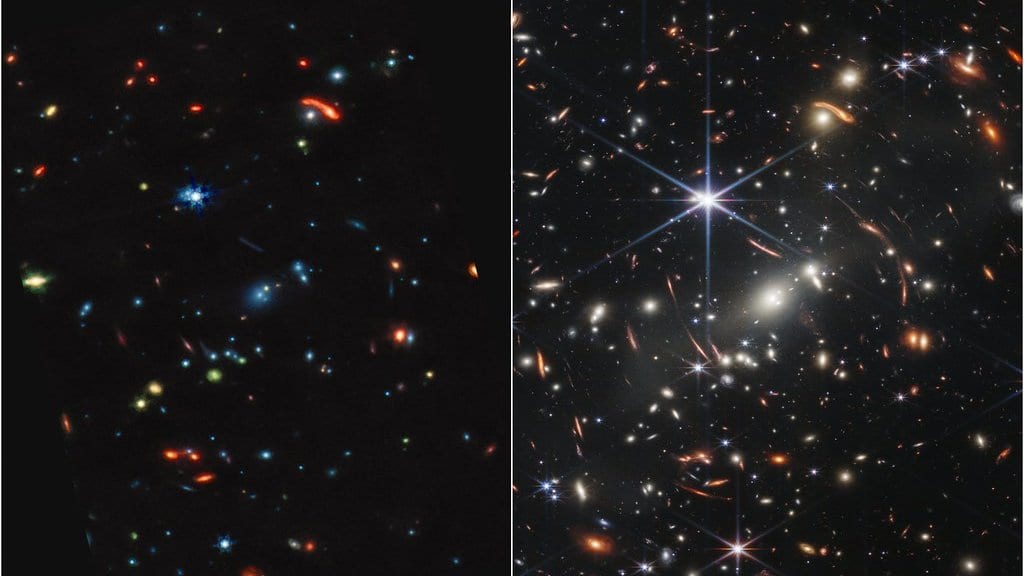
Nine massive galaxies that stopped making stars long ago hold far more small, faint stars than the Milky Way's mix would predict, astronomers report — enough that the earliest big galaxies found by the James Webb Space Telescope may be around four times heavier than current estimates.
The measurement was published Aug. 18 in Nature Astronomy by Chloe M. Cheng, Martje Slob and Mariska Kriek of Leiden Observatory with 21 co-authors, under the title "Hidden mass in early galaxies revealed by bottom-heavy initial mass functions." The team combined very deep JWST spectra with earlier observations from the European Southern Observatory's Very Large Telescope, according to Leiden University's release.
A galaxy's initial mass function is the mix of star sizes it produces. A "bottom-heavy" mix has an excess of small stars, which give off little light but carry real mass. All nine galaxies in the sample, seen at a redshift of about 0.7 and already finished with star formation, came out bottom-heavy compared with the Milky Way, the paper reports, and the galaxy whose own stars formed earliest came out the most bottom-heavy of the set.
From that pattern the team argues that if the very early massive galaxies JWST has found share the same mix, their stellar masses would be about four times higher, give or take one, than published values. Those are masses inferred by fitting models to spectra rather than weighed directly. The paper's own conclusion is that the result sharpens the disagreement with galaxy-formation models rather than settling it.
"Our models show that behind the brightest stars there is a much larger population of small stars, like houses among the skyscrapers," Cheng said in the Leiden release.
Kriek said the count matters beyond mass: "Small stars often have planets orbiting them, so if there were many more small stars in the early Universe than we thought, there may also have been more planets."
The JWST spectra come from an observing program called IMFERNO and the supporting optical spectra from the LEGA-C survey, per the team's preprint.
Sources
- Nature AstronomyPeer-reviewed
- www.universiteitleiden.nl
- arXivPreprint