Perseverance Gives Mars Scientists a New Order of Events for Jezero's Water
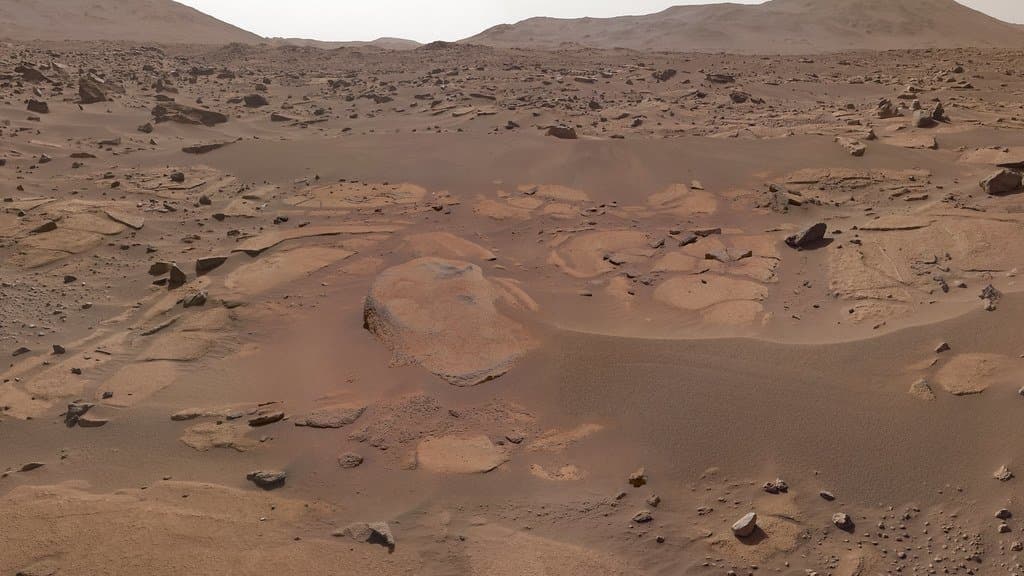
NASA says its Perseverance rover found rock formed from cooled magma, not the lakebed sediment mission scientists expected, in a band of ground called the Margin Unit, at the inner rim of Mars' Jezero Crater. The crystals inside it record at least three separate encounters with water.
The study appeared Sept. 21 in Communications Earth & Environment. The carbonate that Mars orbiters had seen there, the mineral that makes up limestone on Earth, had been expected to come from the crater's lake. "But now we know that this location became a sort of crossroads for aqueous systems," said Candice Bedford, a research scientist at Purdue University and the study's lead author.
NASA says Perseverance has analyzed more than 185 bedrock targets across the unit with SuperCam, a mast-mounted instrument that fires a laser at a rock and reads the light from the flash. High in the unit, the rock is coarse and crystalline, rich in olivine, a magnesium and iron mineral, with almost no sign that water touched it. Lower down, on the old lakebed, the olivine grains are fractured with silica between them.
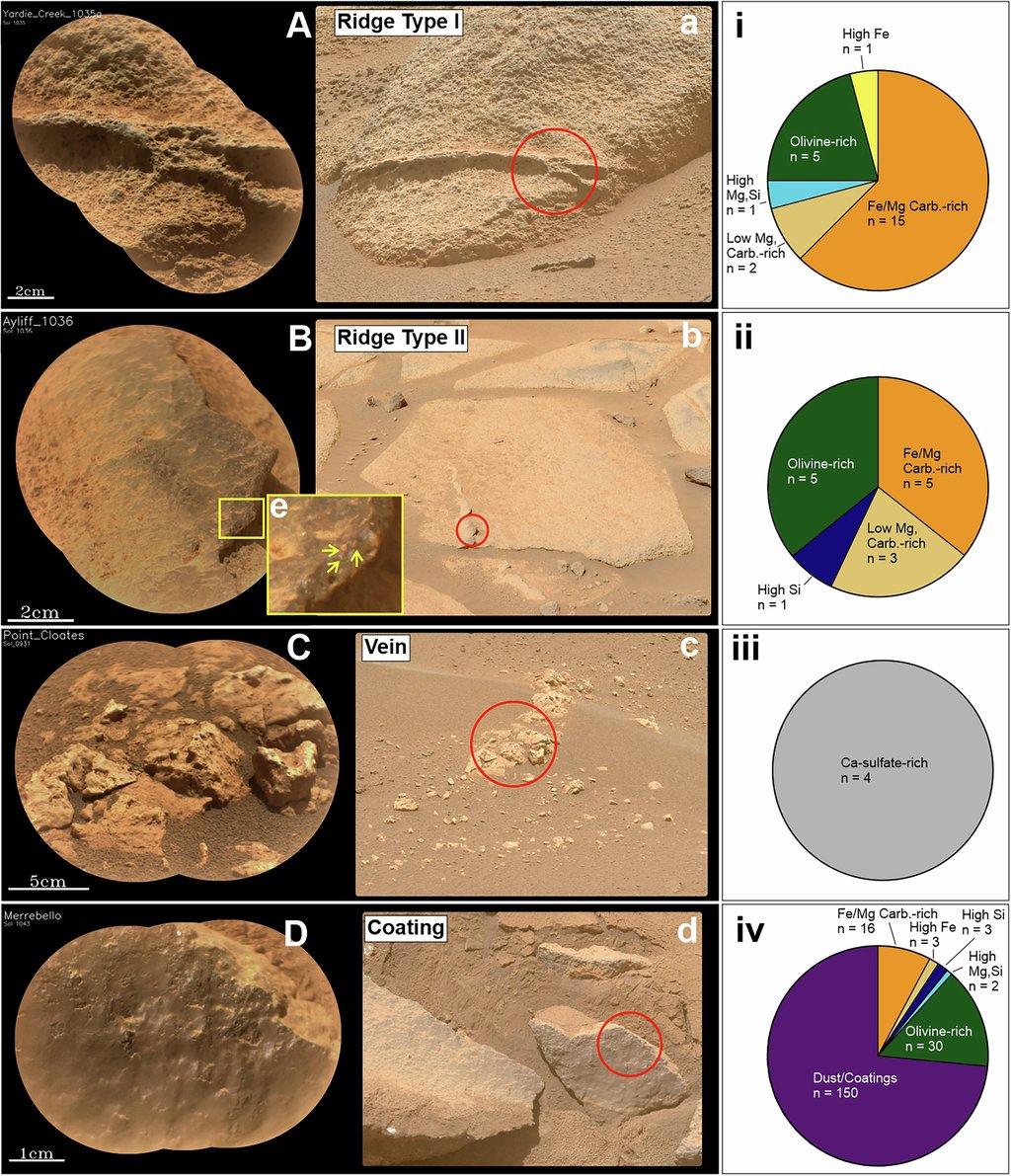
The team can put the three water events in order but cannot date them. First, carbon-dioxide-rich groundwater reacted with the olivine and left ridges of carbonate through fractures in low-lying bedrock. The second episode may be tied to the lake that once filled the crater. "Turning olivine into carbonate can leave silica behind, and we see more of that silica in rocks that sat below the water line," said Eleni Ravanis, a planetary scientist at the University of Hawaii at Manoa and a co-author. The last episode left mineral veins, including fluorite, at one spot in the eastern Margin Unit. NASA says fluorite usually forms where hot water circulates through volcanic rock, which points to a later heated groundwater event.
Bedford said she hopes the work helps planetary scientists reconstruct the changing climate and habitability of early Mars.
Perseverance reached the inner edge of Jezero Crater in September 2023. The search for signs of ancient microbial life is a key objective of the mission.