A Sahara Meteorite Turns Out to Be One of the Oldest Pieces of Mars on Earth
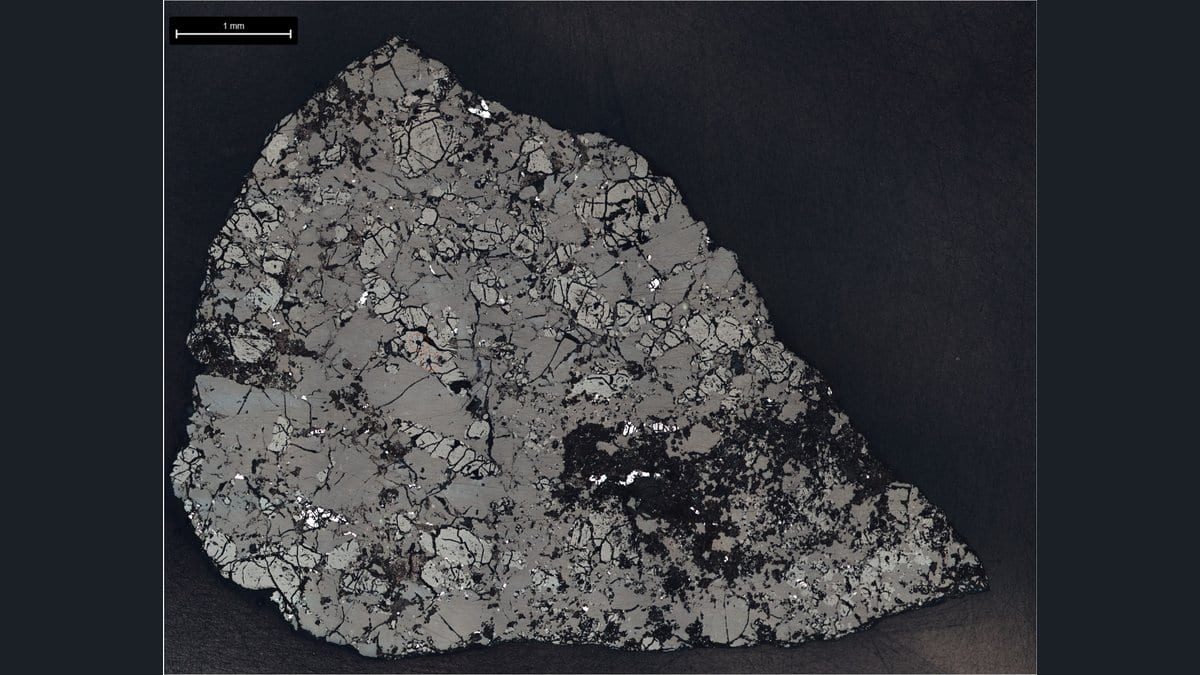
A rose-colored rock picked up in the Sahara Desert in 2022 is one of the oldest pieces of Mars ever found on Earth. NASA-funded researchers age-dated its minerals and reported Oct. 29, 2026, in Science that the 800-gram meteorite formed at least 4.1 billion years ago.
The paper describes the stone, named Teghaza 001 after the salt plain in Mali where it was found, as a sample of ancient Martian crust, formed from a chemically distinct part of the mantle that had kept the planet's original composition. Its minerals, chemistry and texture are unlike those of the roughly 435 other known meteorites from Mars.
"This is really our first piece of Martian crust from a part of Mars we've never had a sample of before," said Lee Saper, the paper's second author, who did the work at NASA's Jet Propulsion Laboratory and is now at NASA Ames.
NASA says the rock's importance was not obvious at first, because it appeared to belong to the most common class of Martian meteorite. "It was only after we started looking closely that we realized this meteorite is really unique," said lead author Yang Liu, a planetary-sample specialist at JPL.
Her team found zircon crystals, which geologists use to date a rock precisely, and Caltech coauthor Francois Tissot applied a method his group developed that reads single mineral grains on a fragment smaller than a fingernail, leaving the rest intact. The authors also report that water-altered minerals, together with oxygen-isotope measurements, indicate the rock reacted with fluids before an impact threw it into space.
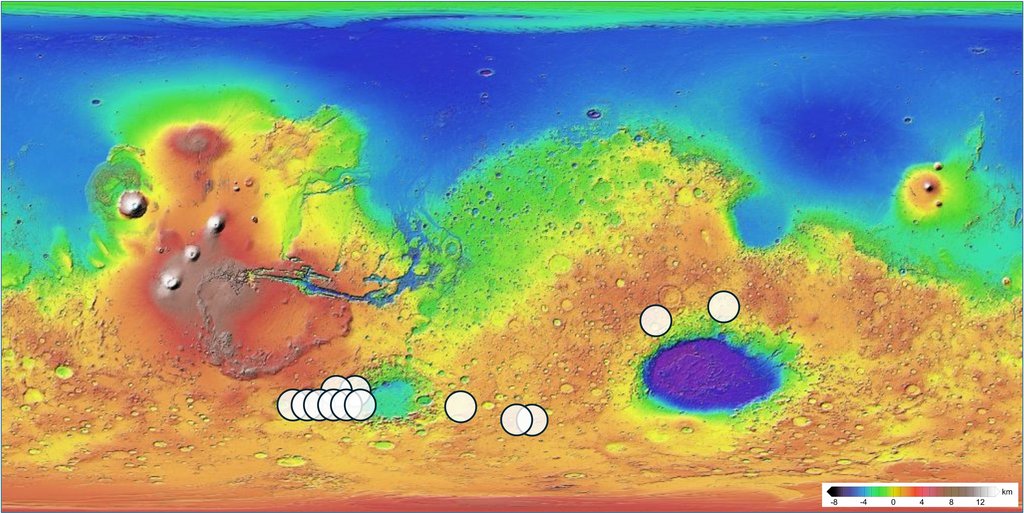
Only two other Martian meteorites are in the same age bracket, NASA says: ALH84001, similar in age but made almost entirely of a single mineral; and the rock nicknamed "Black Beauty," which formed about 2.1 billion years ago out of small volcanic fragments. Scientists have matched the minerals and chemistry of Teghaza 001 to 13 locations on Mars, and the agency says its minerals resemble terrain the Mars Reconnaissance Orbiter has observed in the cratered southern highlands.