Habitable Zones Around 12 Nearby Stars Get 10 to 100 Times the Sun's X-Rays
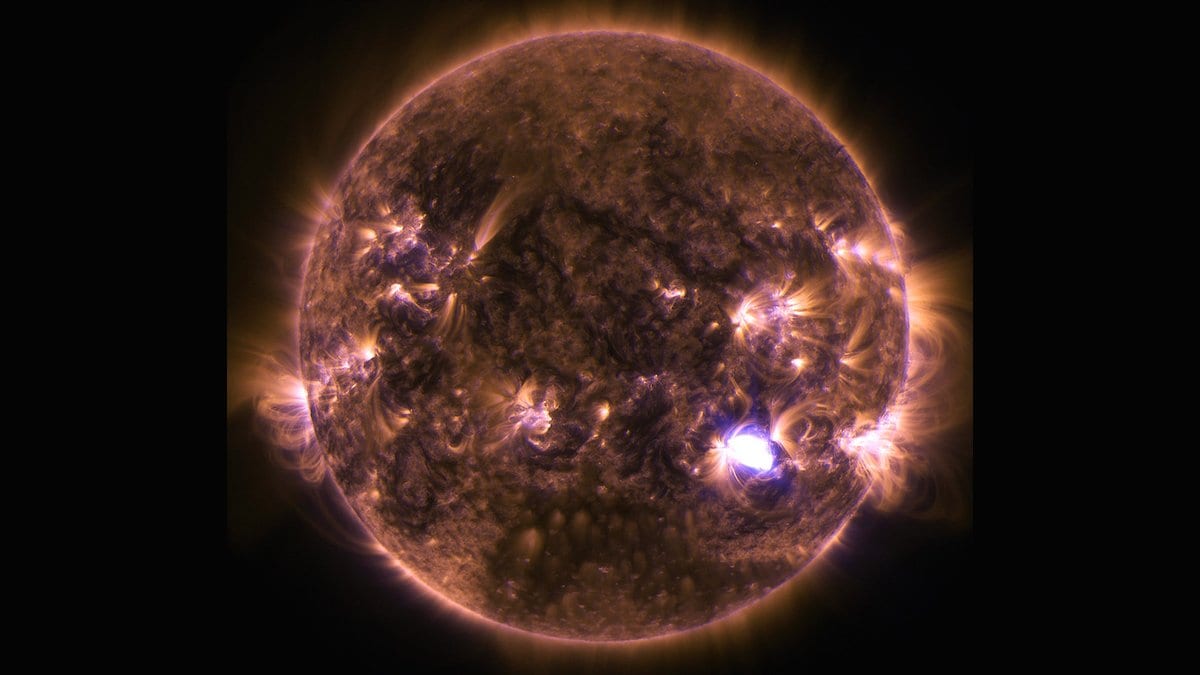
Twelve nearby stars near the top of the target list for NASA's Habitable Worlds Observatory expose their habitable zones to 10 to 100 times as much X-ray and extreme-ultraviolet radiation as the modern Sun delivers to its own, according to modeled spectra published on Aug. 27 by Sarah Peacock and six co-authors.
The paper was posted to the arXiv preprint server and has not been through peer review. The authors state in its comment field that it has been accepted by the Astrophysical Journal.
Peacock's team built panchromatic spectral energy distributions, single continuous spectra running from X-rays out to radio wavelengths, for 12 nearby low-mass and Sun-like stars whose habitable zones can be imaged directly. The paper lists all 12 as prioritized targets for the Habitable Worlds Observatory and the Extremely Large Telescopes. The spectra are not new measurements: they come from forward stellar atmosphere models that the authors say are guided and constrained by archival X-ray and ultraviolet observations.
Many stars in the sample show "elevated high-energy radiation environments relative to the modern Sun," the authors write, with habitable-zone X-ray and extreme-UV fluxes "frequently exceeding solar values by 1-2 orders of magnitude."
They put that excess down to a combination of causes rather than a single one: how the sample was chosen, differences in the stars' ages and rotation rates, and magnetic variability in the stars themselves. Observations taken at several epochs show that variability alone can significantly alter the radiation environment inferred for a star.
Peacock and colleagues conclude that high-energy radiation is "an important discriminator in identifying the most promising habitable planet hosts," and say more X-ray and ultraviolet observations are needed to complete the stellar characterization behind the observatory's target prioritization.
Sources
- arXivPreprint