Skip to content
See the World Through ScienceA project of ALLATRA

India Launches a Satellite to Keep Its Navigation System Running
Space

Republish this story

Our work is licensed under Creative Commons BY-NC 4.0. You may republish this piece for free — with credit to ALLATRA Media and a link to the original, unedited beyond length trims, and not for commercial use.

Read the full license

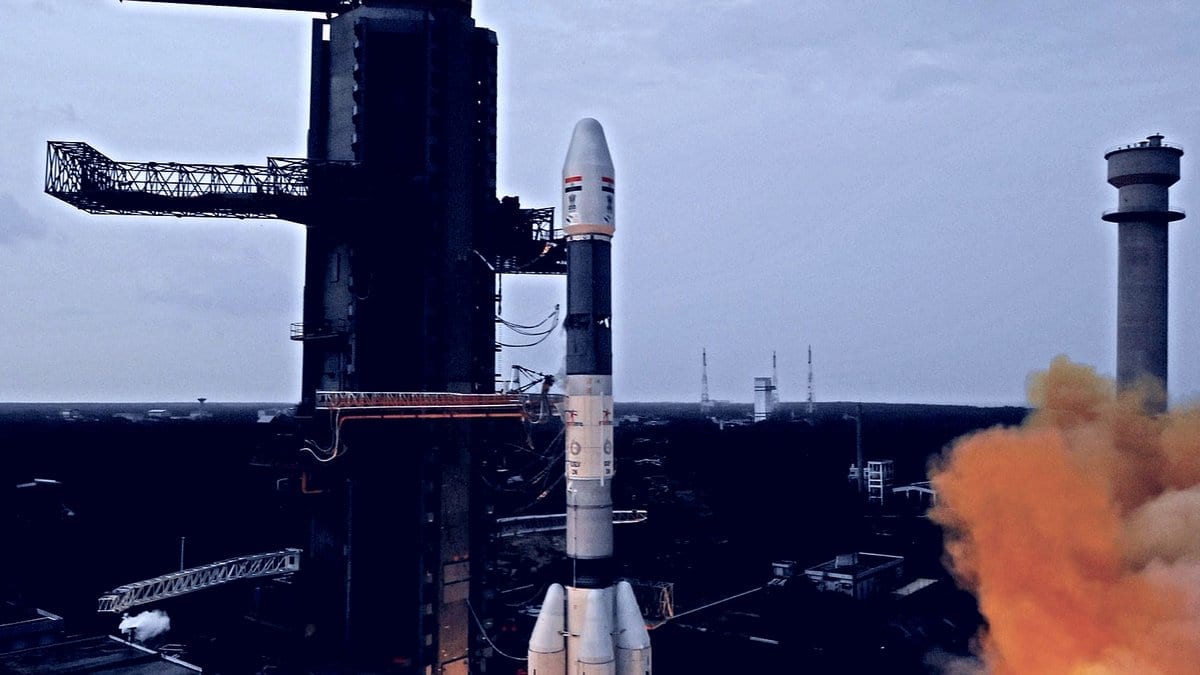
A GSLV Mk II rocket rises from its pad at Sriharikota, India, beside the mobile launch tower, with an orange exhaust cloud spreading across the launch complex.
The GSLV-D6 flight climbs away from Sriharikota on Aug. 27, 2015; NVS-03 flew Oct. 30, 2026, on the same Indian rocket family (illustrative)."GSLV Mk.II D6 lifting off with GSAT-6" by Indian Space Research Organisation, via Wikimedia Commons, CC BY-SA 4.0

The Indian Space Research Organisation launched the NVS-03 navigation satellite on Oct. 30, 2026, on the 20th flight of its Geosynchronous Satellite Launch Vehicle.

NVS-03 is the third satellite of India's next-generation navigation system, which ISRO says is meant to keep the service of the earlier IRNSS navigation satellites running. Its signals cover India's land mass and a region extending 1,500 km around the country's boundary.

ISRO's mission page for the flight says the rocket, designated GSLV-F18, lifted off from the Second Launch Pad at the Satish Dhawan Space Centre, Sriharikota, and placed the satellite into a geosynchronous transfer orbit. The agency calls the launch successful and the orbit the intended one.
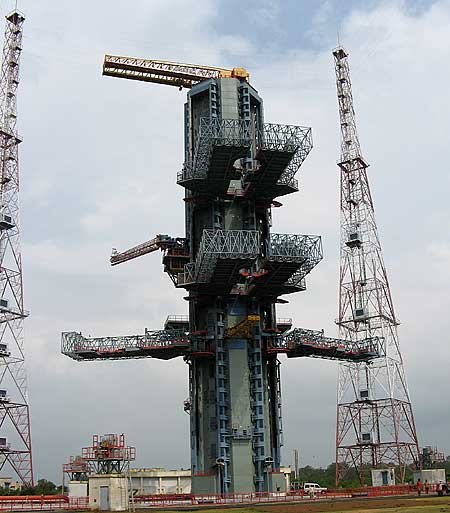
An empty launch pad with a tall gray service tower, folded access platforms and two red and white lightning towers standing on either side.
Standing empty July 15, 2018, this is the pad at Sriharikota that GSLV-F18 used on Oct. 30, 2026 (illustrative). "Second Launch Pad" by Aakarsh K, via Wikimedia Commons, CC BY-SA 4.0

A geosynchronous transfer orbit is a staging orbit, not a working one. It is elongated, and the satellite must raise itself out of it under its own power before it can take up station and start sending signals.

ISRO says the satellite carries an Indian-built atomic clock alongside purchased clocks, and that it adds an L1 signal to the L5 and S-band signals the system already broadcasts. The clock matters because a receiver works out its position from how long the signal took to arrive.

The vehicle's previous flight, GSLV-F17, launched the EOS-05 satellite in September 2026, per ISRO's list of recent missions.

Sources

Spot an error?

Spot an error?

Report an error

Spotted a mistake on this page? Tell us what's wrong and our editors will take a look.

What kind of problem?

Only if you'd like us to be able to follow up. We won't use it for anything else.

We correct mistakes openly. Select any text to flag it. Fixes are logged under our Corrections Policy.

Report an error

Reporting on

India Launches a Satellite to Keep Its Navigation System Running

What kind of problem?

Only if you'd like us to be able to follow up. We won't use it for anything else.

We read every report. Corrections are logged publicly.