India Launches an Earth-Watching Satellite ISRO Calls a First for the Country
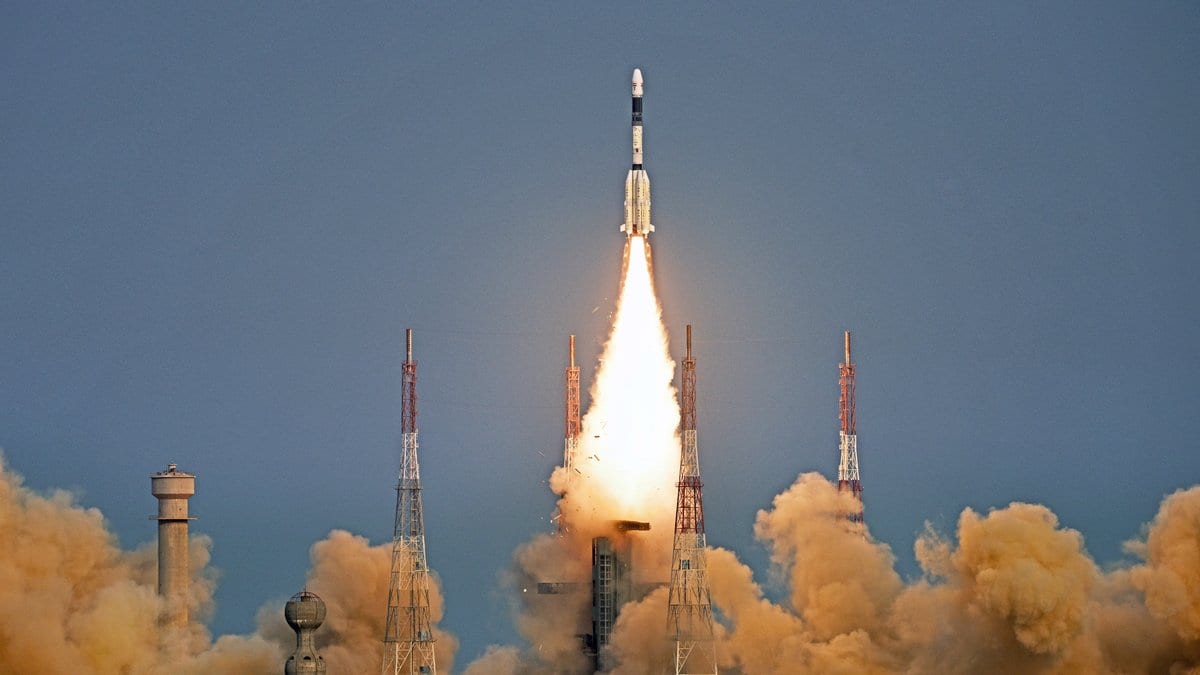
India's space agency says its GSLV-F17 rocket placed the EOS-05 Earth-observation satellite into a sub-geosynchronous transfer orbit on Sept. 4. The launch was the 19th flight of the country's Geosynchronous Satellite Launch Vehicle.
The Indian Space Research Organisation records the liftoff as “04 Sept 2026 at 02:55 AM IST” (21:25 UTC on Sept. 3), and a second notice states that “GSLV-F17 has successfully accomplished its mission, placing EOS-05 into the intended orbit.” ISRO's mission page lists the Second Launch Pad at Satish Dhawan Space Centre, SHAR, as the launch site.
The page states that the vehicle “has placed EOS-05 satellite into a Sub-Geosynchronous Transfer Orbit (Sub- GTO).” This is a transfer orbit rather than the spacecraft's planned operational orbit. ISRO has not published a schedule for the subsequent orbit-raising maneuvers.
ISRO describes EOS-05 as “India's first ever imaging satellite from Geosynchronous orbit.” The mission page lists the spacecraft's type and application as Earth observation.
A satellite in geosynchronous orbit takes the same time to circle Earth as Earth takes to rotate, allowing it to remain over roughly the same region rather than passing overhead a few times a day.
The mission page identifies the rocket's payload fairing, the nose cone that shields the satellite during ascent, as the 4-meter-diameter ogive composite version.