Geneva Team Reports the First Backward Planet Found Around a Red Dwarf
An international team led by the University of Geneva has measured the orbit of the planet GJ 3090 b and found it running backward. The planet circles its star in the direction opposite to the star's own rotation, on an orbit tilted about 136 degrees from the star's equator.
Planets are expected to travel the way their star spins, because a star and its planets condense out of one collapsing cloud of gas and dust that was already turning. Any tilt past 90 degrees means the planet is going the other way. Astronomers call that angle Psi.
"Measuring the angle Psi provides clues about the formation and evolution of planetary systems," said Yann Carteret, a doctoral student at the University of Geneva and first author of the study. The paper appeared in Astronomy & Astrophysics on Sept. 21.
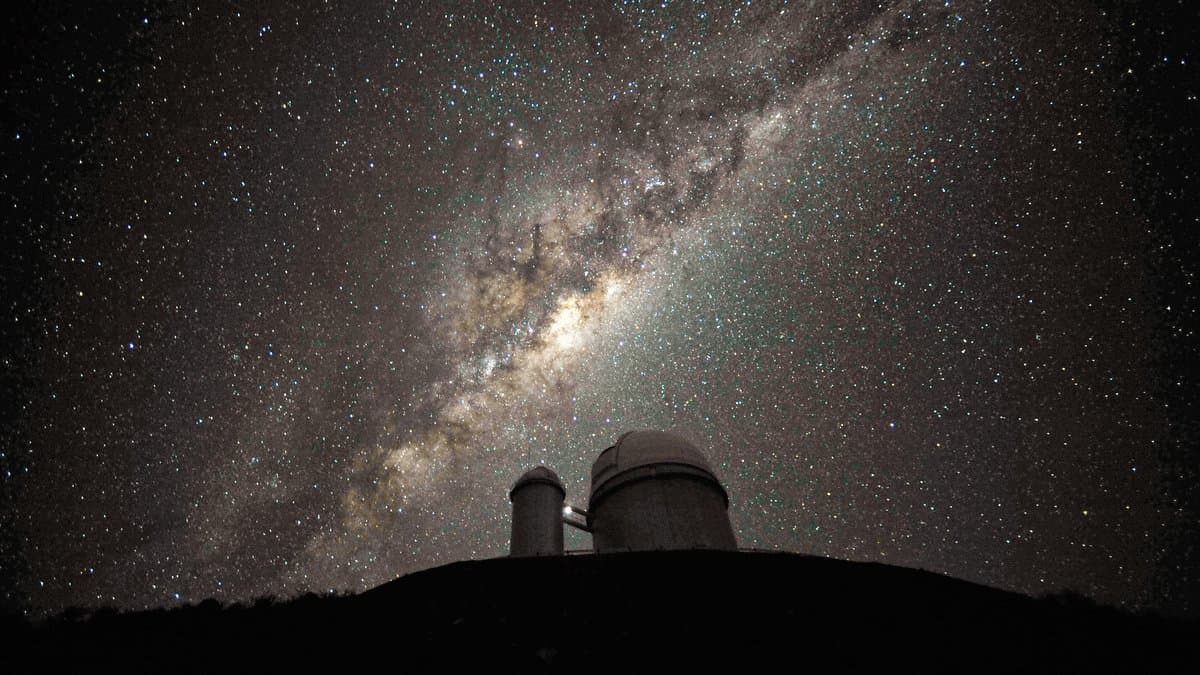
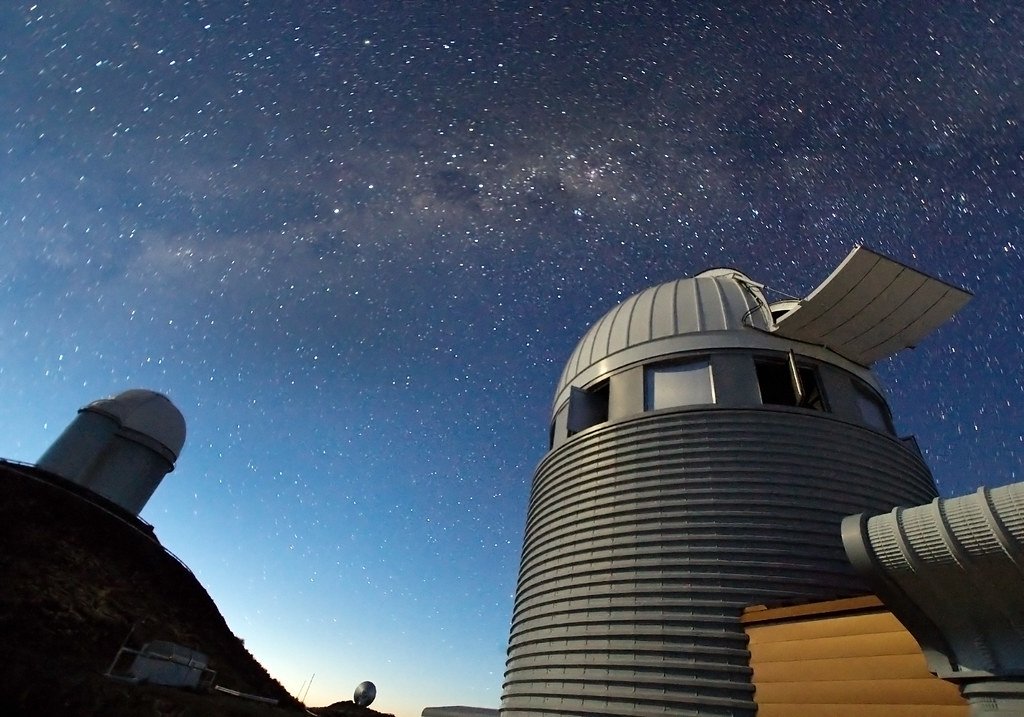
By the university's account, GJ 3090 b has a radius 2.2 times Earth's and a mass 4.5 times Earth's, making it a sub-Neptune, the most abundant class of planet known in the galaxy. The TESS space telescope spotted it first. NIRPS, a Swiss-built infrared spectrograph at the La Silla Observatory, confirmed the planet, measured its mass and fixed the tilt of its orbit. Its star is a red dwarf, smaller and cooler than the Sun; the authors describe GJ 3090 b as the first planet found on a retrograde orbit around such a star.
Five other multi-planet systems are known to hold a planet tilted more than 70 degrees, the university said. What GJ 3090 lacks is the usual explanation. A heavy companion, another star, or a large outer planet, can drag an orbit out of line, and the team reports no sign of one here.
"The absence of a massive companion to explain this unusual orbit will lead us to explore other hypotheses," said Vincent Bourrier, a senior lecturer in the same department and a co-author. His suggestion is that the star later took on a second disk of material, already tilted and turning the other way, in which the system's planets then formed.