The Gas Feeding Our Galaxy's Black Hole Carries More Heavy Elements Than the Sun
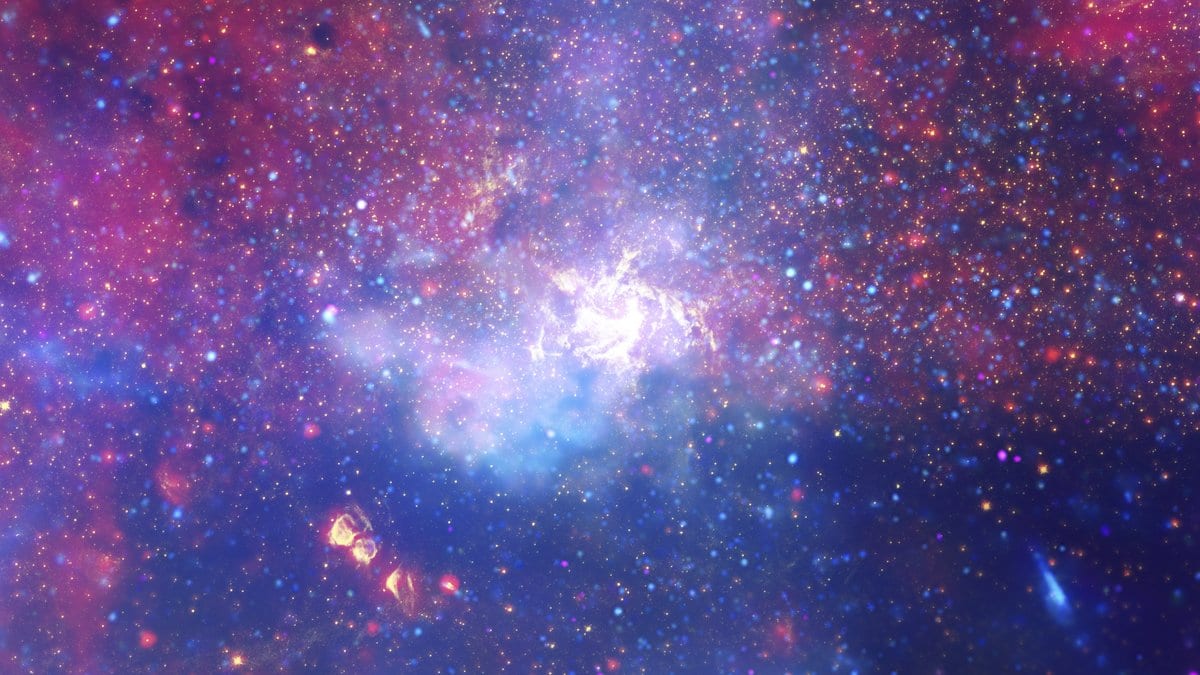
JWST spectra have separated the strands of glowing gas inside 0.1 parsec of Sagittarius A*, about a third of a light-year from the supermassive black hole at the center of the Milky Way, and put the gas's heavy-element content at about 1.8 times the Sun's. Nicole M. Ford of McGill University and colleagues report the measurements in The Astronomical Journal.
Ford and colleagues describe that gas as the black hole's fuel supply, and Sgr A* as the nearest quiet supermassive black hole, close enough that its surroundings can be picked apart. Their paper was published online Oct. 19, 2026.
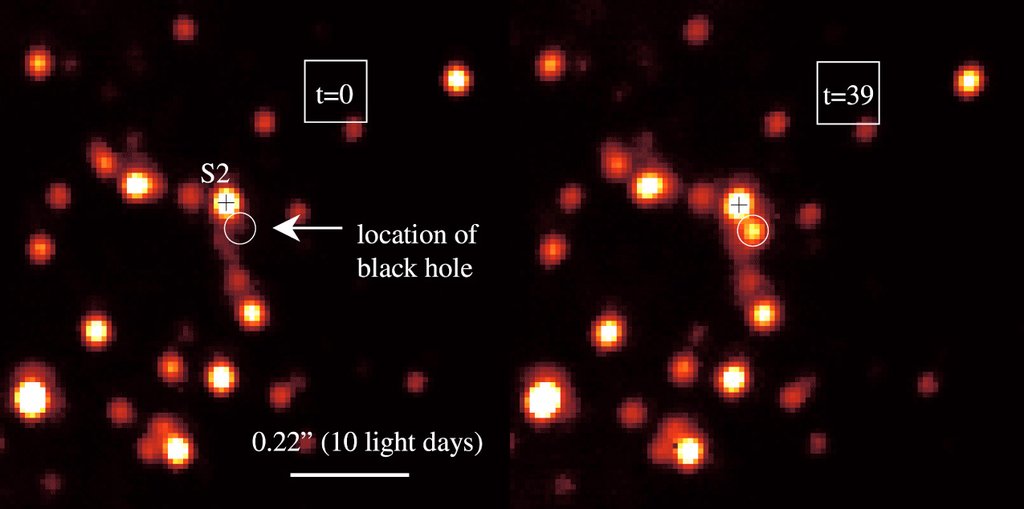
The data come from JWST's MIRI Medium Resolution Spectrograph, and they split the Minispiral, the looping streams of gas around the galactic center, into its Bar and Northern Arm by their shapes and motions. Several compact structures, including one cataloged as X7, lie within about 0.05 parsec of the black hole on the sky and are moving toward Earth at 600 kilometers per second or faster.
The team reads the condition of that fast gas, with more of its atoms stripped of electrons and more of its dust broken up, as a sign of fast shocks confined to those spots.
That abundance covers neon, argon, sulfur, nickel and iron, measured structure by structure from their mid-infrared emission. Those elements are made inside stars and returned to space as stars shed mass or die, so gas above the solar value has taken up more processed material than the cloud the Sun formed from. The paper also reports that much of the nickel and iron in the Minispiral is no longer locked inside dust grains.
The paper is published open access under a CC BY license and credits the Canadian Space Agency as its funder.
Sources
- The Astronomical JournalPeer-reviewed