Deep-Sea Life in the Gulf of Mexico Fell Sharply and Has Not Recovered
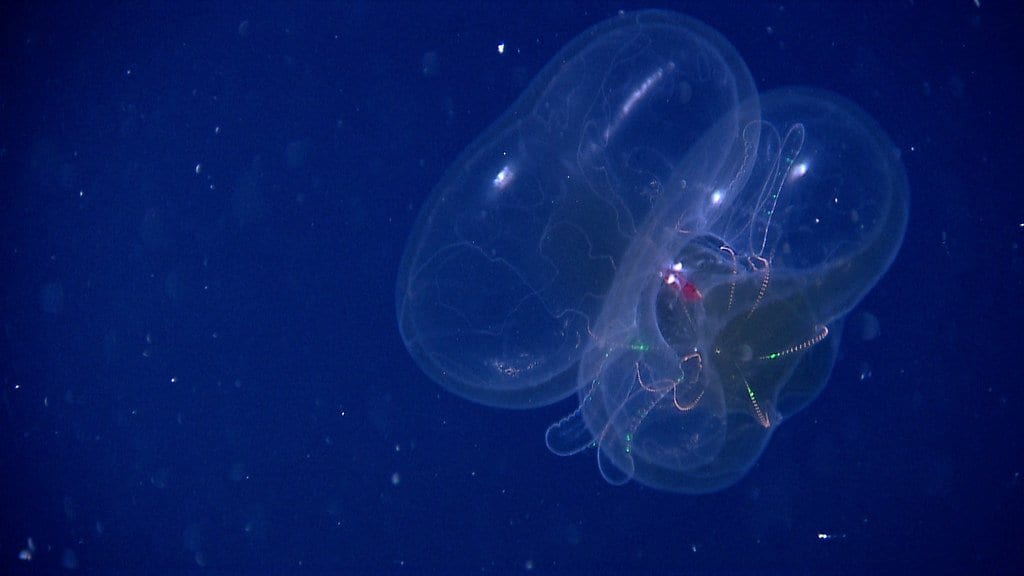
Deep-water animal life in the Gulf of Mexico declined by 60 to 85%, depending on the group, over a 3.5-year period and has not recovered in more than a decade, according to a study published Oct. 19, 2026, in the Proceedings of the National Academy of Sciences.
Tracey T. Sutton of Nova Southeastern University, Daniel R. Hahn of the National Oceanic and Atmospheric Administration, and colleagues sampled the deep-pelagic zone, the open water far below the surface, which the paper says makes up 90.4% of the Gulf's volume. The findings suggest this habitat is vulnerable to human disturbance despite its size and has little capacity to recover.
The authors report that no natural factor they examined, including temperature, oxygen and food supply, tracked the declines, which, they say, suggests a human cause. They also report that the losses began shortly after the Deepwater Horizon oil spill, and they name that 2010 blowout as "the most parsimonious explanation," the simplest account that fits what they measured, rather than as a demonstrated cause.
Fishes, crustaceans and squid all fell. The hardest hit were euphausiids, the small shrimp-like animals also called krill, and lanternfishes, which the paper calls ecologically foundational. The authors say the deep-pelagic community supplies prey to oceanic predators and takes part in carbon cycling.
The declines showed up both in direct net sampling and in acoustic surveys, which the paper describes as independent corroboration. Genomic analysis found reduced genetic diversity among the dominant groups. Resource managers also see the same trend in managed and protected Gulf species that feed on deep-pelagic prey, among them endangered beaked whales and Rice's whale.
For scale, the authors report that the drop over those 3.5 years was larger than any decline recorded over 60 years in the California Current system, which they note as the only comparable dataset.
The study was funded by the NOAA RESTORE Science Program, and the paper is free to read under a Creative Commons license.
Sources
- Proceedings of the National Academy of SciencesPeer-reviewed