A Black Hole's Jet Starts Where Its Cold Disk Ends
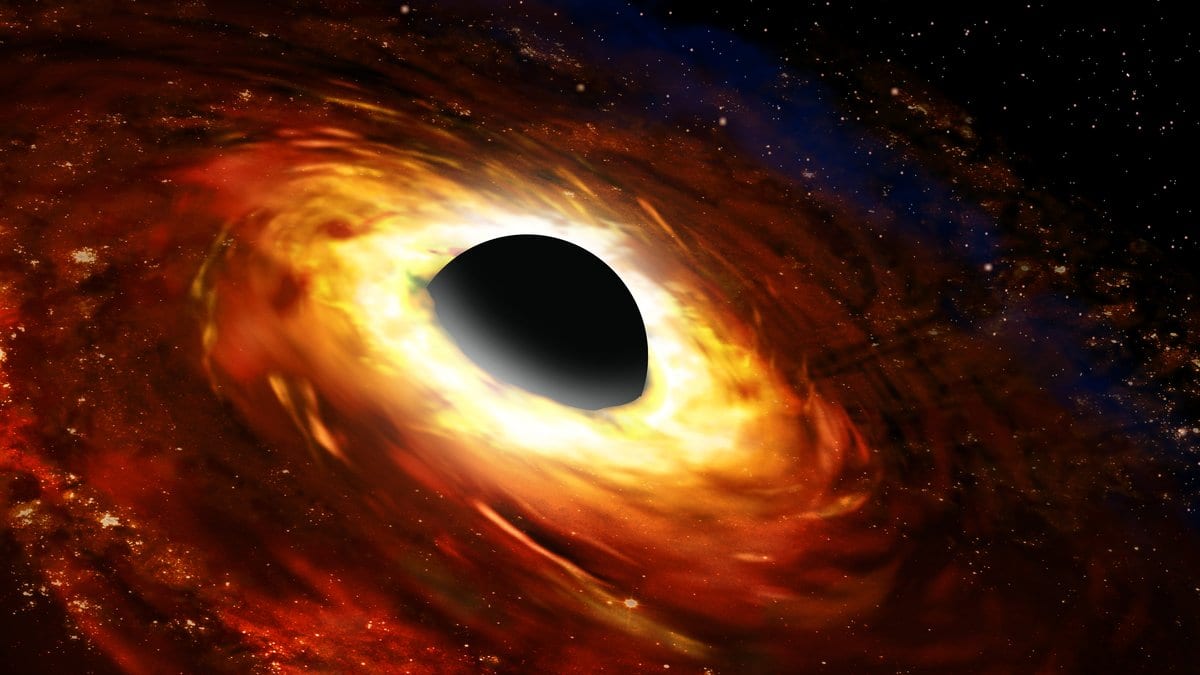
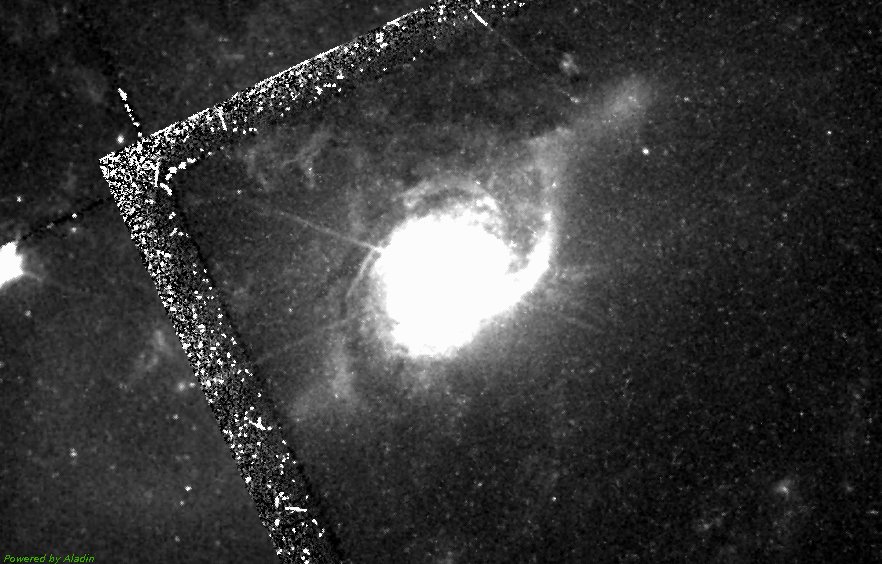
A team led by Hirofumi Noda of Tohoku University has measured how close gas gets to the supermassive black hole in the galaxy 3C 120 before its cold disk gives out. The team reports that the galaxy's jet appears to begin at roughly the same distance. The group watched 3C 120 with the X-ray satellite XRISM while radio telescopes observed it at the same time, and published the result Oct. 19, 2026, in The Astrophysical Journal Letters.
The authors set the result against an unsolved problem. Jets are widely attributed to the Blandford-Znajek mechanism, which draws on a black hole's rotation through large-scale magnetic fields held in place by the gas flowing around it. The paper states that this picture is well supported for hot, thick flows, but that black holes feeding quickly present a paradox: they are usually dominated by cold, thin disks that cannot sustain such fields.
The authors report that XRISM's X-ray spectra show a broadened iron emission line, and that its shape indicates the cold, thin disk stops at about 20 gravitational radii. That unit is a distance scale set by the black hole's own mass, so the figure says how close the gas gets before the cold disk ends. Inside that edge, the paper reports, hot and thick gas has taken the disk's place.
The jet measurement came from three radio networks, the Global Millimeter VLBI Array, the Very Long Baseline Array and the East Asian VLBI Network. The team reports that extrapolating the jet's narrowing shape inward toward the black hole gives a base whose radius is comparable to, or even narrower than, the radius where the cold disk stops.
The team concludes that jet launching is tied to a hot inner flow even when a black hole is feeding fast, possibly through that same mechanism, and offers it as evidence of a disk and jet connection that holds across feeding rates.
The paper is signed by 13 researchers at institutions in Japan, South Korea and Taiwan, and is open access under a Creative Commons license.
Sources
- The Astrophysical Journal LettersPeer-reviewed