A Black Hole Was Already Huge When the Universe Was 630 Million Years Old
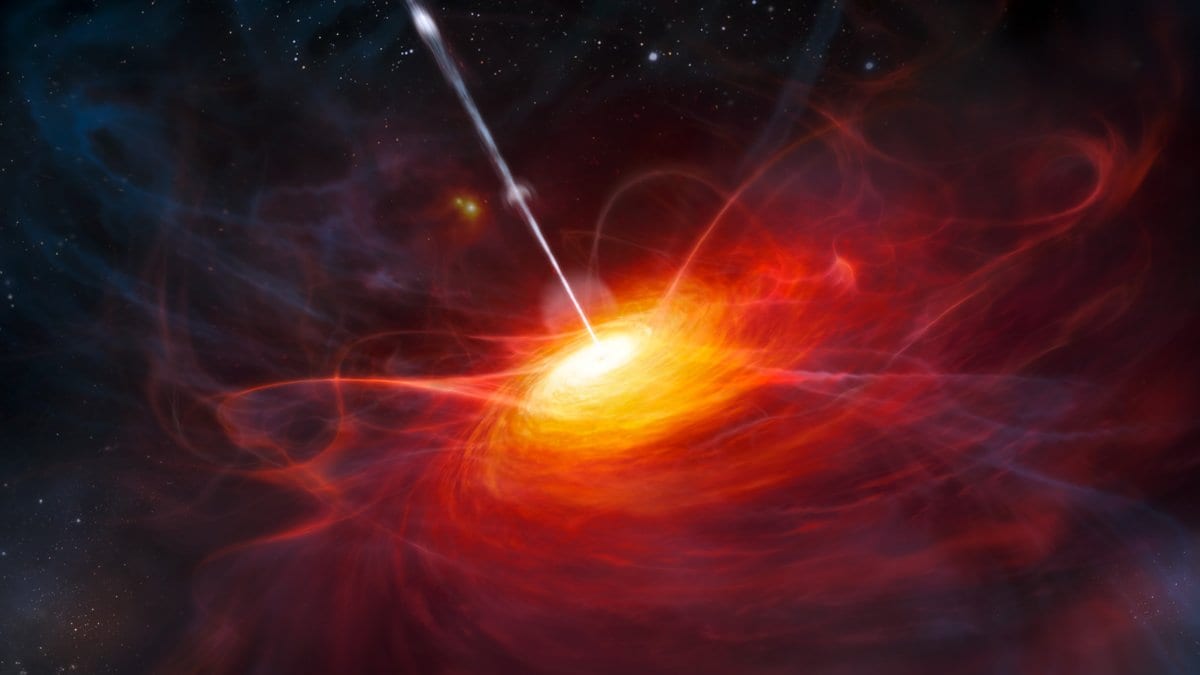
Astronomers have found a black hole that was already shining as a quasar 630 million years after the Big Bang, picked out of imaging from the Euclid Wide Survey, which the European Space Agency runs. The discovery team reports a redshift of 8.129 ± 0.005, the stretch in the light on its way to us, and describes the object as the first quasar confirmed beyond a redshift of 8.
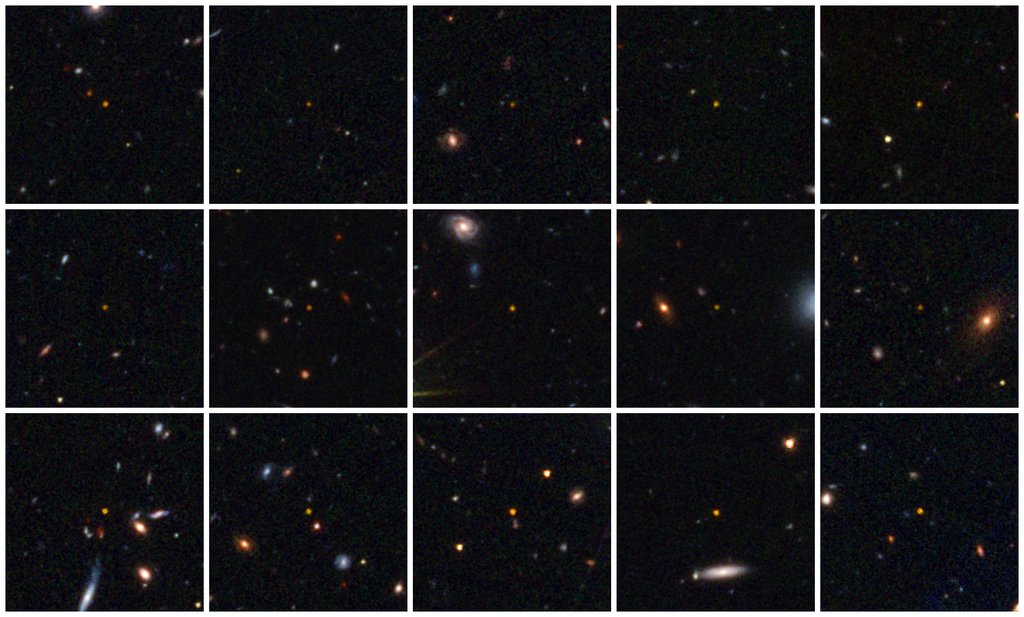
In Astronomy & Astrophysics on Nov. 24, 2026, the authors say the find pushes the earliest confirmed quasar back by about 39 million years. They add that a quasar already this mature so early suggests brighter ones hosting similarly heavy black holes remain to be found.
From the width of two emission lines in the object's spectrum, the team derived a reference mass of about 360 million times the Sun's. The figure is an estimate drawn from a single spectrum through a widely used calibration, not a direct measurement, and the paper reports that other standard calibrations spread the value across a range.
The same calibrations put the black hole's current feeding at 12% to 44% of the fastest rate an object of that mass can sustain. The authors write that building so much mass so early, despite that comparatively slow intake today, requires one of two things — a heavy seed to start from, or growth that was both sustained and highly efficient.
The confirmation drew on the Keck Observatory, the Hubble Space Telescope, the Large Binocular Telescope and the James Webb Space Telescope, whose NIRSpec spectrograph supplied the redshift. The object is cataloged as J1504+6252.
Sources
- Astronomy & AstrophysicsPeer-reviewed