Astronomers Confirm the Youngest Known Planet, Still Forming Inside Its Star's Disk
Astronomers have confirmed a planet inside a gap in the disk of dust and gas still surrounding the young star Elias 2-24, and the authors describe it as the youngest exoplanet discovered to date. Writing in The Astrophysical Journal Letters, Andrea Bernardi of the Universidad Diego Portales in Chile and colleagues give the planet's age as no more than about a million years.
The paper says the confirmation carries implications for how quickly planets form and for the origin of the gaps seen in very young disks.
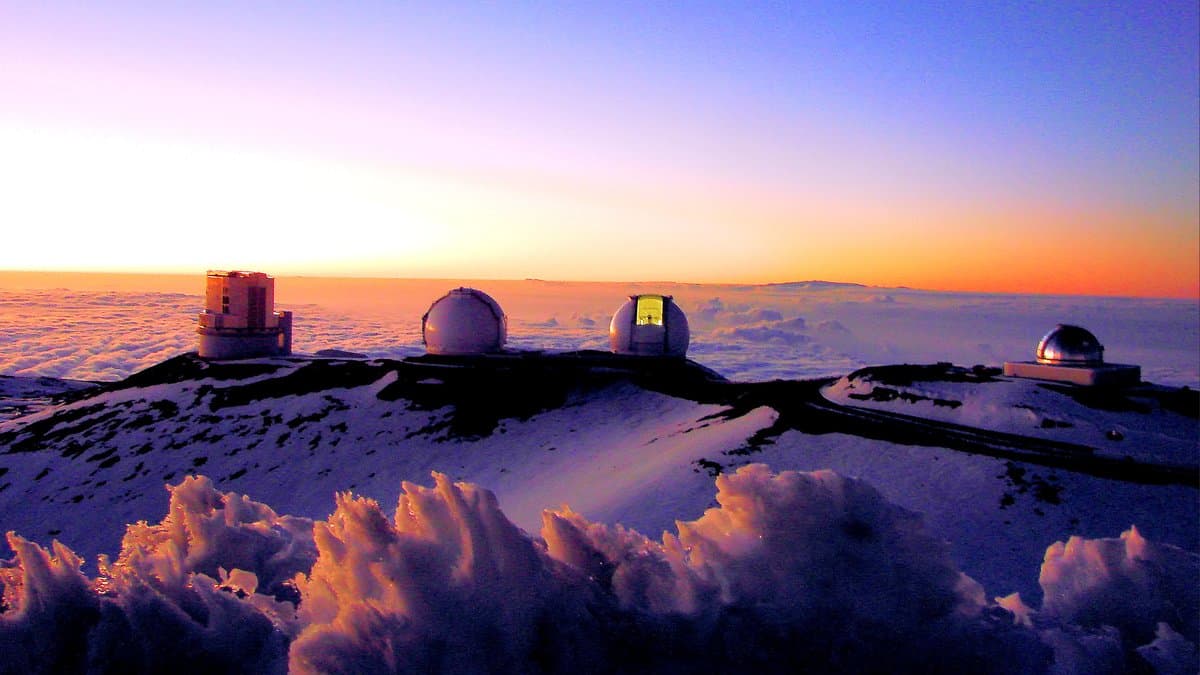
Elias 2-24 b orbits about 55 times farther from its star than Earth does from the Sun. Comparing its brightness with models for an object that age, and not counting material still falling onto it, the team infers a mass of 1.9 to 4.0 times Jupiter's. It was picked out of archival images of seven disk-hosting stars taken with a coronagraph, which blocks the star's own light, at the W. M. Keck Observatory in Hawaii.
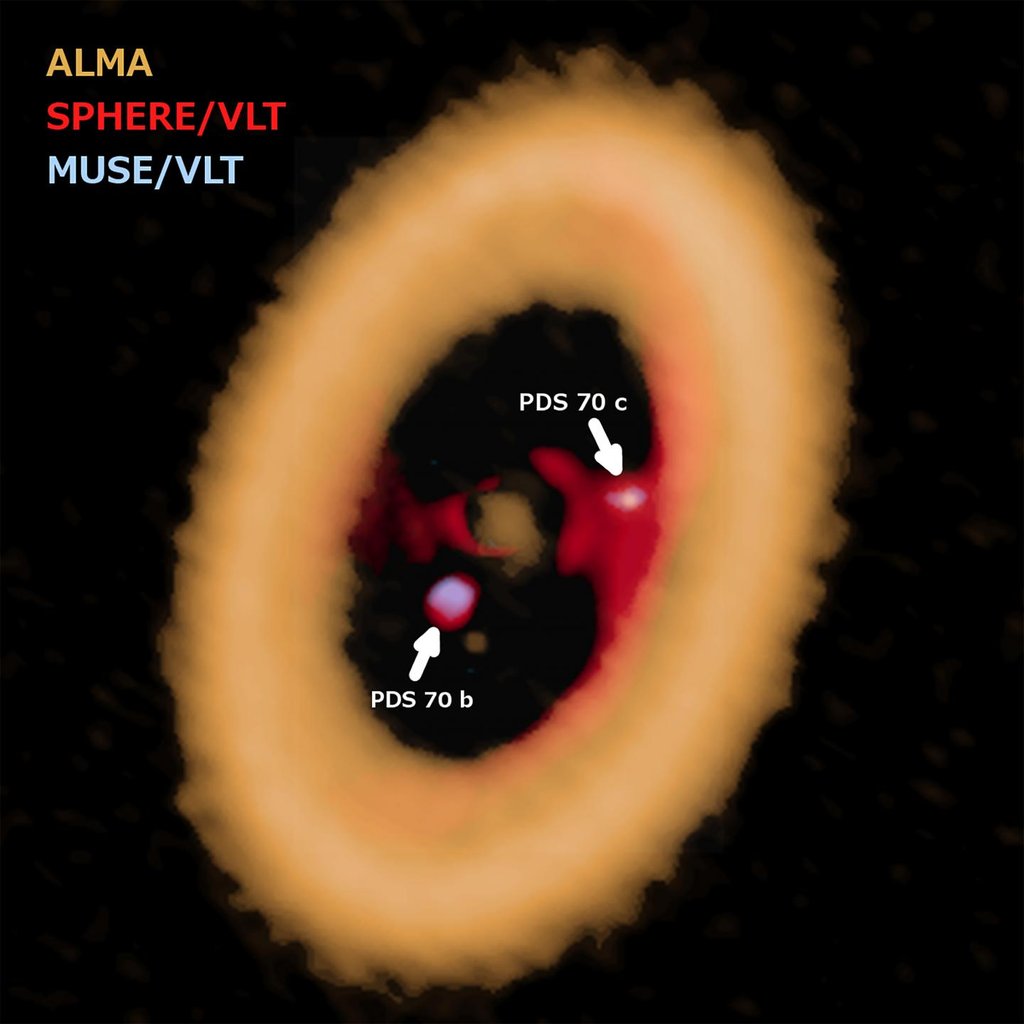
NASA puts the star about 450 light-years from Earth. The youngest planets known before this orbit the stars PDS 70 and WISPIT 2 and are all more than 5 million years old, said Lucas Cieza, a professor at the Instituto de Estudios Astrofísicos in Chile and a co-author of the paper. "Elias 2-24 b shows us that even our best planet-formation models are still missing some important processes," he said.
A gap in the star's disk turned up in ALMA observations about a decade ago, and the European Southern Observatory's Very Large Telescope later spotted a faint point of light inside it that astronomers could not agree was a planet. Bernardi's team found the same point in Keck data from 2018 and 2020 and traced its motion. "The planets should be found within the gaps, since they are carving them," Bernardi said. "And that's exactly where we found Elias 2-24 b."
Bernardi said the planet sits at the limit of what current telescopes can detect, and that instruments such as NASA's Nancy Grace Roman Space Telescope should make such detections easier.