After 26 Years, ESA's Cluster Mission Ends With a Steered Reentry
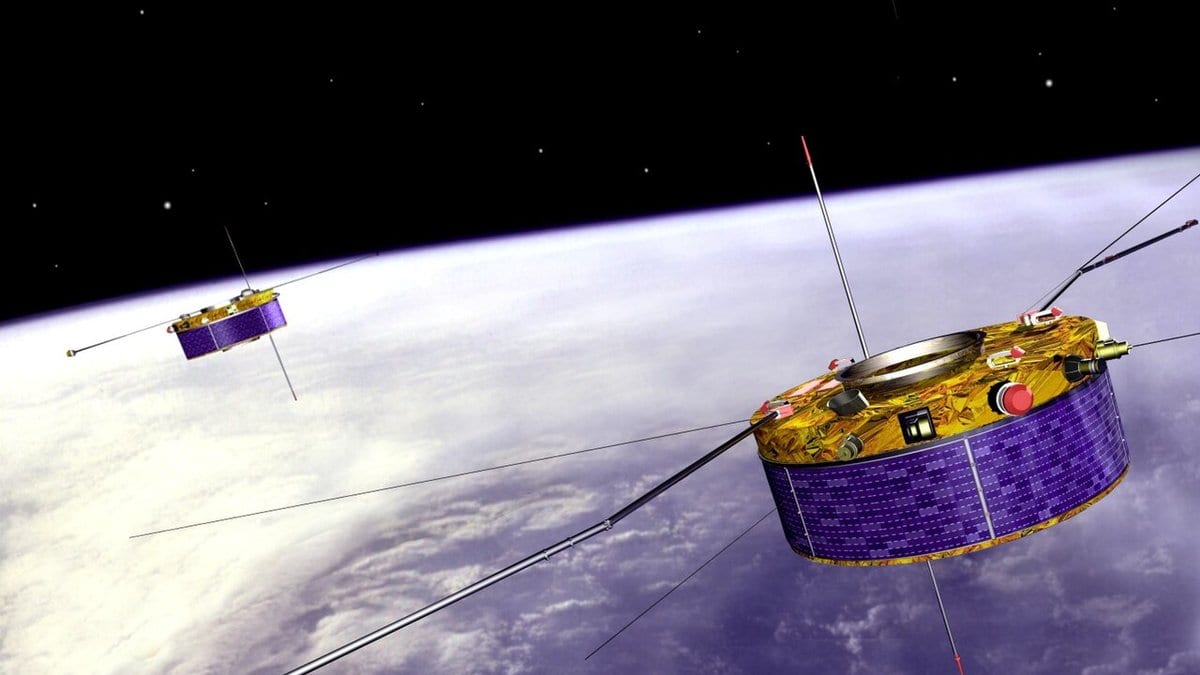
The last of the European Space Agency's four Cluster satellites reentered Earth's atmosphere over the South Pacific on Sept. 1 at 21:30:31 UTC, ESA said, ending 26 years of Cluster operations and completing the fourth and final aimed reentry of the fleet.
The satellite, Tango (Cluster II FM-8), was not left to fall wherever its orbit decayed. ESA said it had been "specially lined up for a targeted reentry safely over the South Pacific Ocean," aimed precisely enough that an aircraft could fly out of Tonga and record the breakup. Samba (Cluster II FM-7), the third of the four, came down the same way on Aug. 31.
The aircraft carried ESA's ROSIE airborne observation team. Twenty-nine of the 30 instruments aboard recorded both reentries, and the scientists tracked each satellite across the sky for about 50 seconds on average. Images were taken with a Nikon Z8 camera operated by the University of Stuttgart's HEFDiG group, ESA said. For Tango, the pilot banked the plane at the right moment to keep the burning spacecraft in the team's field of view for a few seconds longer.
Members of the flight control, mission and reentry teams each sent a last command to Tango shortly before the end. Its signal through the Kourou ground station was lost about a quarter of an hour before reentry.
ESA's release calls the campaign a success and says that after four targeted reentries "this is now a proven method of safe end-of-life disposal." The agency expects the data to "improve our understanding of the destructive process." No analysis of the data set has been published. "With the data from the Cluster and Draco reentries we will improve reentry models," said Stijn Lemmens, ESA's acting head of Space Debris.
Draco, the reentry mission ESA plans next, is scheduled to launch in 2027 with more than 200 sensors, four cameras and what the agency calls an indestructible capsule to keep the collected data safe.