A New Report Treats the Smallest Plastics as Active Particles, Not Inert Waste
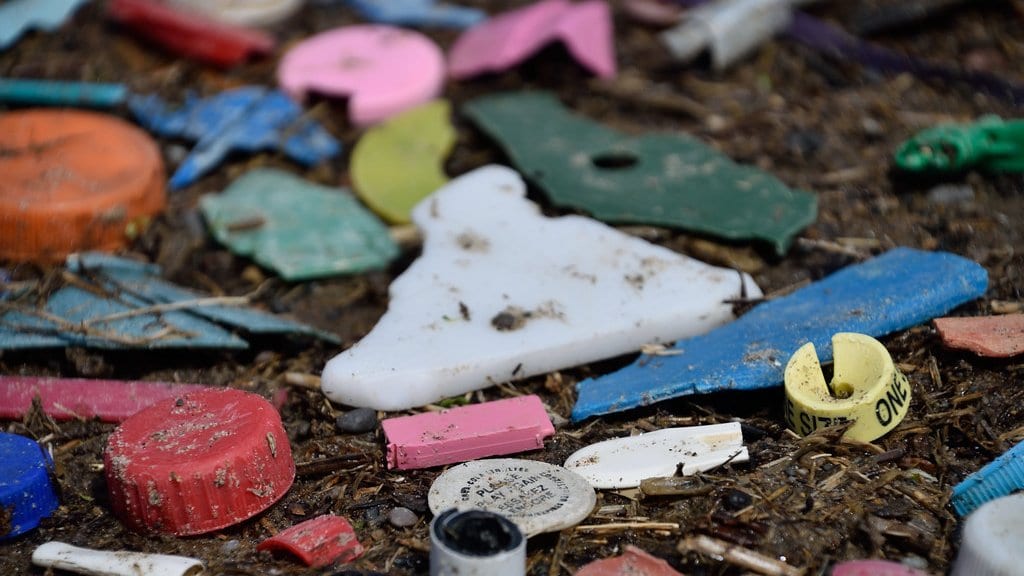
The ALLATRA Global Research Center has published a risk analysis of micro- and nanoplastics, the fragments plastic breaks down into. The report is dated April 22, 2026, and is signed by seven authors, John Ahn first among them. It reports no measurements of its own: it is a review of published experimental, clinical, toxicological and epidemiological work, issued by the center.
The report sets out from the physics of small particles rather than the volume of plastic waste. Its authors argue that once plastic fragments, it stops behaving like inert debris, and that the surface area of each particle, its capacity to pick up other substances and its electrical charge decide how it meets living tissue.
Across the literature it reviews, the report says contact between these particles and cell membranes has been associated with a coating of proteins forming on the particle surface, chemical stress inside the cell, damage to the structures that supply a cell's energy, weakened biological barriers and inflammation. Those are associations drawn from existing laboratory, clinical and population studies, not findings the report produced.
At the level of whole systems, the authors name risks to the signaling between gut and brain, to the nervous system and the circulatory system, to reproduction and development before birth, and a possible contribution to the processes behind cancer. They add that conventional plastic waste handling may break the material down further and release finer particles in turn.
The report's primary conclusion is that micro- and nanoplastics should be regarded as a new class of human-made particles with potentially significant biological and ecological activity. Its authors call for a shift away from mechanical cleanup toward cutting emissions of the finest fractions, monitoring that can be compared across studies, and more work on the particles' surfaces.
The report is in English, names ALLATRA USA as publisher in its suggested citation, and is posted in full as a free PDF and a web version.