Why the Ocean Warms Faster in Late Summer Than in Late Winter
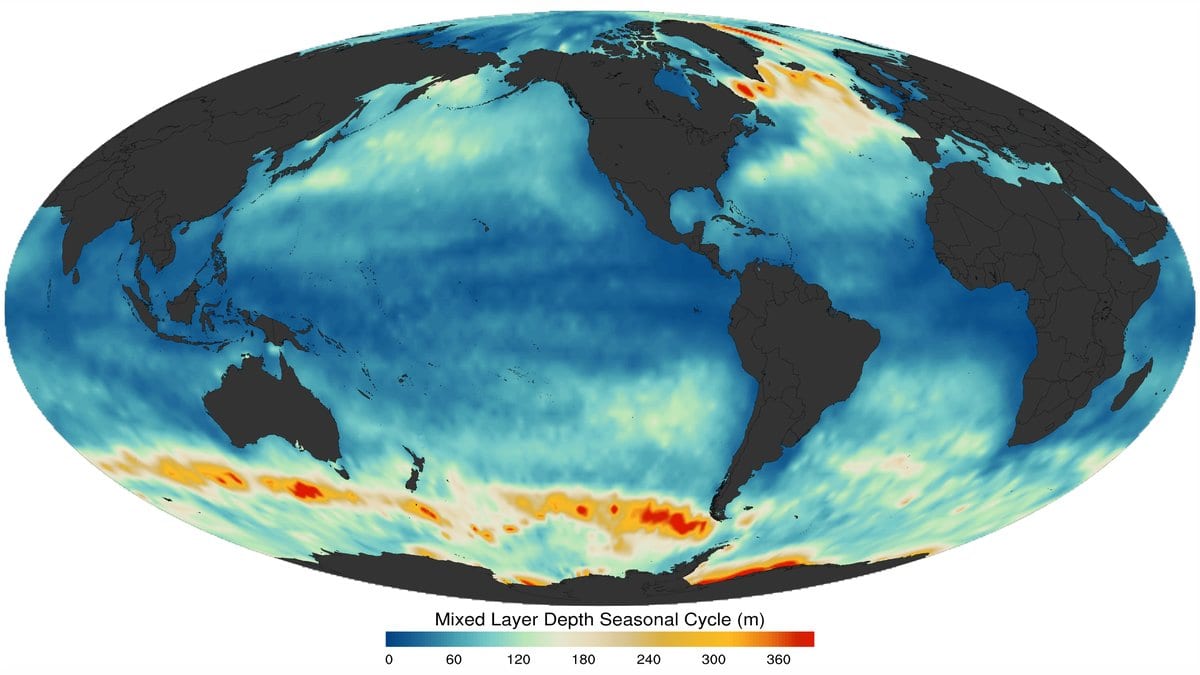
The midlatitude oceans are warming faster at the end of summer than at the end of winter, and a new paper puts the cause in the ocean's own seasonal cycle rather than in anything seasonal about the heating it receives. Daniel J. Vimont of the University of Wisconsin-Madison and colleagues at the University of Colorado Boulder and Oak Ridge National Laboratory published the result Oct. 18, 2026.
The results establish seasonal midlatitude warming as a robust climate feature and provide a minimal framework for interpreting, attributing and projecting future ocean changes. The paper is published open access in npj Climate and Atmospheric Science.
The researchers report that observed sea surface temperature records and global climate model simulations both show the midlatitude oceans warming 75% faster during late summer than during late winter. To test why, the team ran a model of the ocean's seasonal mixed layer, the wind-stirred surface layer that thins in summer and deepens in winter.
The model produced the stronger summer response even with the heating held constant through the year. In the authors' account, two things drive it. A thinner summer layer has less heat capacity, so the same added energy warms it more. The flow of heat from the sea back to the air is also suppressed, so less of the extra warmth escapes. A separate experiment, in which the mixed layer was allowed to grow shallower, produced a stronger seasonal summer response without changing the annual mean response. In both experiments, the mixing of deeper water into the layer in fall contributed to the timing of the peak late-summer warming.
The observational data sets came from the NOAA Physical Sciences Laboratory in Boulder, Colorado, and the model output from the CMIP6 archive of coordinated climate simulations; the work was funded by the US Department of Energy, per the acknowledgments. The journal accepted the paper Sept. 24, 2026, and is publishing this version ahead of the final Version of Record.
Sources
- npj Climate and Atmospheric SciencePeer-reviewed