Skip to content
See the World Through ScienceA project of ALLATRA
Source: Peer-reviewedScience1 source

Microwaves Keep a Gas of Ultracold Molecules Alive for Seconds
Science

Republish this story

Our work is licensed under Creative Commons BY-NC 4.0. You may republish this piece for free — with credit to ALLATRA Media and a link to the original, unedited beyond length trims, and not for commercial use.

Read the full license

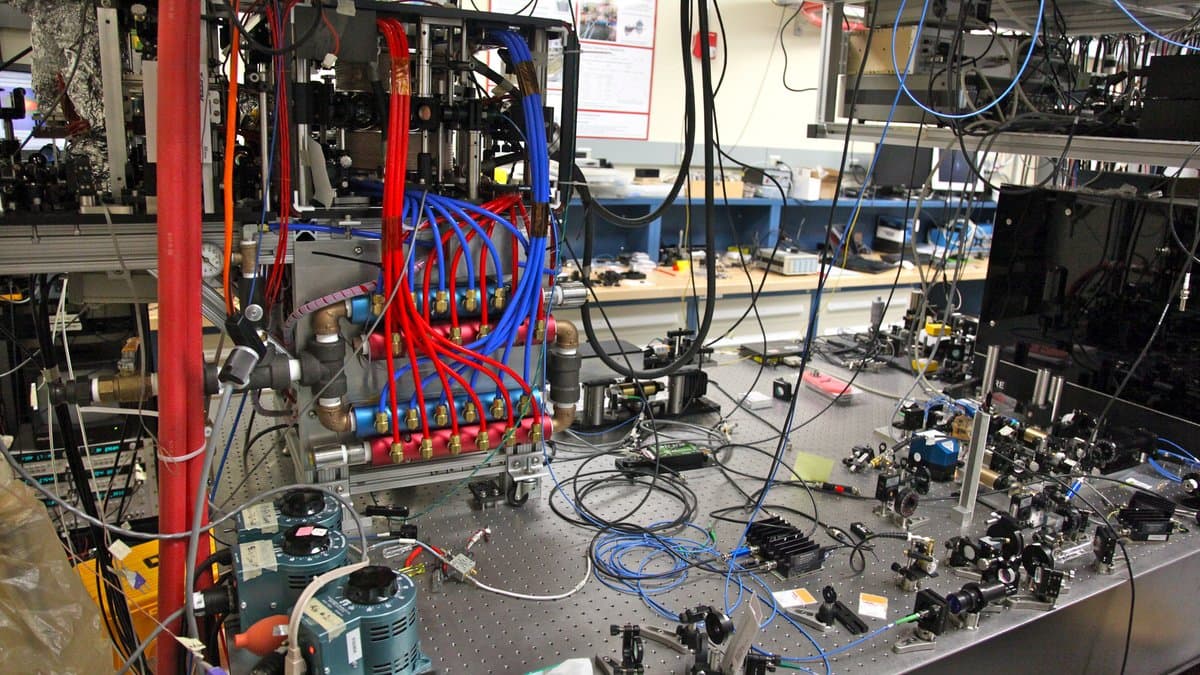
An optical table in a physics laboratory, crowded with mirrors, lenses and cabling around a vacuum chamber used to trap laser-cooled atoms.
A laser trap for super-cooled rubidium atoms on an optical table at Stanford University (illustrative). Experiments on ultracold molecules use apparatus of this kind."File:Bose-Einstein condensate, a cloud of super-cooled Rubidium atoms in a Laser trap on an Optical table - In a game of catch & release, the atoms will shoot up a 30 ft. tall Atomic fountain - Stanford.jpg" by Steve Jurvetson from Menlo Park, USA, via wikimedia, CC-BY-2.0 · CC-BY-2.0

Physicists at Columbia University have held a gas of ultracold molecules together for several seconds by using microwaves to suppress the collisions that destroy such gases, according to a paper published Sept. 17, 2026, in Science.

Ultracold molecules that pull on one another at a distance are a promising material for building exotic quantum states of matter, the authors write in Science. Long-lived samples with strong interactions of that kind have remained hard to make, because the molecules are lost when they collide.

The group used double-microwave dressing, in which two microwave fields keep the molecules apart. It cut losses in which a pair of molecules is destroyed at once by a factor of more than 10,000, and losses involving three molecules by more than 1,000. The suppression held across a wide range of interaction strengths, which let the team tune that strength continuously.
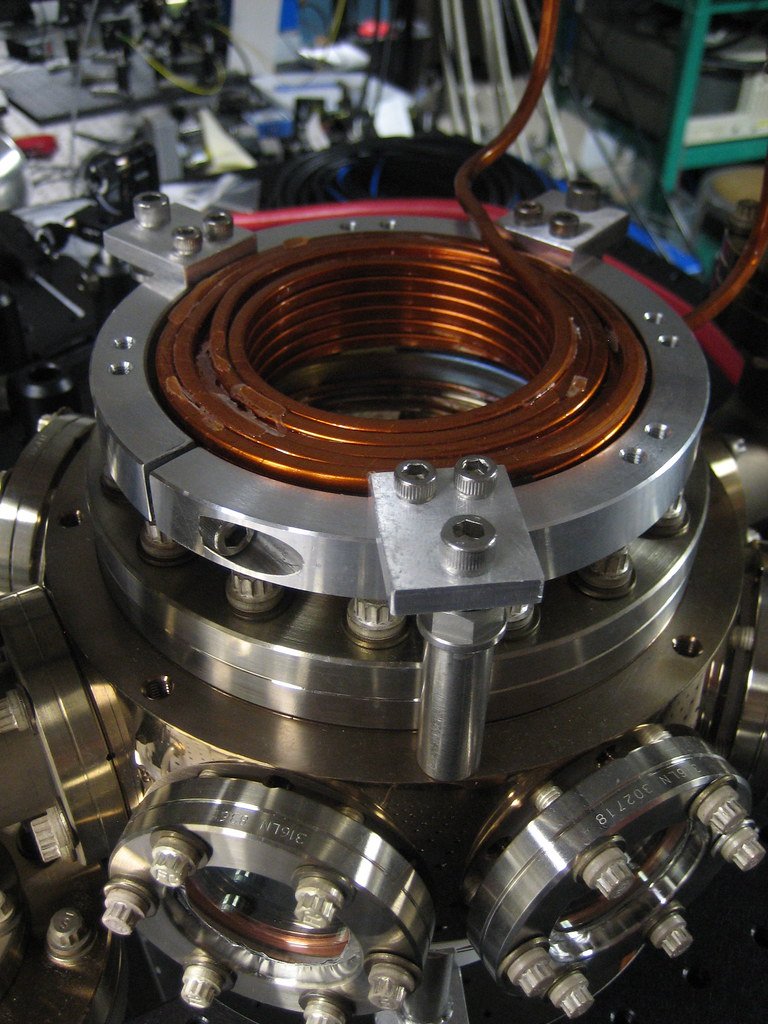
A close view of a copper magnetic coil mounted on top of a vacuum chamber ringed with bolted viewports.
Copper coils on a vacuum chamber make the magnetic field of a magneto-optical trap, the stage that first cools atoms toward absolute zero (illustrative). — "Yb 2.0: MOT coil closeup" by fatllama, via flickr, BY-NC-SA

Molecules of this kind have recently been cooled into a Bose-Einstein condensate, a state in which a gas behaves as a single quantum wave. Combined with that, the authors write, the work opens the door to exploring strongly dipolar quantum liquids.

Sources

Spot an error?

Spot an error?

Report an error

Spotted a mistake on this page? Tell us what's wrong and our editors will take a look.

What kind of problem?

Only if you'd like us to be able to follow up. We won't use it for anything else.

We correct mistakes openly. Select any text to flag it. Fixes are logged under our Corrections Policy.

Report an error

Reporting on

Microwaves Keep a Gas of Ultracold Molecules Alive for Seconds

What kind of problem?

Only if you'd like us to be able to follow up. We won't use it for anything else.

We read every report. Corrections are logged publicly.