Sponge Microbes Long Thought to Eat Only Ammonia Turn out to Consume Amino Acids Too
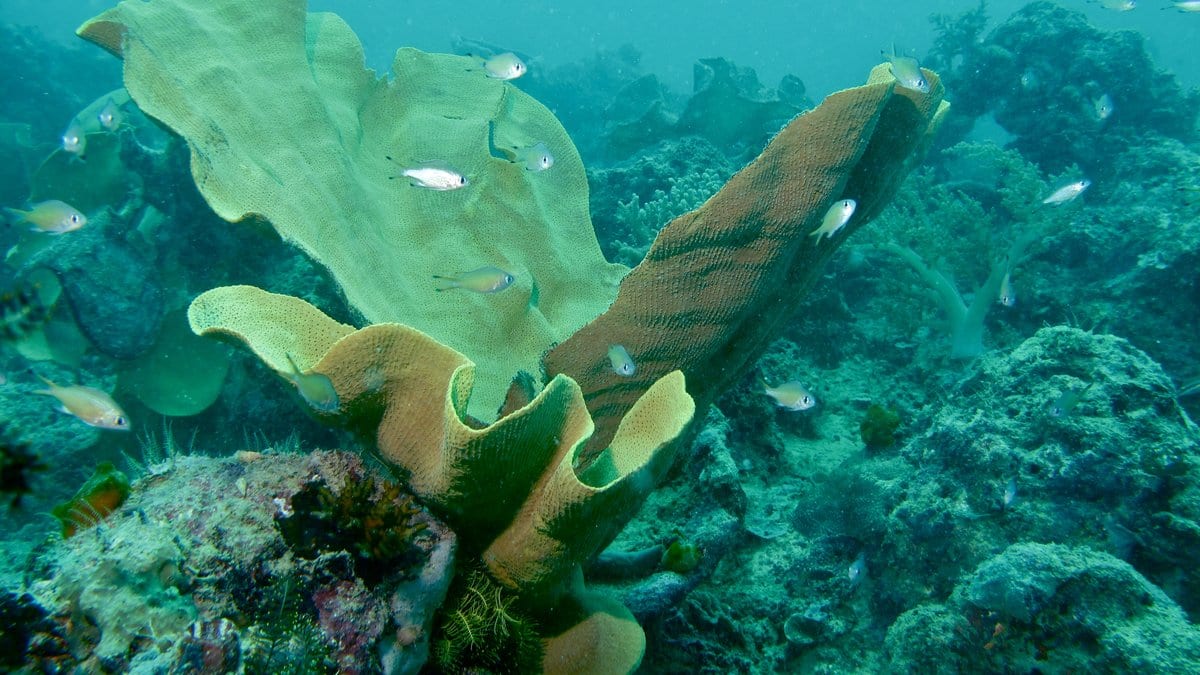
Archaea that live inside marine sponges have long been classed as strict ammonia-eaters, microbes whose sole job is stripping nitrogen waste from their host. A study published Sept. 4 in Science Advances shows they are also taking up amino acids, a capacity the field had not attributed to symbiotic forms of this group.
In the authors' own framing, the finding "expands this view" of what these microbes do inside the sponge and suggests they may have a lever on the host's internal chemistry.
Bettina Glasl and Michael Wagner of the University of Vienna, with colleagues at the Australian Institute of Marine Science and other Vienna institutions, fed labeled leucine, isoleucine and valine (marked with carbon-13 and nitrogen-15) to the sponge Ianthella basta and traced where the labels went. Using fluorescence and chemical imaging, they followed uptake at the level of individual cells. The paper reports that "the ability to take up, degrade, and biosynthesize BCAA is a common adaptation among symbiotic AOA lineages," meaning it appears across related strains, not only this one host.
The authors also note that the capacity to handle these amino acids "may enable symbiotic AOA to modulate BCAA concentrations in their auxotrophic sponge hosts," and that such modulation "may regulate the leucine-sensitive mTOR (mechanistic target of rapamycin) signaling pathway in sponges."
The study describes marine sponges and ammonia-oxidizing archaea as "one of the earliest animal-microbe symbioses."
Sources
- Science AdvancesPeer-reviewed