A Giant Antarctic Iceberg Has Reached South Georgia and Slowed Down
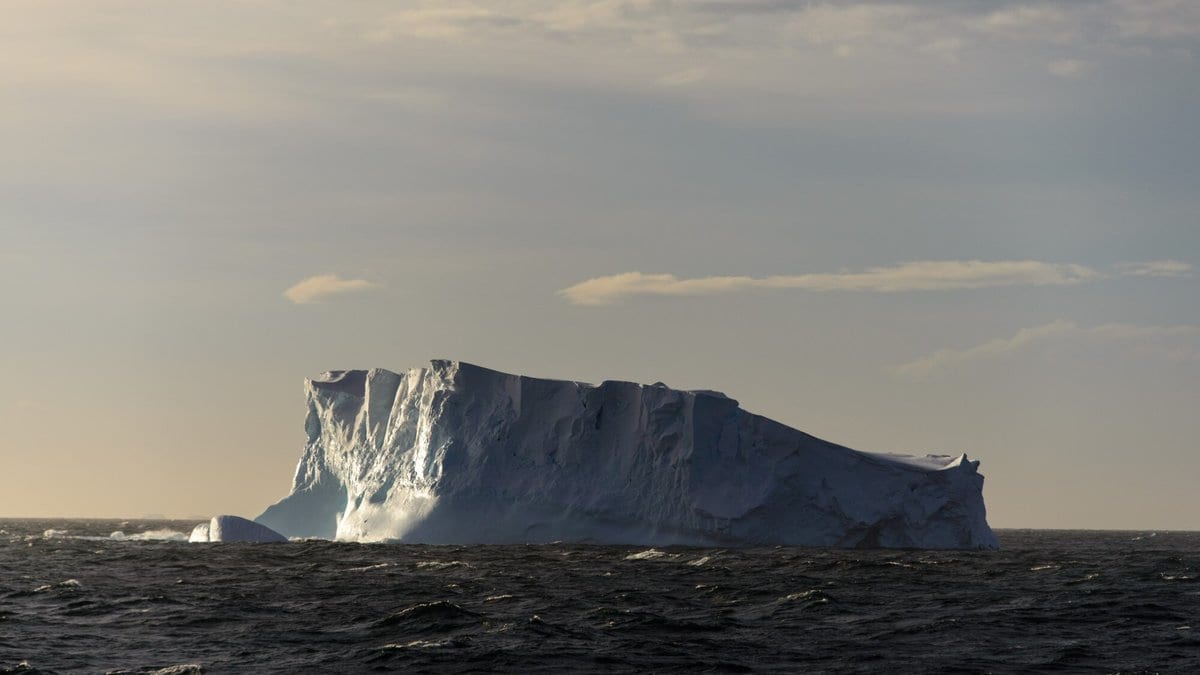
Iceberg A-81, a slab of Antarctic ice covering roughly 1,550 square kilometers (600 square miles), has reached the remote South Atlantic island of South Georgia, and its drift there has slowed. MODIS, an imaging instrument on NASA's Terra satellite, photographed the berg on Oct. 20, 2026, at the edge of the island's shallow underwater shelf.
According to Jan Lieser of Australia's Bureau of Meteorology and Christopher Shuman of the University of Maryland, now retired, the berg's progress slowed noticeably in the days before the image and it appeared to be bumping along the edge of the shelf. NASA's Earth Observatory said South Georgia has slowed and even stopped icebergs before: in 2025, Iceberg A-23A ran aground on the same shelf and later broke apart.
The Earth Observatory said A-81 broke from Antarctica's Brunt Ice Shelf in January 2023 and then spent more than three years in the Weddell Sea, carried along the coast by the clockwise-flowing Weddell Gyre. It reached the tip of the Antarctic Peninsula by May 2026, moved north into the Scotia Sea, and by late October 2026 was approaching South Georgia, 2,300 kilometers (1,400 miles) north-northwest of the ice shelf it came from.
The berg took longer to form than to travel. One of the Brunt Ice Shelf's rifts, known as Chasm 1, was relatively stable for about 35 years before it began growing again, and the ice then held on for several more years before it broke.
The Earth Observatory said calving is a normal part of an ice shelf's life cycle, but that scientists watch Brunt closely. The shelf has shed several large icebergs in quick succession, and it holds the British Antarctic Survey's Halley Research Station, a base for Earth, atmospheric and space science research. Brunt also calved Iceberg A-74 in 2021 and Iceberg A-83 in 2024. A-74 has since broken up. A-83 is still intact and is trailing A-81 northward, along with a handful of other icebergs that appear to be clearing out of the Weddell Sea.