A Stone Age Fisherman's Tooth Tracks a Diet Turning Toward the Land
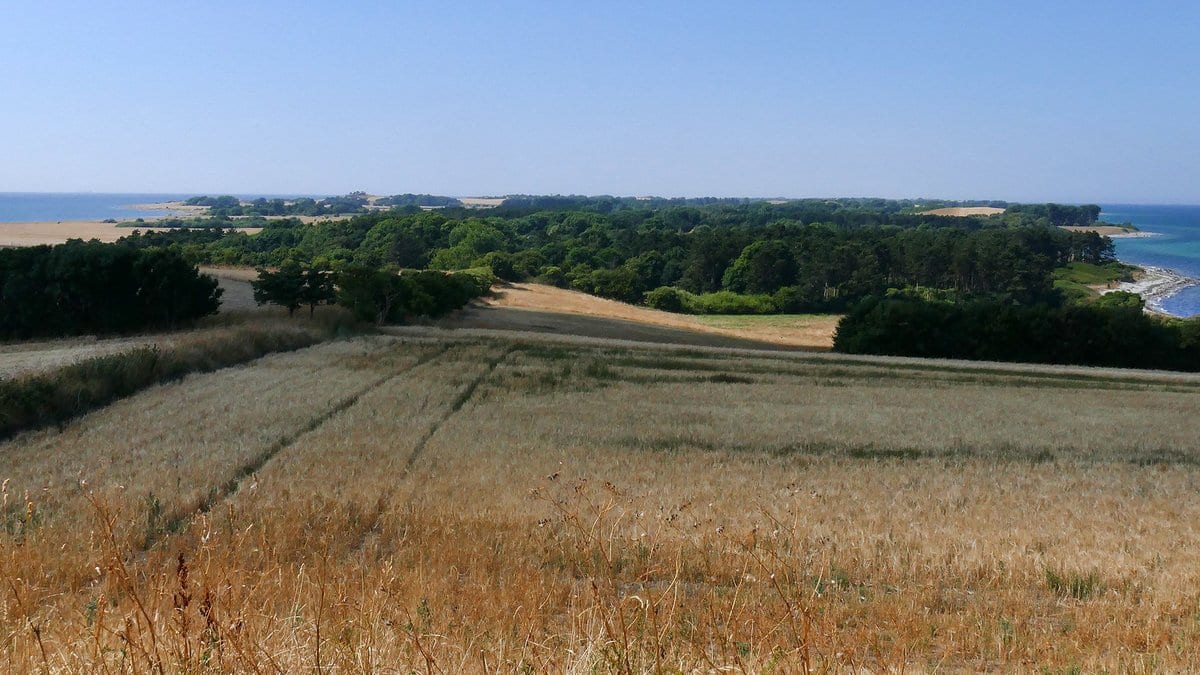
A man buried in a shell heap on a small Danish island is the most recent securely dated person in Denmark with purely hunter-gatherer ancestry and a sea-based diet, a team reports in the journal Antiquity. The layered tissue inside one of his teeth records that diet taking in more and more land food from his teenage years on.
Anders Fischer of the University of Gothenburg, John Meadows of the Leibniz-Zentrum für Archäologie and colleagues set out to see the arrival of farming in northern Europe through one life rather than the population averages usually used. He is known as Rødhals Man, after the shell heap on the island of Sejerø where residents found his skeleton in 1956.
In the paper, published Nov. 16, 2026, the authors sampled growth layers across one of his lower teeth, measuring carbon, nitrogen and sulfur in each to track his diet from childhood on. Most of his protein came from shallow water: shellfish, flatfish and eel from eelgrass meadows around the island. From adolescence on, the land share rose sharply. Correcting for the misleadingly old ages marine food imparts, their radiocarbon model puts his death between 3930 and 3710 BC, at 95% probability.
Fischer and colleagues argue the added land food was probably farmed, and are explicit that the chemistry cannot settle it: it cannot separate more hunting and gathering on land from the adoption of farming and herding. In their reading, two observations point to close contact with farmers: he shows none of the freshwater fish typical inland foragers do, and his adult diet is unlike any other Danish person's of the era measured so far.
The authors note that dated bones of domestic cattle and sheep place a farming economy in Denmark at about 3950 to 3850 BC, overlapping his lifetime. The ancestry comes from earlier work on ancient Danish genomes; the diet history and date of death are new.
His grave lacked the red ochre usual in late Danish hunter-gatherer burials and had a stone frame closer to the farmer graves that followed. The paper is open access.
Sources
- AntiquityPeer-reviewed