A Protein Bridges Two Plant Signal Systems, and Pollen Depends on It
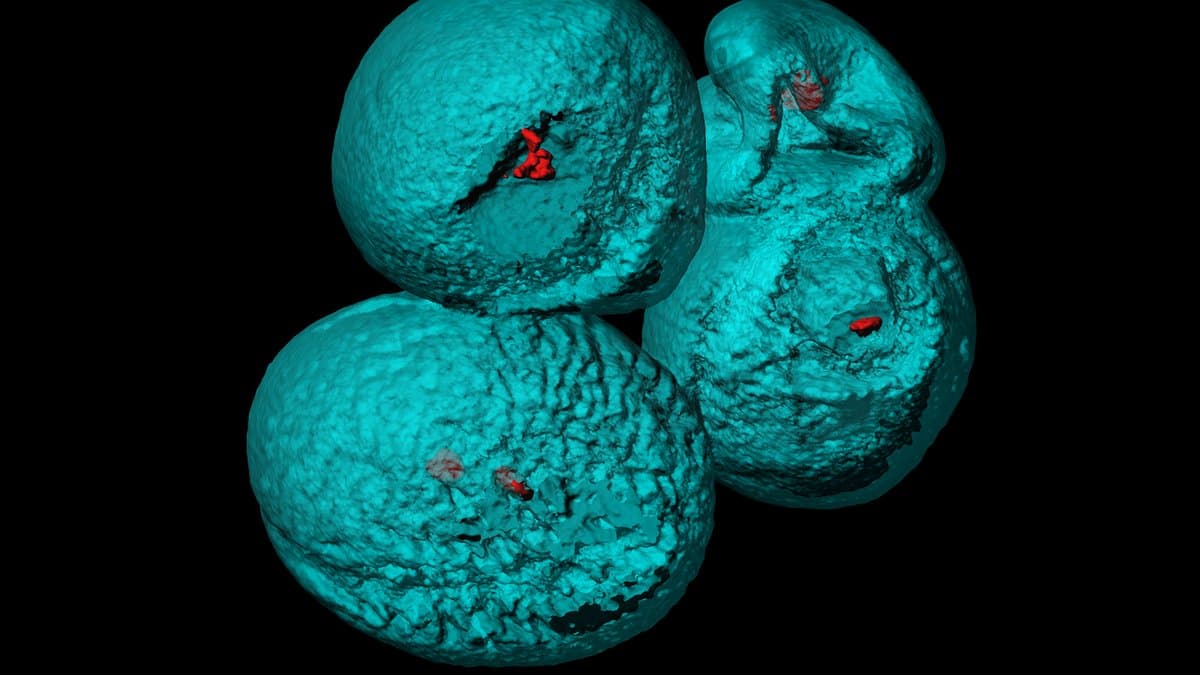
A protein named REAP1 links two families of molecular switches inside plant cells, and plants need that link to make working pollen, a Japanese research team reports in Nature Plants.
Cells run on molecular switches called small GTPases, which flip between an active and an inactive state. In animals, signals pass between different switch families. The paper, published on September 1
7, 2026, states that such crosstalk has not been explored in plants, and that the one it describes operates during sexual reproduction, when flowering plants make pollen and egg cells.
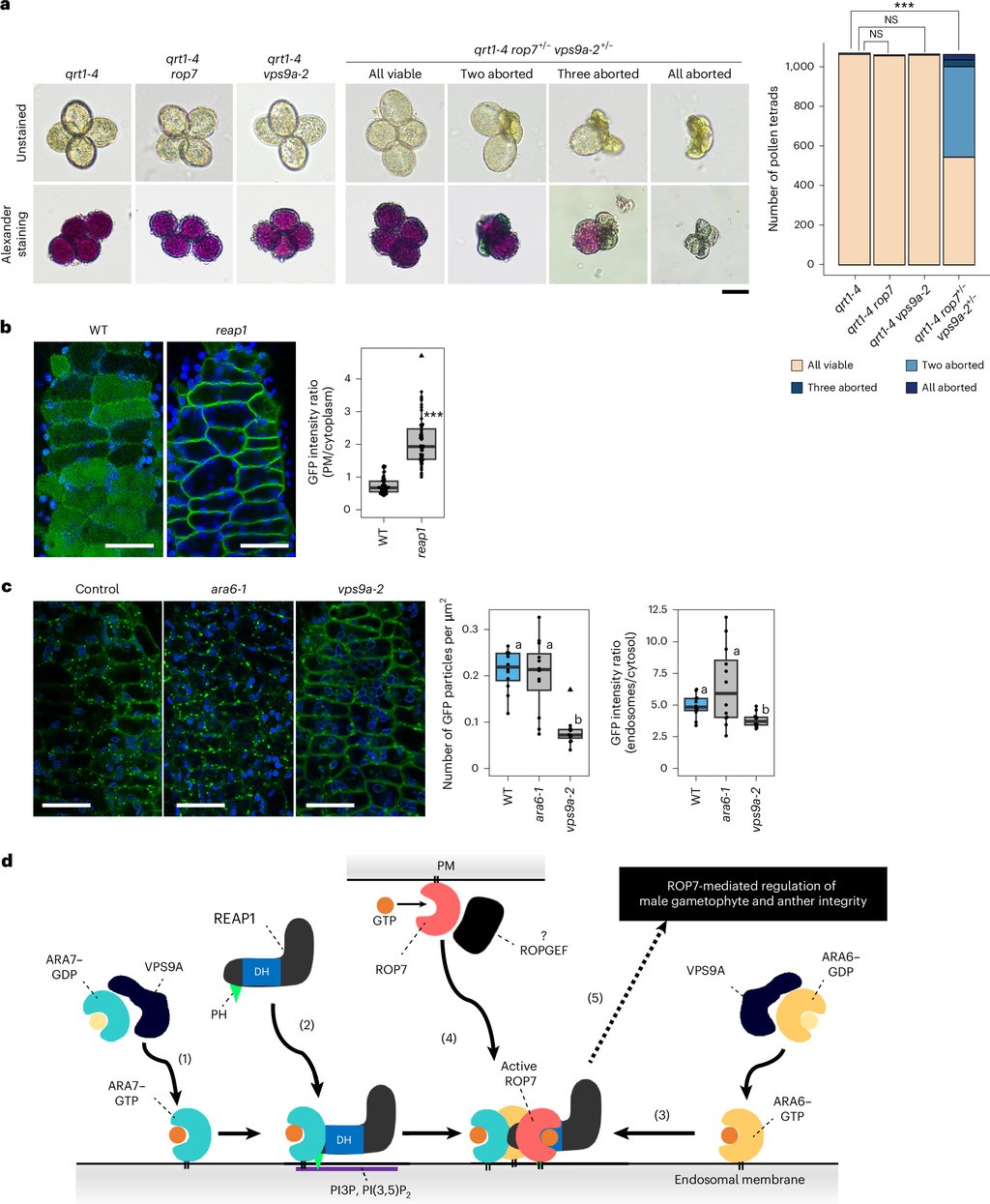
Working in Arabidopsis thaliana, a small weed used as a laboratory model, Emi Ito and Takashi Ueda of the National Institute for Basic Biology and colleagues found that REAP1 binds the switched-on form of RAB5, which directs traffic between compartments inside the cell, and also the switched-on form of ROP7, a switch found only in plants. REAP1 sits on endosomes, the compartments that sort material moving through the cell, and pulls ROP7 off the cell's outer membrane onto them. That transfer depended on RAB5 being active.
Plants missing both ROP7 and the protein that switches RAB5 on could not be obtained at all, and in crosses that double-mutant combination passed through neither pollen nor egg. In plants carrying one broken copy of each gene, 43% of the four-grain clusters in which pollen matures held two dead grains alongside two healthy ones, while control plants made normal clusters. Plants lacking REAP1 together with either partner showed a smaller but statistically significant rise in dead pollen, which the authors take as evidence that REAP1 is needed for ROP7 to work fully with RAB5.
Plants took a different evolutionary path with these switches went a different evolutionary way: they lost the Ras family that animals use for cell growth and division, and expanded others, so ROP7 has no animal counterpart, and neither does ARA6, a second version of RAB5 that REAP1 also binds. The new paper cites a 2025 Nature Plants report that RAB5 switches direct ROP signaling to set the direction in which a pollen grain germinates.