Physicists Catch Sound Jumping Between Quantum Energy Levels for the First Time

Stanford physicists have directly observed a vibrating mechanical device flipping abruptly between discrete energy levels, reporting the first quantum jumps of sound ever seen in a massive object. The finding appears in Science on September 17, 2026.
Quantum mechanics has long predicted that a vibrating object holds energy in fixed steps called phonons, the sound equivalents of light's photons. Watching those steps directly requires measuring a resonator's energy, not its position, a qualitatively different kind of measurement. Takuma Makihara, Amir H. Safavi-Naeini, and colleagues at Stanford's Ginzton Laboratory built the apparatus to do it.
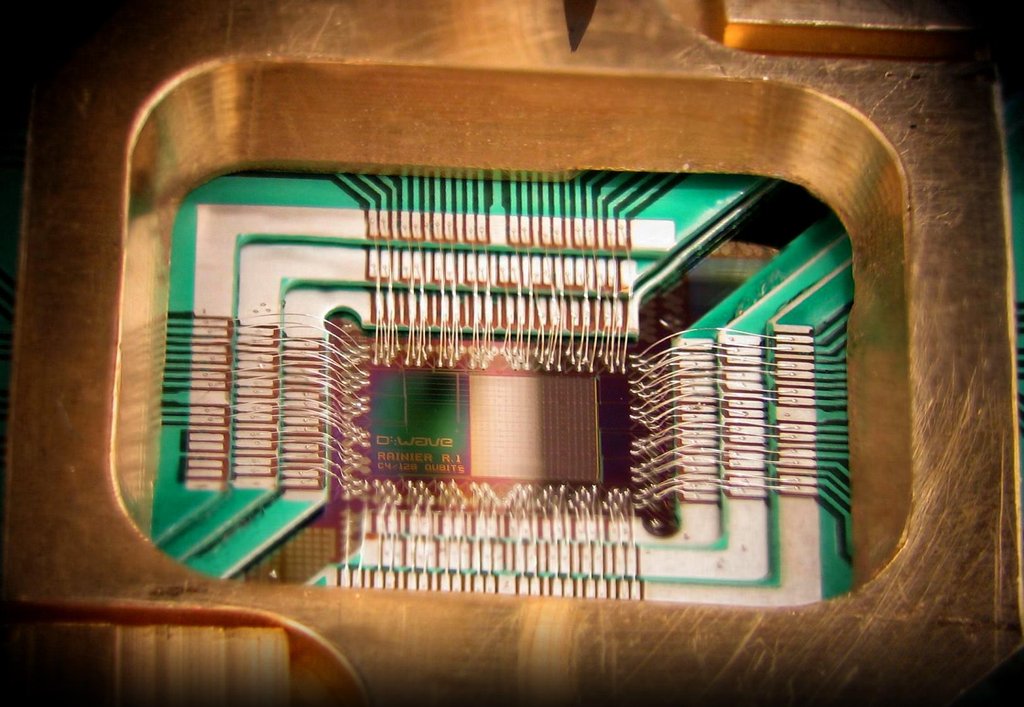
The team bonded a superconducting qubit to a nanomechanical resonator using an aligned transfer-print technique. The qubit probed the resonator's phonon number repeatedly without disturbing it, a quantum nondemolition measurement. According to the paper, the integrated device achieved a mechanical lifetime T1 = 2.1 milliseconds and a dispersive shift of 2χ/2π = 328 kilohertz per phonon. That shift gave enough frequency resolution to distinguish zero phonons from one. The authors report heralding single-phonon states with 85% fidelity and observing the resonator jump between its ground state and first excited state in real time.
Quantum jumps were first seen in atoms in the 1980s, and later in superconducting circuits. The authors describe the transitions in a mechanical object as "a striking manifestation of quantum mechanics in a massive, vibrating object," framing the result as evidence that quantum discreteness extends to the motion of objects substantially larger than atoms or electrons. Whether the technique can be extended to larger or heavier resonators is not addressed in the published abstract.
Sources
- SciencePeer-reviewed